

Close Menu
    Facebook X (Twitter) Instagram
    SciTechDaily
    • Biology
    • Chemistry
    • Earth
    • Health
    • Physics
    • Science
    • Space
    • Technology
    Facebook X (Twitter) Pinterest YouTube RSS
    SciTechDaily
    Home»Science»College Student Alcohol Use Declined During COVID Pandemic
    Science

    College Student Alcohol Use Declined During COVID Pandemic

    By University of North Carolina at Chapel HillAugust 16, 2021No Comments3 Mins Read
    Facebook Twitter Pinterest Telegram LinkedIn WhatsApp Email Reddit
    Share
    Facebook Twitter LinkedIn Pinterest Telegram Email Reddit
    Beer Pong College Drinking
    First-year college students are drinking less alcohol and experiencing fewer episodes of binge drinking four months into the coronavirus pandemic compared to before it started.

    Carolina researchers say downward trend in college drinking could change once students return to campus.

    First-year college students are reporting drinking less alcohol and having fewer episodes of binge drinking four months into the coronavirus pandemic than they were before the pandemic started, according to a study by the University of North Carolina at Chapel Hill.

    The study is based on the experiences of 439 Carolina students and reflects how the COVID-19 pandemic affected students’ social lives and stress. Researchers from the Carolina Population Center and the UNC School of Medicine published the study findings on August 2, 2021, in the Journal of Adolescent Health.

    “We found that social factors, like social distancing and reductions in social support from friends, were associated with decreases in alcohol use among first-year students. By contrast, stress-related factors were less important,” said lead study author Jane Cooley Fruehwirth, an associate professor in the UNC-Chapel Hill Department of Economics in the College of Arts & Sciences and a faculty fellow at the Carolina Population Center.
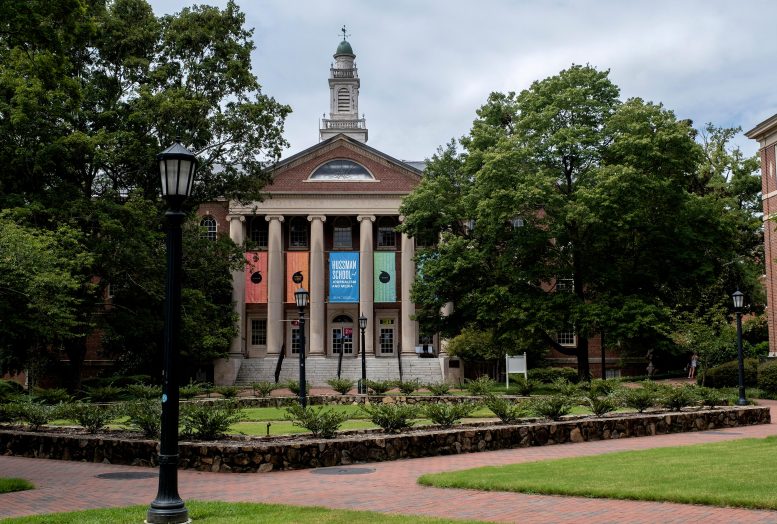
    University of North Carolina at Chapel Hill
    Study at University of North Carolina at Chapel Hill shows decline in drinking during the pandemic among first-year students. Credit: Johnny Andrews/UNC-Chapel Hill

    Her collaborators include Ben Gorman, a senior communications and neuroscience major in the College of Arts and Sciences, and Krista Perreira, a professor of social medicine at the UNC School of Medicine and a faculty fellow at the Carolina Population Center. The work builds on their previous research looking at the mental health of first-year college students during the pandemic.

    Alcohol Usage Declines

    Using survey data, researchers found the prevalence of alcohol use by first-year college students decreased from 54.2% before the pandemic to 46% mid-pandemic. The prevalence of binge drinking dropped from 35.5% before the pandemic to 24.6% mid-pandemic.

    “We followed the same group of first–year college students before and after the pandemic began, which allowed us to analyze COVID-related determinants of drinking behaviors while accounting for pre-existing alcohol use and social factors,” says Gorman, who also runs the TEACH Initiative, an organization which conducts near-peer substance use and mental health education in North Carolina high schools.

    While the social factors dominated, stress did play a role for some students. Difficulties with distanced learning were associated with increased drinking for students who were already consuming alcohol before the pandemic. Furthermore, 20.5% of students reported using alcohol or other drugs to cope with the pandemic.

    “The dominance of social factors suggests that reductions in alcohol use may not be sustained once college students return to campus,” said Fruehwirth. “For students who were already drinking prior to the pandemic, universities can support them by providing ways to help them manage stress, through counseling, student support groups and particularly targeting challenges with distance learning through academic coaching.”

    Reference: “The Effect of Social and Stress-Related Factors on Alcohol Use Among College Students During the Covid-19 Pandemic” by Jane Cooley Fruehwirth, Ph.D., Benjamin L. Gorman and Krista M. Perreira, Ph.D., 2 August 2021, Journal of Adolescent Health.
    DOI: 10.1016/j.jadohealth.2021.06.016

    This research was supported by the Carolina Population Center and its National Institutes of Health (NIH)/National Institute of Child Health and Human Development (NICHD) Grant Award Number P2C HD50924 (JF), the Integrating Special Populations/ North Carolina Translational and Clinical Sciences Institute through Grant Award Number UL1TR002489 (KP), the Office of Undergraduate Research and Department of Economics at UNC-CH. 

    Never miss a breakthrough: Join the SciTechDaily newsletter.
    Follow us on Google and Google News.

    Alcohol Behavioral Science COVID-19 Stress University of North Carolina at Chapel Hill
    Share. Facebook Twitter Pinterest LinkedIn Email Reddit

    Related Articles

    A Simple Trick Can Help Couples Weather COVID-19 Pandemic-Related Stress

    People More Afraid of Catching COVID-19 Are More Judgmental

    Flexibility Paradox: Scientists Uncover Hidden Threat of Working From Home

    Clubs Closed During COVID-19 Pandemic? Partygoers Turn to Virtual Raves and Happy Hours

    COVID-19 Baby Boom? Not According to a New Study

    8 Pitfalls That Must Be Addressed to Combat the COVID-19 Pandemic

    Controlling Coronavirus and Harmful Pests on a Global Scale by Countries Working Together

    Men’s Stress Increases If Wife Earns More Than 40% of Household Income

    Groundbreaking Research Into the Value of “Thoughts and Prayers”

    Leave A Reply Cancel Reply

    • Facebook
    • Twitter
    • Pinterest
    • YouTube

    Don't Miss a Discovery

    Subscribe for the Latest in Science & Tech!

    Trending News

    Largest-Ever Study Finds Medicinal Cannabis Ineffective for Anxiety, Depression, PTSD

    250-Million-Year-Old Egg Solves One of Evolution’s Biggest Mysteries

    Living With Roommates Might Be Changing Your Gut Microbiome Without You Knowing

    Century-Old Cleaning Chemical Linked to 500% Increased Risk of Parkinson’s Disease

    What if Your Memories Never Happened? Physicists Take a New Look at the Boltzmann Brain Paradox

    One of the Universe’s Largest Stars May Be Getting Ready To Explode

    Scientists Discover Enzyme That Could Supercharge Ozempic-Like Weight Loss Drugs

    Popular Sweetener Linked to DNA Damage – “It’s Something You Should Not Be Eating”

    Follow SciTechDaily
    • Facebook
    • Twitter
    • YouTube
    • Pinterest
    • Newsletter
    • RSS
    SciTech News
    • Biology News
    • Chemistry News
    • Earth News
    • Health News
    • Physics News
    • Science News
    • Space News
    • Technology News
    Recent Posts
    • Scientists Say This Overlooked Organ Could Hold the Key to Longer Life
    • Want Less Stress? Landmark Study Points to a Simple Habit
    • Scientists Reveal Eating Fruits and Vegetables May Increase Your Risk of Lung Cancer
    • AI Reveals Explosive Growth of Floating Algae Across the World’s Oceans
    • 5.5 Million Bees Discovered Living Beneath a New York Cemetery
    Copyright © 1998 - 2026 SciTechDaily. All Rights Reserved.
    • Science News
    • About
    • Contact
    • Editorial Board
    • Privacy Policy
    • Terms of Use

    Type above and press Enter to search. Press Esc to cancel.