
Close Menu
    Facebook X (Twitter) Instagram
    SciTechDaily
    • Biology
    • Chemistry
    • Earth
    • Health
    • Physics
    • Science
    • Space
    • Technology
    Facebook X (Twitter) Pinterest YouTube RSS
    SciTechDaily
    Home»Space»Coming Back Empty: NASA Schedules Boeing Starliner for Earth Return on September 6
    Space

    Coming Back Empty: NASA Schedules Boeing Starliner for Earth Return on September 6

    By NASAAugust 30, 20244 Comments3 Mins Read
    Facebook Twitter Pinterest Telegram LinkedIn WhatsApp Email Reddit
    Share
    Facebook Twitter LinkedIn Pinterest Telegram Email Reddit
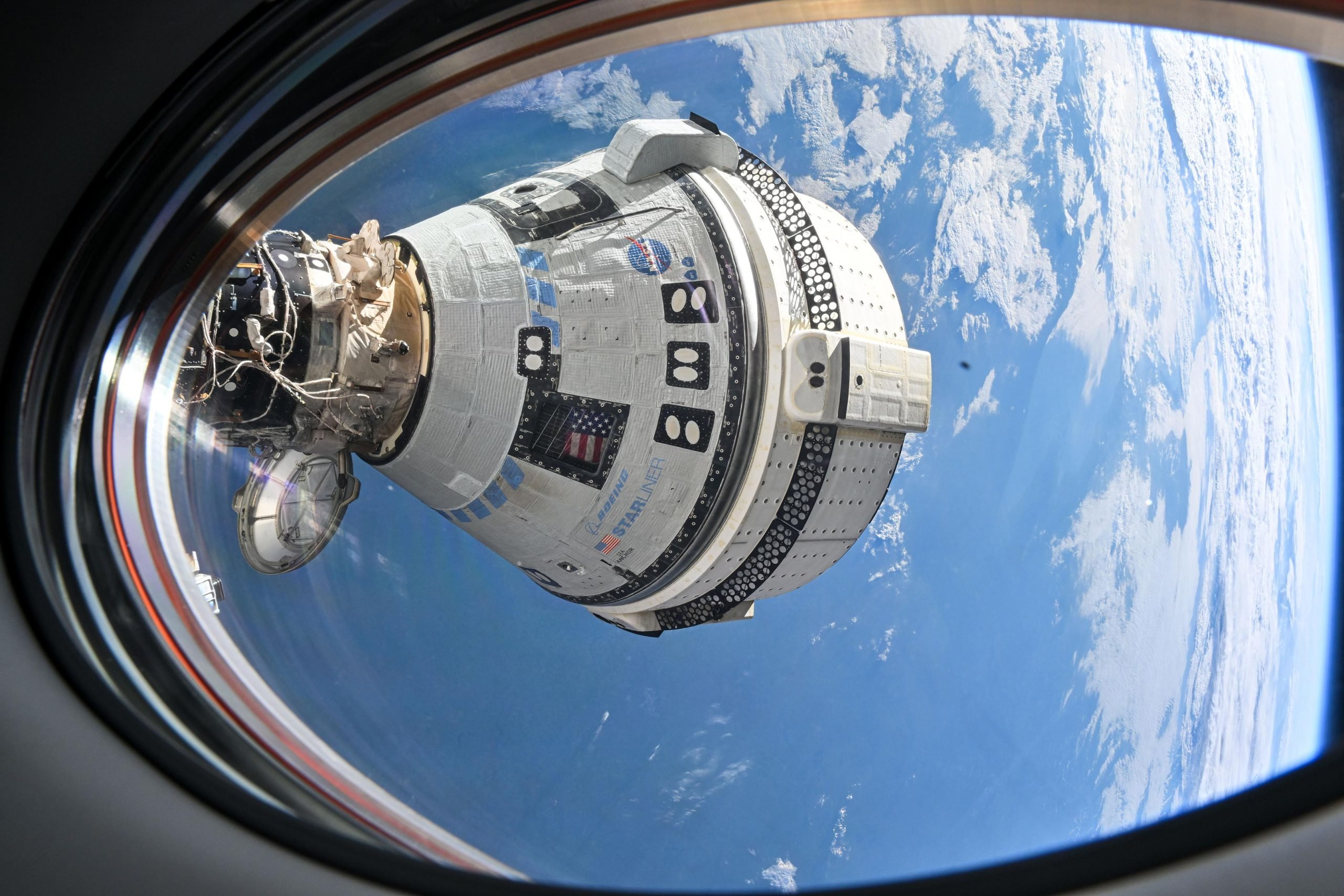
    Boeing Starliner Spacecraft Docked to the Harmony Module From a Window on the SpaceX Dragon Endeavour
    Boeing’s Starliner spacecraft that launched NASA’s Crew Flight Test astronauts Butch Wilmore and Suni Williams to the International Space Station is pictured docked to the Harmony module’s forward port. This view is from a window on the SpaceX Dragon Endeavour spacecraft docked to the port adjacent to the Starliner. Credit: NASA

    NASA and Boeing are set for the Starliner spacecraft’s undocking from the International Space Station, scheduled for early September.

    The uncrewed mission will feature a six-hour journey back to Earth, culminating in a parachute-assisted landing at White Sands Space Harbor. Upon landing, recovery teams will prepare the spacecraft for its return to Boeing’s factory.

    Starliner’s Upcoming Undocking and Landing

    NASA and Boeing concluded a detailed Delta-Flight Test Readiness Review on Thursday, polling “go” to proceed with undocking of the uncrewed Starliner spacecraft no earlier than 6:04 p.m. EDT on Friday, September 6, from the International Space Station, pending weather and operational readiness.

    After undocking, Starliner will take about six hours to reach the landing zone at White Sands Space Harbor in New Mexico. The spacecraft will touch down at about 12:03 a.m. on Saturday, September 7, descending under parachutes and with inflated airbags to cushion the impact. Recovery teams at the landing zone will prepare the spacecraft for a return to Boeing’s Starliner factory at NASA’s Kennedy Space Center in Florida.

    Boeing Starliner Spacecraft Docked to International Space Station
    The Starliner spacecraft on NASA’s Boeing Crew Flight Test is pictured docked to the Harmony module’s forward port as the International Space Station orbited 262 miles above Egypt’s Mediterranean coast. Credit: NASA

    Mission Updates and Autonomous Operations

    Following NASA’s decision on August 24 to return the Starliner spacecraft uncrewed, mission managers and flight controllers updated elements of the Starliner systems with specific information for this mission that will allow the spacecraft to execute the return. The uncrewed Starliner spacecraft will perform a fully autonomous return with flight controllers at Starliner Mission Control in Houston and at Boeing Mission Control Center in Florida. Teams on the ground are able to remotely command the spacecraft if needed through the necessary maneuvers for a safe undocking, re-entry, and parachute-assisted landing in the southwest United States. NASA will host a media briefing to discuss more details about return operations, and the agency will share more on the briefing schedule and return coverage.

    Starliner has previously completed a successful uncrewed entry and landing during two orbital flight tests. During one of the flight tests, the spacecraft also proved it could autonomously undock with the station safely.
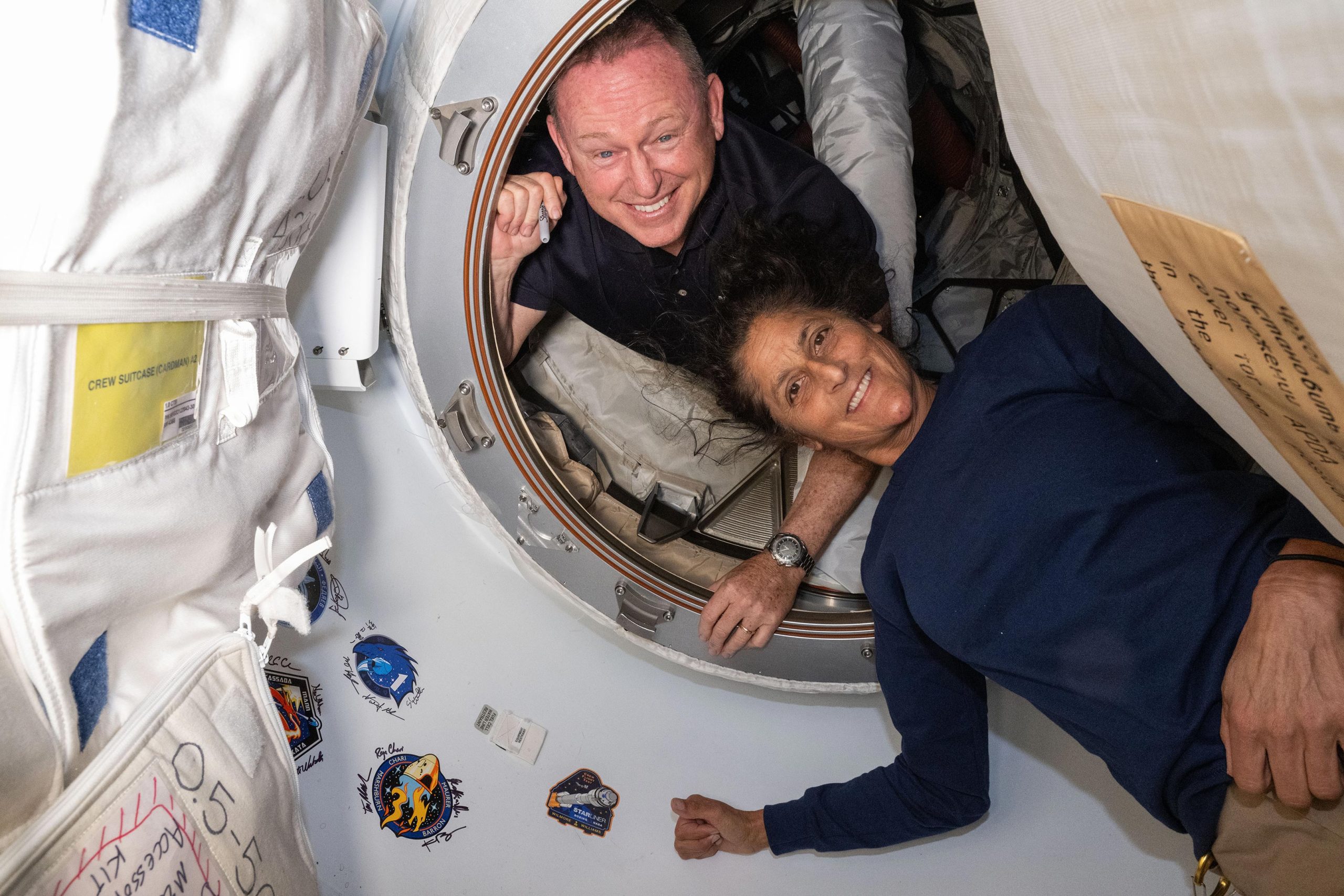
    NASA’s Boeing Crew Flight Test Astronauts Butch Wilmore and Suni Williams
    NASA’s Boeing Crew Flight Test astronauts (from top) Butch Wilmore and Suni Williams pose for a portrait inside the vestibule between the forward port on the International Space Station’s Harmony module and Boeing’s Starliner spacecraft. Credit: NASA

    Continued Human Presence and Future Missions

    As part of NASA’s Boeing Crew Flight Test, agency astronauts Butch Wilmore and Suni Williams flew aboard Starliner to the station in June. Wilmore and Williams will remain aboard the orbiting complex as part of the Expedition 71/72 crew through February 2025, when they’ll return with the agency’s Crew-9 mission.

    Never miss a breakthrough: Join the SciTechDaily newsletter.
    Follow us on Google and Google News.

    Astronaut Boeing Boeing Starliner International Space Station NASA Popular
    Share. Facebook Twitter Pinterest LinkedIn Email Reddit

    Related Articles

    Fiery Success: NASA and Boeing’s Starliner Hot Fire Thruster Test Yields Impressive Results

    NASA, Boeing Complete Starliner Engine Testing – What’s Next for the Troubled Spacecraft?

    Starliner’s Final Countdown: New Thruster Testing Before Earth Return

    Liftoff! NASA Astronauts Pilot First Boeing Starliner Crewed Mission to Space Station

    Starliner’s Stellar Liftoff: NASA Astronauts Embark on Historic Journey to ISS

    Liftoff Looms: Boeing Starliner Ready for Launch

    Ready for Liftoff: NASA, Boeing, ULA “Go” for Starliner Crew Flight Test

    Historic Boeing Starliner Launch Delayed Again Due to Helium Leak

    Space Station Crew Opens Boeing Starliner Hatch, Greet “Rosie the Rocketeer”

    4 Comments

    1. Mindbreaker on August 30, 2024 2:07 pm

      I hope it really has a problem, or they may not take warnings as seriously next time. If everything works flawlessly, people will be saying they were “too cautious.” Best, if there is a failure, but it lands fine, so they can identify the problems and resolve them in a timely manner.
      If there is an epic fail, at the very least the spouses of the next bunch to use it, won’t be too eager for theirs to go up and down in the thing.

      Reply
    2. Sekar on August 30, 2024 2:54 pm

      International Space Station was a Co-operative effort of many Nations. I wonder what happened to the
      Co-operation?

      When EGO rules the world looses.

      Views expressed are personal and not binding on anyone.

      Best of luck Sunita & Butch !!!

      Reply
    3. Sekar on August 30, 2024 3:04 pm

      Please Build a better Starliner Boeing!!!

      Risk Management means anticipating what ALL could go wrong and having multiple back-up plans , as the environment in Space is different from what you have been building for donkeys years ! The Cost may go up a bit but the investment in Astronauts is invaluable. Over time the Costs will come down OVER TIME AS SPACE TOURISM BECOMES ROUTINE and as safe as flying in a Boeing Airliner in an airless environment,

      Reply
    4. Boba on August 30, 2024 6:11 pm

      Good call. I like to see it validated by Starliner actually crashing and burning on the re-entry. Now that the astronauts are out of harm’s way, the only thing that will be suffering is the ego of Boeing’s board members.

      Reply
    Leave A Reply Cancel Reply

    • Facebook
    • Twitter
    • Pinterest
    • YouTube

    Don't Miss a Discovery

    Subscribe for the Latest in Science & Tech!

    Trending News

    Monster Storms on Jupiter Unleash Lightning Beyond Anything on Earth

    Scientists Create “Liquid Gears” That Spin Without Touching

    The Simple Habit That Could Help Prevent Cancer

    Millions Take These IBS Drugs, But a New Study Finds Serious Risks

    Scientists Unlock Hidden Secrets of 2,300-Year-Old Mummies Using Cutting-Edge CT Scanner

    Bread Might Be Making You Gain Weight Even Without Eating More Calories

    Scientists Discover Massive Magma Reservoir Beneath Tuscany

    Europe’s Most Active Volcano Just Got Stranger – Here’s Why Scientists Are Rethinking It

    Follow SciTechDaily
    • Facebook
    • Twitter
    • YouTube
    • Pinterest
    • Newsletter
    • RSS
    SciTech News
    • Biology News
    • Chemistry News
    • Earth News
    • Health News
    • Physics News
    • Science News
    • Space News
    • Technology News
    Recent Posts
    • Scientists Were Wrong About This Strange “Rule-Breaking” Particle
    • Webb Space Telescope Uncovers Unexpected Ice Clouds on a Jupiter-Like World
    • 289-Million-Year-Old Reptile Mummy Reveals Origin of Human Breathing System
    • New Brain Discovery Challenges Long-Held Theory of Teenage Brain Development
    • Sharks Are Overheating as Warming Oceans Push Them to the Edge
    Copyright © 1998 - 2026 SciTechDaily. All Rights Reserved.
    • Science News
    • About
    • Contact
    • Editorial Board
    • Privacy Policy
    • Terms of Use

    Type above and press Enter to search. Press Esc to cancel.