
Close Menu
    Facebook X (Twitter) Instagram
    SciTechDaily
    • Biology
    • Chemistry
    • Earth
    • Health
    • Physics
    • Science
    • Space
    • Technology
    Facebook X (Twitter) Pinterest YouTube RSS
    SciTechDaily
    Home»Space»NASA, Boeing Complete Starliner Engine Testing – What’s Next for the Troubled Spacecraft?
    Space

    NASA, Boeing Complete Starliner Engine Testing – What’s Next for the Troubled Spacecraft?

    By NASAJuly 19, 2024No Comments4 Mins Read
    Facebook Twitter Pinterest Telegram LinkedIn WhatsApp Email Reddit
    Share
    Facebook Twitter LinkedIn Pinterest Telegram Email Reddit
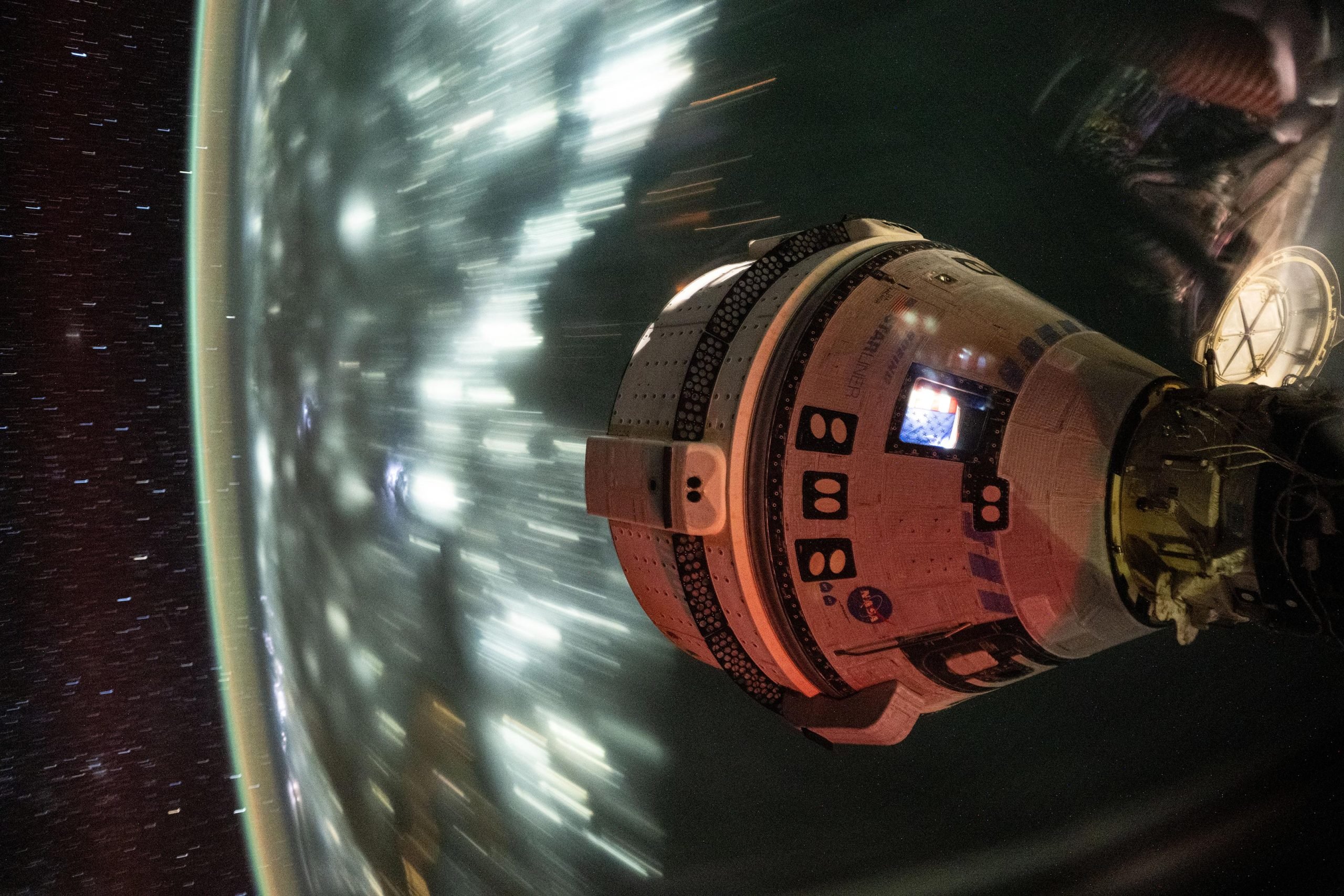
    Boeing Starliner Spacecraft Docked to the International Space Station
    Boeing’s Starliner spacecraft that launched NASA’s Crew Flight Test astronauts Butch Wilmore and Suni Williams to the International Space Station is pictured docked to the Harmony module’s forward port. This long-duration photograph was taken at night from the orbital complex as it soared 256 miles above the Arabian Sea off the coast of Mumbai, India. Credit: NASA

    Engineers at NASA and Boeing are scrutinizing recent engine tests to ensure the safe return of the Boeing Crew Flight Test. Simultaneously, astronauts on the ISS engage in health and scientific experiments, contributing to our understanding of space’s effects on human physiology and material sciences.

    NASA and Boeing engineers are evaluating results from last week’s engine tests at NASA’s White Sands Test Facility in New Mexico as the team works through plans to return the agency’s Boeing Crew Flight Test from the International Space Station in the coming weeks.

    Teams completed ground hot fire testing at White Sands and are working to evaluate the test data and inspect the test engine. The ongoing ground analysis is expected to continue throughout the week. Working with a reaction control system thruster built for a future Starliner spacecraft, ground teams fired the engine through similar inflight conditions the spacecraft experienced on the way to the space station. The ground tests also included stress-case firings, and replicated conditions Starliner’s thrusters will experience from undocking to deorbit burn, where the thrusters will fire to slow Starliner’s speed to bring it out of orbit for landing in the southwestern United States.

    For a detailed overview of the test plans, listen to a replay of a recent media teleconference with NASA and Boeing leadership:

    “I am extremely proud of the NASA, Boeing team for their hard work in executing a very complex test series,” said Steve Stich, manager, NASA’s Commercial Crew Program. “We collected an incredible amount of data on the thruster that could help us better understand what is going on in flight. Next, our team has moved into engine tear downs and inspections which will provide additional insight as we analyze the results and evaluate next steps.”

    Preparing for Starliner’s Earth Return

    Integrated ground teams also are preparing for an in-depth Agency Flight Test Readiness Review, which will evaluate data related to the spacecraft’s propulsion system performance before its return to Earth. The date of the agency review has not yet been solidified.

    NASA and Boeing leadership plan to discuss the testing and analysis work in detail during a media briefing next week. More information on the briefing will be made available soon.
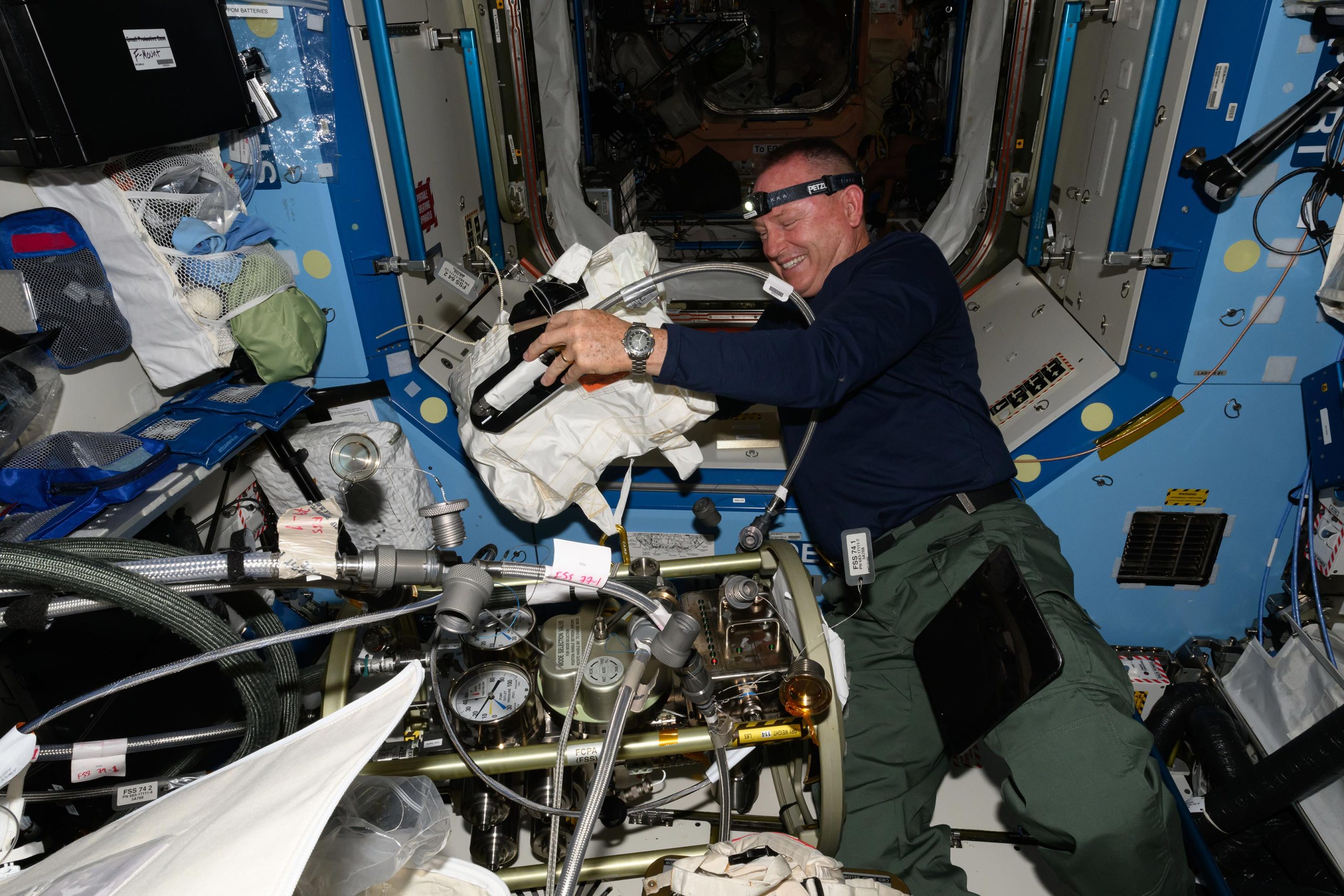
    Boeing Crew Flight Test Commander Butch Wilmore
    NASA astronaut and Boeing Crew Flight Test Commander Butch Wilmore works on the Fluid Systems Servicer which drains, purges, and circulates fluids on systems aboard the International Space Station. Credit: NASA

    Astronaut Activities and Research on ISS

    While testing and analysis are happening on Earth, NASA astronauts Butch Wilmore, Starliner mission commander, and Suni Williams, mission pilot, are working alongside the Expedition 71 crew. The two participated in vein scans using the Ultrasound 2 device on Monday. Doctors on the ground monitored in real-time as the pair took turns imaging each other’s neck, shoulder, and leg veins. Afterward, Wilmore scanned the veins of fellow NASA astronaut Matthew Dominick, helping researchers understand how microgravity affects the human body.

    Wilmore and Dominick also spent a portion of the day taking inventory of the food stored aboard the space station. Williams worked on a pair of studies, first exploring the use of microgravity to manufacture higher-quality optical fibers than on Earth. Williams also investigated using fluid physics, such as surface tension, to overcome the lack of gravity when watering and nourishing plants grown in space.

    Never miss a breakthrough: Join the SciTechDaily newsletter.
    Follow us on Google and Google News.

    Astronaut Boeing Boeing Starliner International Space Station NASA Popular
    Share. Facebook Twitter Pinterest LinkedIn Email Reddit

    Related Articles

    Coming Back Empty: NASA Schedules Boeing Starliner for Earth Return on September 6

    Fiery Success: NASA and Boeing’s Starliner Hot Fire Thruster Test Yields Impressive Results

    Starliner’s Final Countdown: New Thruster Testing Before Earth Return

    Liftoff! NASA Astronauts Pilot First Boeing Starliner Crewed Mission to Space Station

    Starliner’s Stellar Liftoff: NASA Astronauts Embark on Historic Journey to ISS

    Liftoff Looms: Boeing Starliner Ready for Launch

    Ready for Liftoff: NASA, Boeing, ULA “Go” for Starliner Crew Flight Test

    Historic Boeing Starliner Launch Delayed Again Due to Helium Leak

    Space Station Crew Opens Boeing Starliner Hatch, Greet “Rosie the Rocketeer”

    Leave A Reply Cancel Reply

    • Facebook
    • Twitter
    • Pinterest
    • YouTube

    Don't Miss a Discovery

    Subscribe for the Latest in Science & Tech!

    Trending News

    Breakthrough Bowel Cancer Trial Leaves Patients Cancer-Free for Nearly 3 Years

    Natural Compound Shows Powerful Potential Against Rheumatoid Arthritis

    100,000-Year-Old Neanderthal Fossils in Poland Reveal Unexpected Genetic Connections

    Simple “Gut Reset” May Prevent Weight Gain After Ozempic or Wegovy

    2.8 Days to Disaster: Scientists Warn Low Earth Orbit Could Suddenly Collapse

    Common Food Compound Shows Surprising Power Against Superbugs

    5 Simple Ways To Remember More and Forget Less

    The Atomic Gap That Could Cost the Semiconductor Industry Billions

    Follow SciTechDaily
    • Facebook
    • Twitter
    • YouTube
    • Pinterest
    • Newsletter
    • RSS
    SciTech News
    • Biology News
    • Chemistry News
    • Earth News
    • Health News
    • Physics News
    • Science News
    • Space News
    • Technology News
    Recent Posts
    • After 37 Years, the World’s Longest-Running Soil Warming Experiment Uncovers a Startling Climate Secret
    • NASA Satellite Captures First-Ever High-Res View of Massive Pacific Tsunami
    • ADHD Isn’t Just a Deficit: Study Reveals Powerful Hidden Strengths
    • Scientists Uncover “Astonishing” Hidden Property of Light
    • Scientists Discover Stem Cells That Could Regrow Teeth and Bone
    Copyright © 1998 - 2026 SciTechDaily. All Rights Reserved.
    • Science News
    • About
    • Contact
    • Editorial Board
    • Privacy Policy
    • Terms of Use

    Type above and press Enter to search. Press Esc to cancel.