
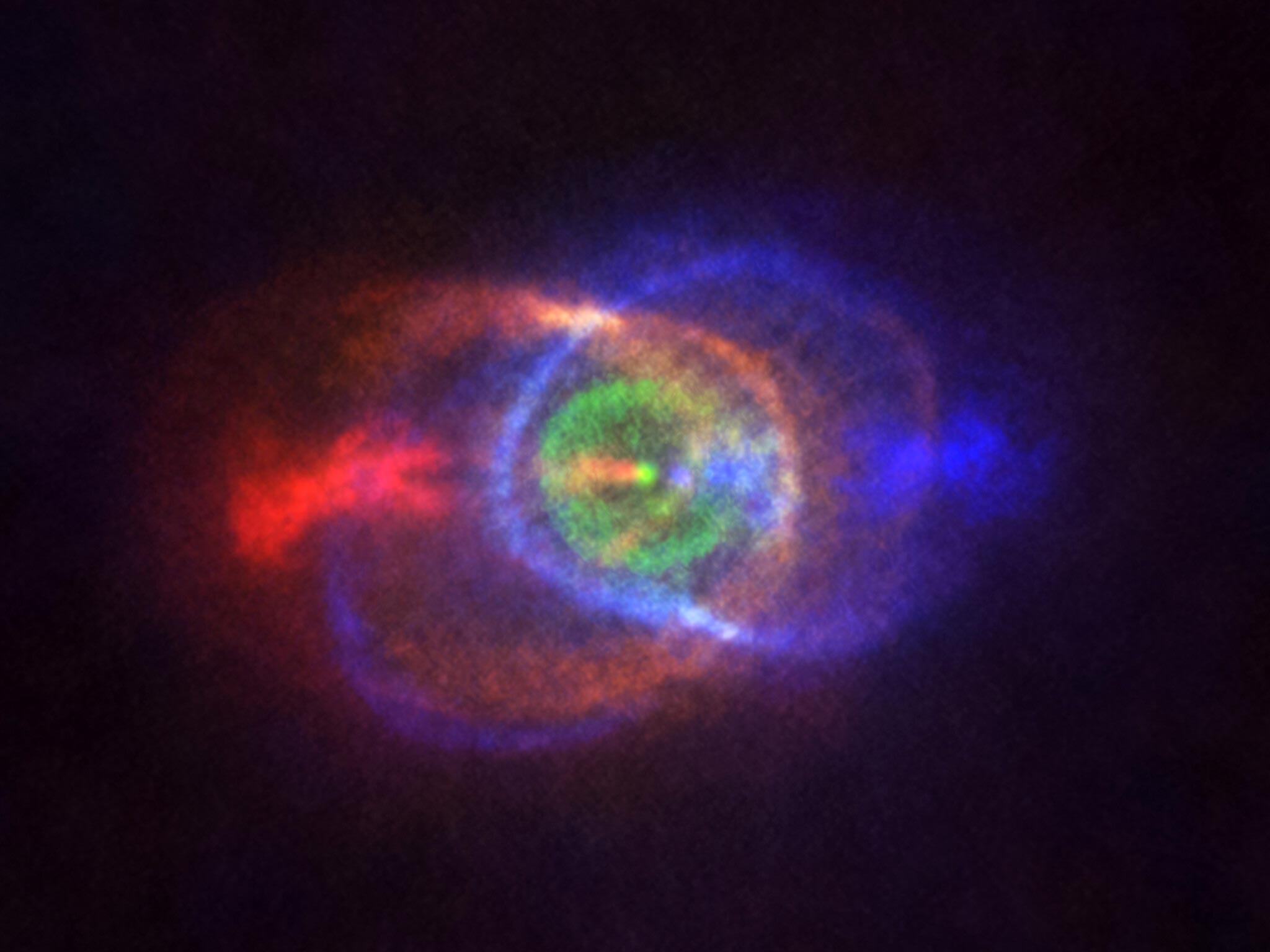
Astronomers have made a groundbreaking discovery of binary star systems, consisting of a white dwarf and a main sequence star, within young star clusters.
This discovery opens up new avenues for understanding stellar evolution and could provide insights into the origins of phenomena such as supernovas and gravitational waves.
Breakthrough Discovery in Star Clusters
Researchers at the University of Toronto (U of T) have made a groundbreaking discovery: the first pairs of white dwarfs—”dead” star remnants—and main sequence stars—still “living” stars—within young star clusters. Published on November 15 in The Astrophysical Journal, this finding sheds light on a critical phase of stellar evolution and tackles one of astrophysics’ enduring mysteries.
This discovery helps bridge the gap between the earliest and final stages of binary star systems—two stars bound by a shared gravitational orbit. Understanding these systems enhances our knowledge of how stars form, galaxies evolve, and the elements that make up the universe are created. Additionally, these binaries, which often include one or more compact remnants, may hold the key to explaining cosmic phenomena like supernova explosions and gravitational waves.
Most stars exist in binary systems. In fact, nearly half of all stars similar to our sun have at least one companion star. These paired stars usually differ in size, with one star often being more massive than the other. Though one might be tempted to assume that these stars evolve at the same rate, more massive stars tend to live shorter lives and go through the stages of stellar evolution much faster than their lower mass companions.
Unraveling the Common Envelope Mystery
In the stage where a star approaches the end of its life, it will expand to hundreds or thousands of times its original size during what we call the red giant or asymptotic giant branch phases. In close binary systems, this expansion is so dramatic that the dying star’s outer layers can sometimes completely engulf its companion. Astronomers refer to this as the common envelope phase, as both stars become wrapped in the same material.
The common envelope phase remains one of the biggest mysteries in astrophysics. Scientists have struggled to understand how stars spiraling together during this critical period affects the stars’ subsequent evolution. This new research may solve this enigma.

Remnants left behind after stars die are compact objects called white dwarfs. Finding these post-common envelope systems that contain both a “dead” stellar remnant and “living” star – otherwise known as white dwarf-main sequence binaries – provides a unique way to investigate this extreme phase of stellar evolution.
“Binary stars play a huge role in our universe,” says lead author Steffani Grondin, a graduate student in the David A. Dunlap Department for Astronomy & Astrophysics at U of T. “This observational sample marks a key first step in allowing us to trace the full life cycles of binaries and will hopefully allow us to constrain the most mysterious phase of stellar evolution.”
Advancements in Observing Binary Systems
The researchers used machine learning to analyze data from three major sources: the European Space Agency’s Gaia mission – a space telescope that has studied over a billion stars in our galaxy – along with observations from the 2MASS and Pan-STARRS1 surveys. This combined data set enabled the team to search for new binaries in clusters with characteristics resembling those of known white dwarf-main sequence pairs.
Even though these types of binary systems should be very common, they have been tricky to find, with only two candidates confirmed within clusters prior to this research. This research has the potential to increase that number to 52 binaries across 38 star clusters. Since the stars in these clusters are thought to have all formed at the same time, finding these binaries in open star clusters allows astronomers to constrain the age of the systems and to trace their full evolution from before the common envelope conditions to the observed binaries in their post-common envelope phase.
Implications for Astrophysics and Beyond
“The use of machine learning helped us to identify clear signatures for these unique systems that we weren’t able to easily identify with just a few datapoints alone,” says co-author Joshua Speagle, a professor in the David A. Dunlap Department for Astronomy & Astrophysics and Department of Statistical Sciences at U of T. “It also allowed us to automate our search across hundreds of clusters, a task that would have been impossible if we were trying to identify these systems manually.”
“It really points out how much in our universe is hiding in plain sight – still waiting to be found,” says co-author Maria Drout, also a professor in the David A. Dunlap Department for Astronomy & Astrophysics at U of T. “While there are many examples of this type of binary system, very few have the age constraints necessary to fully map their evolutionary history. While there is plenty of work left to confirm and fully characterize these systems, these results will have implications across multiple areas of astrophysics.”
Binaries containing compact objects are also the progenitors for an extreme stellar explosion called a Type Ia supernova and the sort of merger that causes gravitational waves, which are ripples in spacetime that can be detected by instruments such as the Laser Interferometer Gravitational-Wave Observatory (LIGO). As the team uses data from the Gemini, Keck, and Magellan Telescopes to confirm and measure the properties of these binaries, this catalog will ultimately shed light on the many elusive transient phenomena in our universe.
Reference: “The First Catalog of Candidate White Dwarf–Main-sequence Binaries in Open Star Clusters: A New Window into Common Envelope Evolution” by Steffani M. Grondin, Maria R. Drout, Jason Nordhaus, Philip S. Muirhead, Joshua S. Speagle and Ryan Chornock, 15 November 2024, The Astrophysical Journal.
DOI: 10.3847/1538-4357/ad7500
Contributing institutions include the David A. Dunlap Department of Astronomy & Astrophysics, the Dunlap Institute for Astronomy & Astrophysics, the Department for Statistical Sciences, and the Data Sciences Institute at the University of Toronto, as well as the National Technical Institute for the Deaf and Center for Computational Relativity and Gravitation at the Rochester Institute of Technology, the Department of Astronomy & The Institute for Astrophysical Research at Boston University, and the Department of Astronomy at the University of California, Berkeley.
Never miss a breakthrough: Join the SciTechDaily newsletter.
Follow us on Google and Google News.
2 Comments
So, in the paper above I find this misleading “Most stars exist in binary systems. In fact, nearly half of all stars similar to our sun have at least one companion star”. this is machine learning sim. data: Applying our trained CNN to the selected main sequence sample of 971,805 stars from LAMOST yielded a catalog of 468,634 binary star from arXiv:2411.03994v1 [astro-ph.SR] 06 Nov 2024
Half a Million Binary Stars identified from the low resolution spectra of LAMOST
by stating MOST and nearly half is at best MISLEADING…
I appreciate getting the reference, but on the topic the university press release is not a “paper” and their press department are journalists. The scientists provide the raw material and may check or influence the final version (but not always).
From a quick browsing, the paper itself does not make any claim on binary star frequencies. But the reference you provide starts with “Binary and multiple star systems are ubiquitous, comprising roughly half of all stars.” That is consistent with “most stars”. If you want to be more precise than that you have to figure in what stars LAMOST observes (eclipsing binaries vs main sequence stars) and misses (observation bias of e.g. non-eclipsing binaries, small stars, too dense clusters, et cetera).