

July’s skies offer a feast: Mars glows at dusk while Mercury peeks out briefly, Venus blazes before dawn, and Jupiter joins it for a photogenic pairing. Saturn lingers past midnight, and the Moon stages close encounters with Mars and the morning planets. Sixty years after Mariner 4’s trailblazing flyby, stargazers can celebrate by tracing Aquila the Eagle soaring overhead, using bright Altair to sketch its wings against the dark.
What are some skywatching highlights in July 2025?
Look for Mars in the evening, Venus and Jupiter in the morning, and find the eagle constellation, Aquila, soaring overhead.
Skywatching Highlights
All Month – Planet Visibility:
- Venus: Venus dazzles in the eastern sky before sunrise, shining brightly for a couple of hours each morning. It’s joined by the Pleiades star cluster and the bright stars Aldebaran and Capella, creating a stunning early-morning scene.
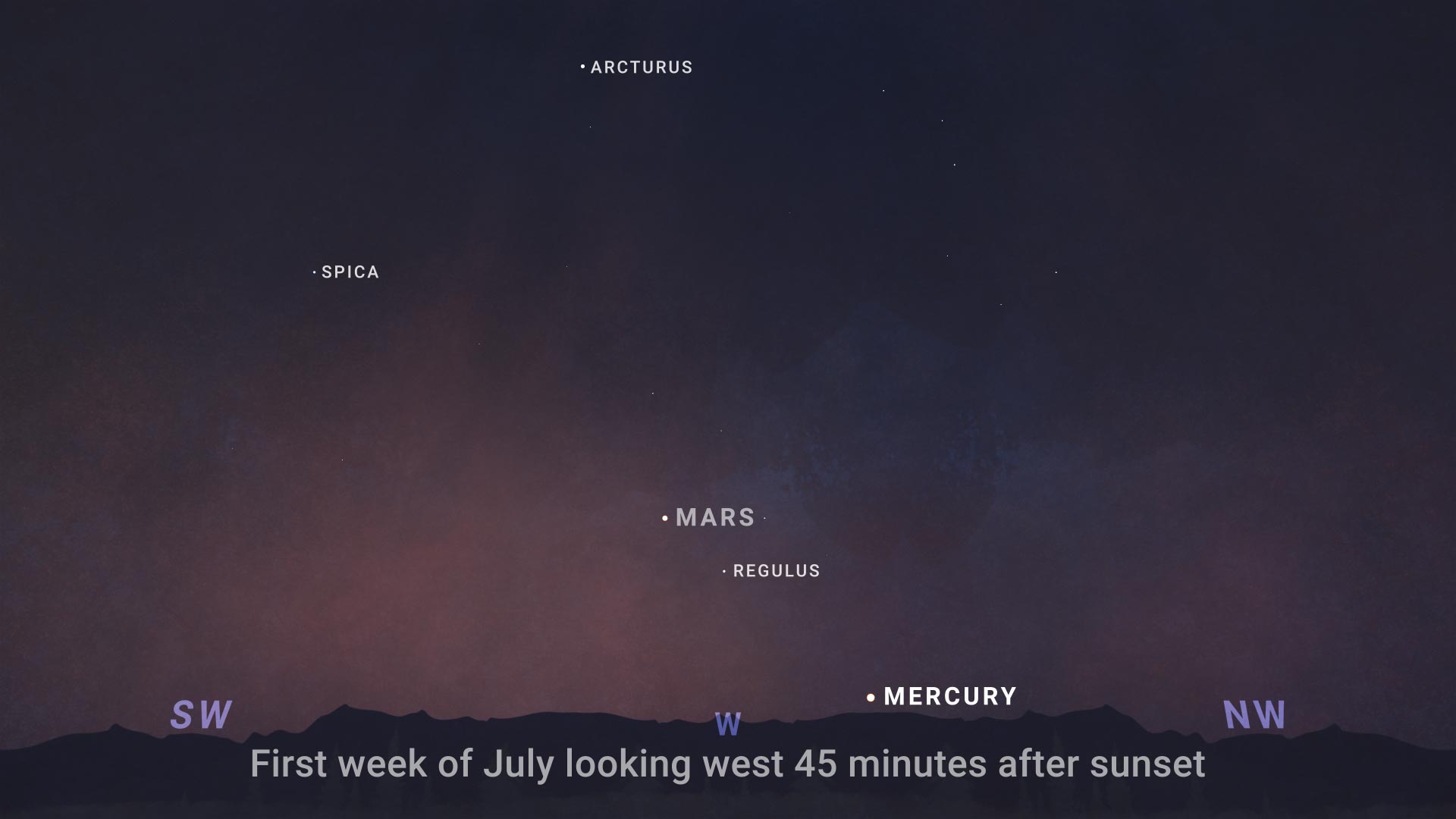
- Mars: Look to the western sky after sunset to spot Mars glowing low above the horizon. It lingers for about two hours after dark, gradually fading and sinking lower each night.
- Jupiter: Jupiter begins making an appearance in the eastern sky shortly before sunrise starting mid-month. Each morning, it climbs a little higher and edges closer to Venus—an eye-catching pair to watch as August approaches.
- Mercury: For a brief window during the first week of July, Mercury pops into view low in the western sky. Try looking 30 to 45 minutes after sunset, but act fast—it sets quickly and is only visible for a short time.
- Saturn: Saturn rises around midnight and steadily climbs high into the southern sky by dawn. Its golden glow is a beautiful sight in the quiet hours before sunrise.
Daily Highlights:
July 1 – 7 – Mercury is relatively bright and easy to spot without a telescope, beginning about 30-45 minutes after sunset for the first week or so of July. You will need an unobstructed view toward the horizon, and note that it sets within an hour after the Sun.
July 21 & 22 – Moon, Venus, & Jupiter – Look toward the east this morning to find a lovely scene, with the crescent Moon and Venus, plus several bright stars. And if you have a clear view toward the horizon, Jupiter is there too, low in the sky.
July 28 – Moon & Mars – The crescent Moon appears right next to Mars this evening after sunset.
All month – Constellation: Aquila – The Eagle constellation, Aquila, appears in the eastern part of the sky during the first half of the night. Its brightest star, Altair, is the southernmost star in the Summer Triangle, which is an easy-to-locate star pattern in Northern Hemisphere summer skies.
Transcript
What’s Up for July? Mars shines in the evening sky, sixty years after its first close-up, Venus brightens your mornings, and the eagle soars overhead.
First up, Mercury is visible for a brief time following sunset for the first week of July. Look for it very low in the west 30 to 45 minutes after sundown. It sets within the hour after that, so be on the ball if you want to catch it!
Mars is visible for the first hour or two after it gets dark. You’ll find it sinking lower in the sky each day and looking a bit dimmer over the course of the month, as our two planets’ orbits carry them farther apart. The crescent Moon appears right next to Mars on the 28th.
July is the 60th anniversary of the first successful flyby of Mars, by NASA’s Mariner 4 spacecraft in 1965. Mariner 4 sent back the first photos of another planet from deep space, along with the discovery that the Red Planet has only a very thin, cold atmosphere.
Next, Saturn is rising late in the evening, and by dawn it’s high overhead to the south.
Looking to the morning sky, Venus shines brightly all month. You’ll find it in the east during the couple of hours before sunrise, with the Pleiades and bright stars Aldebaran and Capella. And as the month goes on, Jupiter makes its morning sky debut, rising in the hour before sunrise and appearing a little higher each day.
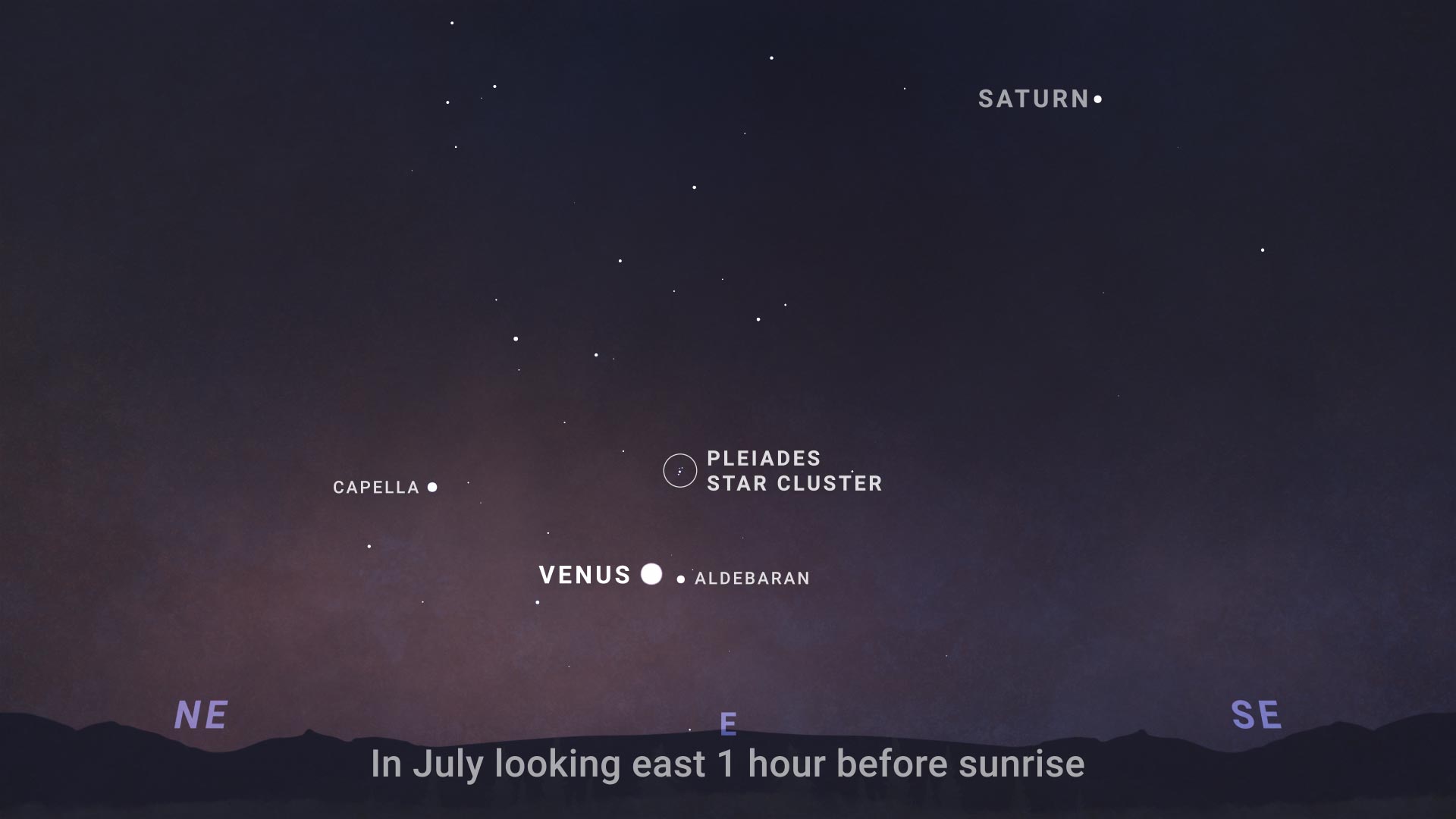
By the end of the month, early risers will have the two brightest planets there greeting them each morning. They’re headed for a super-close meetup in mid-August, and the pair will be a fixture of the a.m. sky through late this year. Look for them together with the crescent moon on the 21st and 22nd.
Aquila, The Eagle
From July and into August, is a great time to observe the constellation Aquila, the eagle.
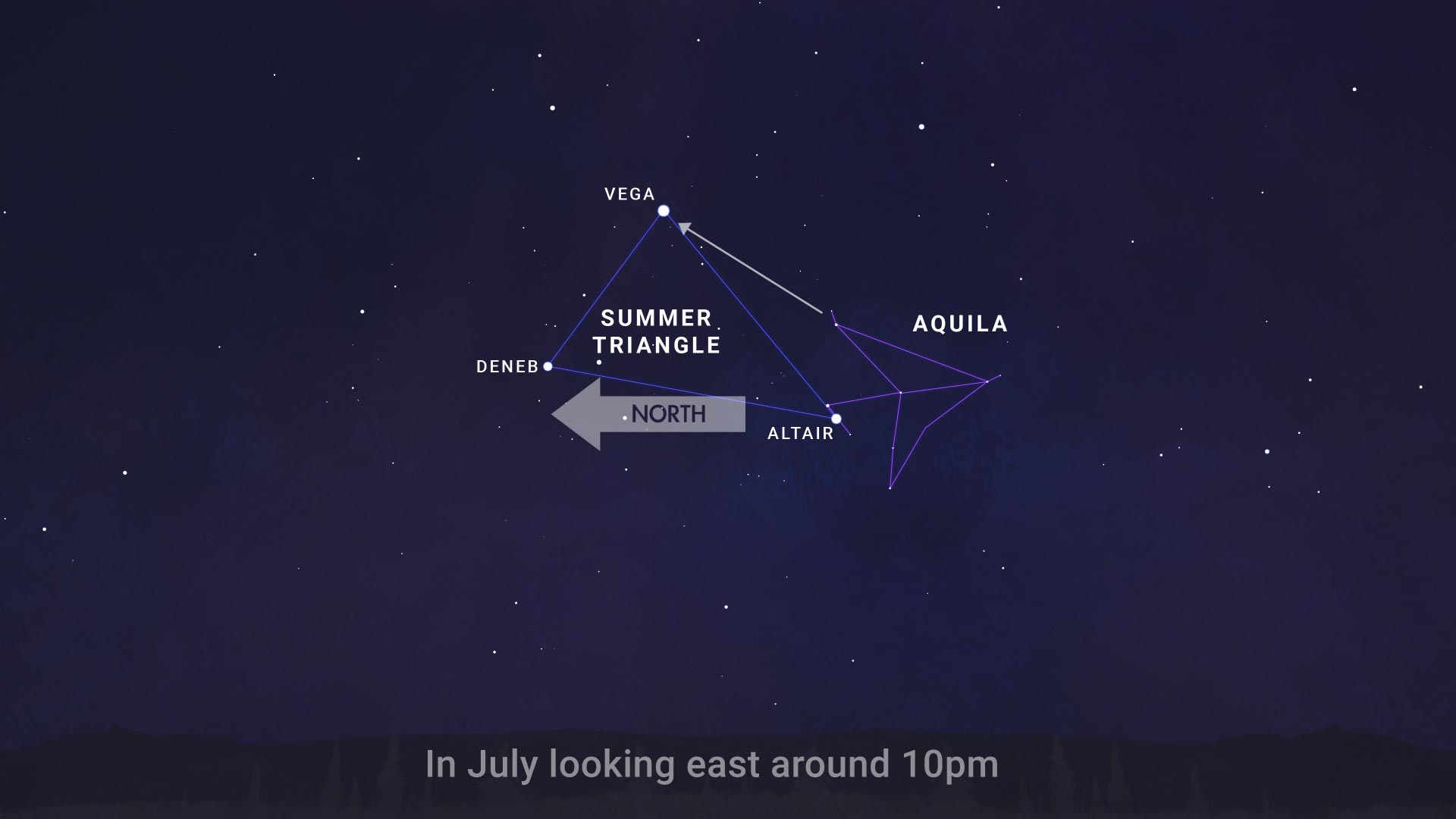
This time of year, it soars high into the sky in the first half of the night. Aquila represents the mythical eagle that was a powerful servant and messenger of the Greek god Zeus. The eagle carried his lightning bolts and was a symbol of his power as king of the gods.
To find Aquila in the sky, start by locating its brightest star, Altair. It’s one the three bright stars in the Summer Triangle, which is super easy to pick out during summer months in the Northern Hemisphere. Altair is the second brightest of the three, and sits at the southernmost corner of the triangle.
The other stars in Aquila aren’t as bright as Altair, which can make observing the constellation challenging if you live in an area with a lot of light pollution. It’s easier, though, if you know how the eagle is oriented on the sky. Imagine it’s flying toward the north with its wings spread wide, its right wing pointed toward Vega. If you can find Altair, and Aquila’s next brightest star, you can usually trace out the rest of the spread-eagle shape from there. The second half of July is the best time of the month to observe Aquila, as the Moon doesn’t rise until later then, making it easier to pick out the constellation’s fainter stars.
Observing the constellation Aquila makes for a worthy challenge in the July night sky. And once you’re familiar with its shape, it’s hard not to see the mythical eagle soaring overhead among the summertime stars.
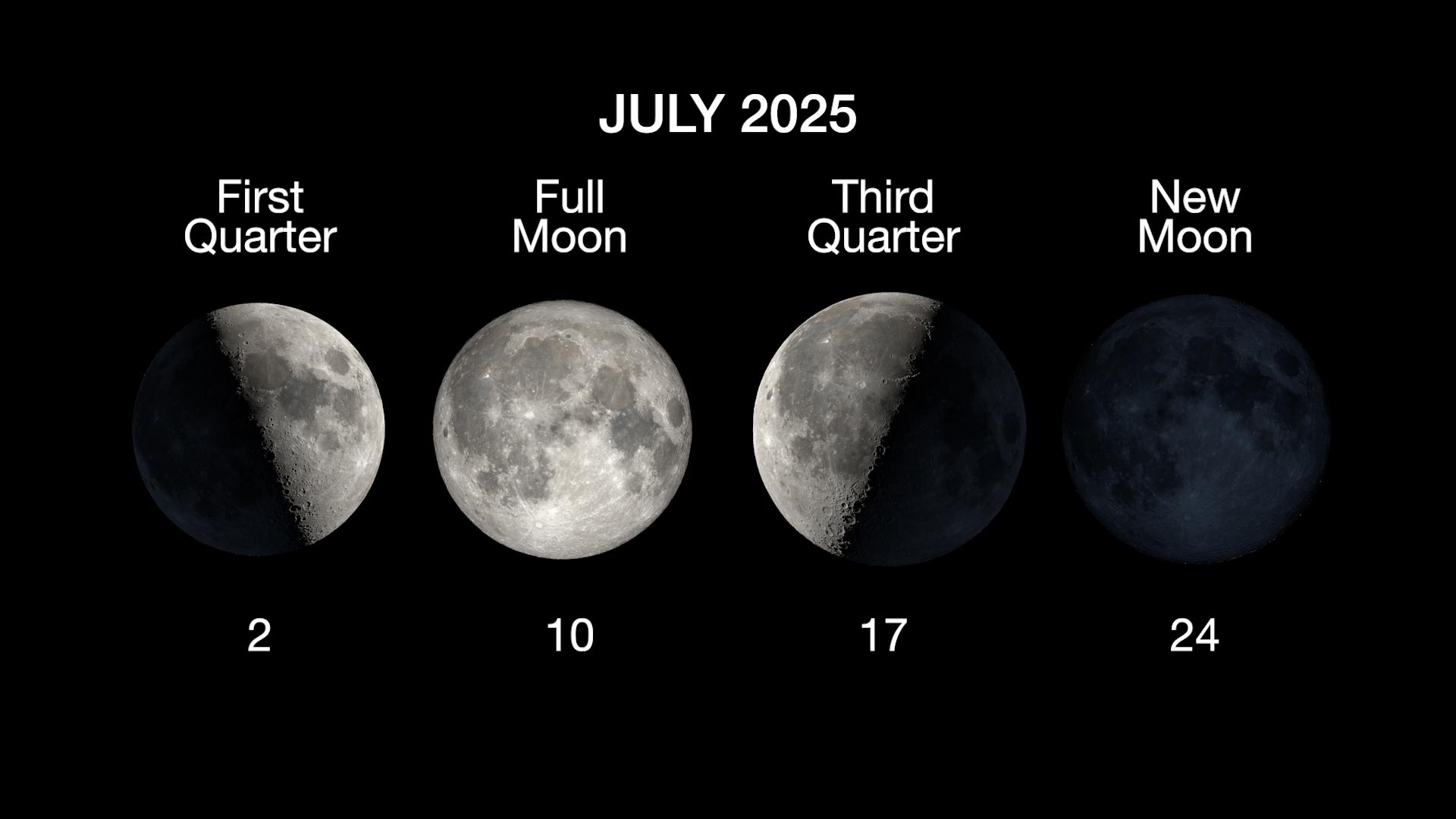
Here are the phases of the Moon for July.
Never miss a breakthrough: Join the SciTechDaily newsletter.
Follow us on Google and Google News.