
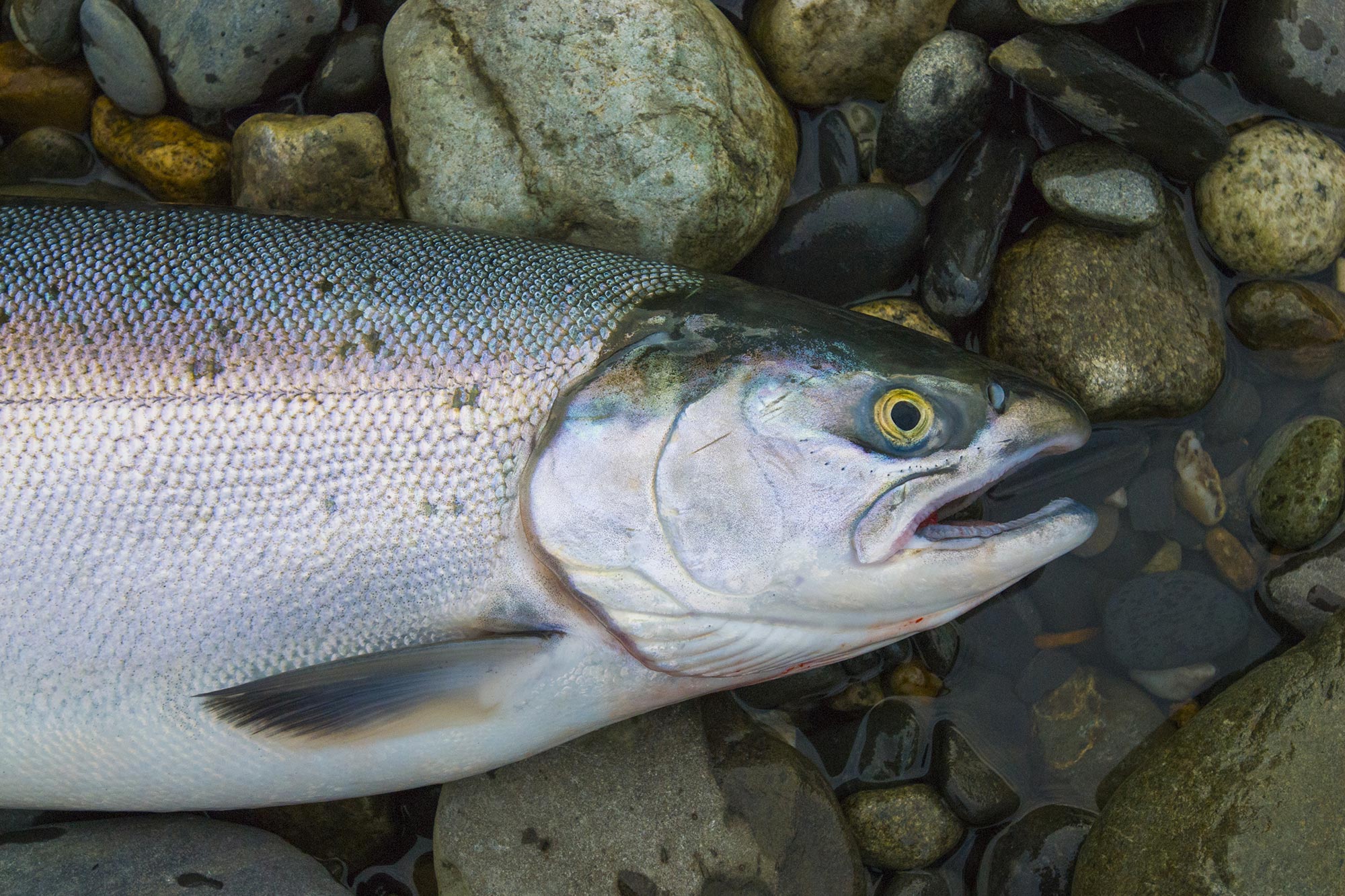
Scientists have discovered the world’s oldest salmon in Arctic Alaska’s Cretaceous fossil.
During the Cretaceous Period, dinosaurs ruled the land, but the waterways of the Arctic were home to creatures that would seem surprisingly familiar today.
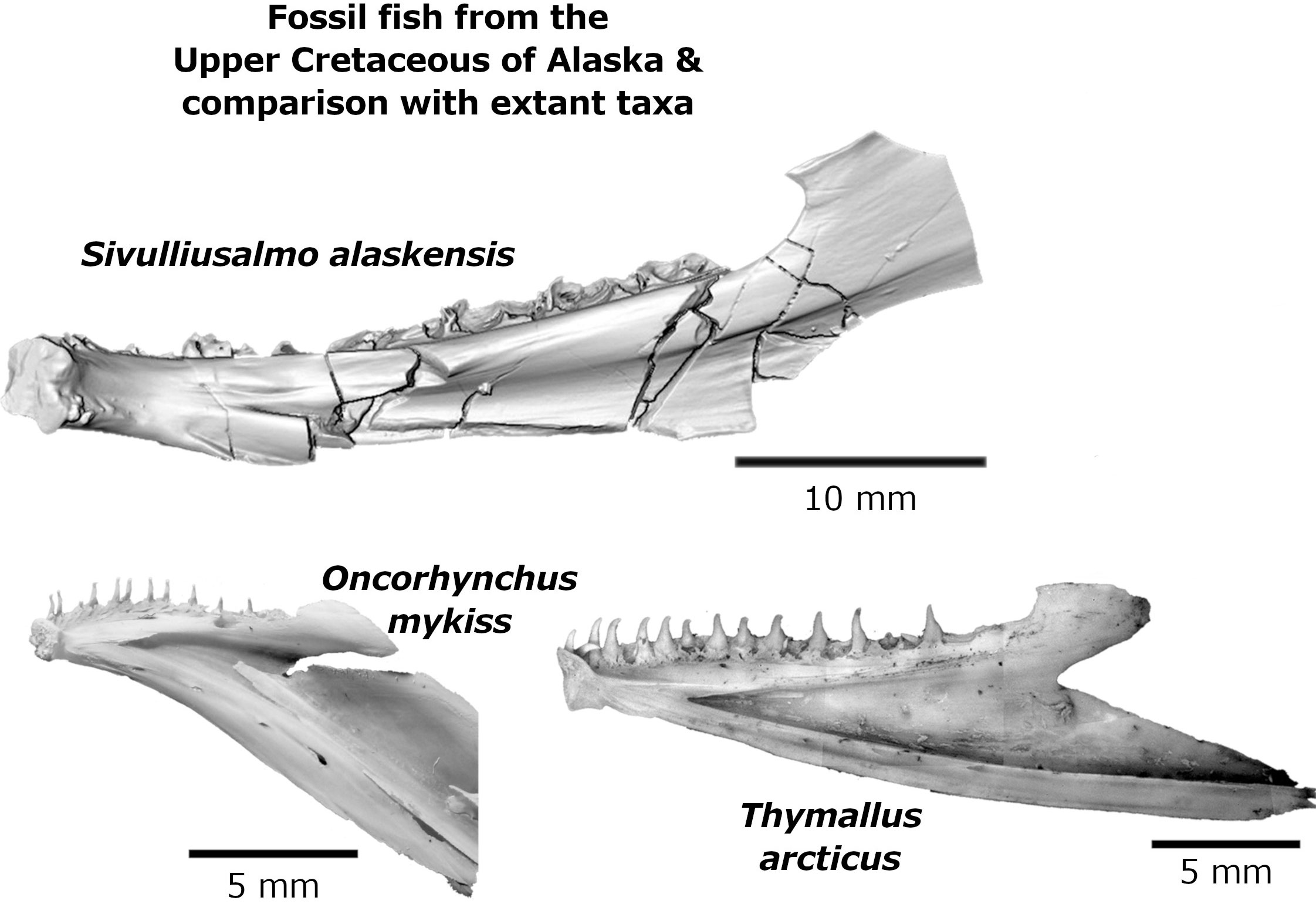
About 73 million years ago, Alaska’s rivers and streams supported an abundance of ancient fish related to modern salmon, pike, and other northern species. According to a new study published in the journal Papers in Palaeontology, researchers have identified three previously unknown fish species from that era, including a salmonid named Sivulliusalmo alaskensis.
“This is not only a new species; it’s the oldest salmonid in the fossil record,” said Patrick Druckenmiller, director of the University of Alaska Museum of the North and the paper’s senior author. The paper also documents multiple other species of ancient fish new to the Arctic, including two new species of pike and the oldest record of the group that includes carp and minnows.
“Many of the fish groups that we think of as being distinctive today in the high-latitude environment in Alaska were already in place at the same time as dinosaurs,” he said.
Extending the Salmon Family Tree
The discovery of Sivulliusalmo alaskensis — the genus is named from the Inupiaq and Latin words for “to be first” and “salmon,” respectively — adds another 20 million years to the fossil history of the salmon family. Previously, the oldest salmonid documented was in fossils found in British Columbia and Washington.
It’s notable that salmonids, which tend to prefer colder water, were thriving even during the warmth of the Cretaceous, and that they lived for millions of years in regions that have gone through dramatic changes in geography and climate, said Andrés López, curator of fish at the UA Museum of the North and a co-author of the paper.
Despite it being warmer in the Arctic at that time, there would have still been big seasonal swings in temperature and light, just like there are today, he said.
“Salmon were already the kind of fish that do well in a place where those dramatic shifts were happening,” López said. “Despite all of the changes that the planet has gone through, all of the changes in the geography and the climate, you still had the ancestors of the same groups of species that dominate the fresh waters of the region today.”
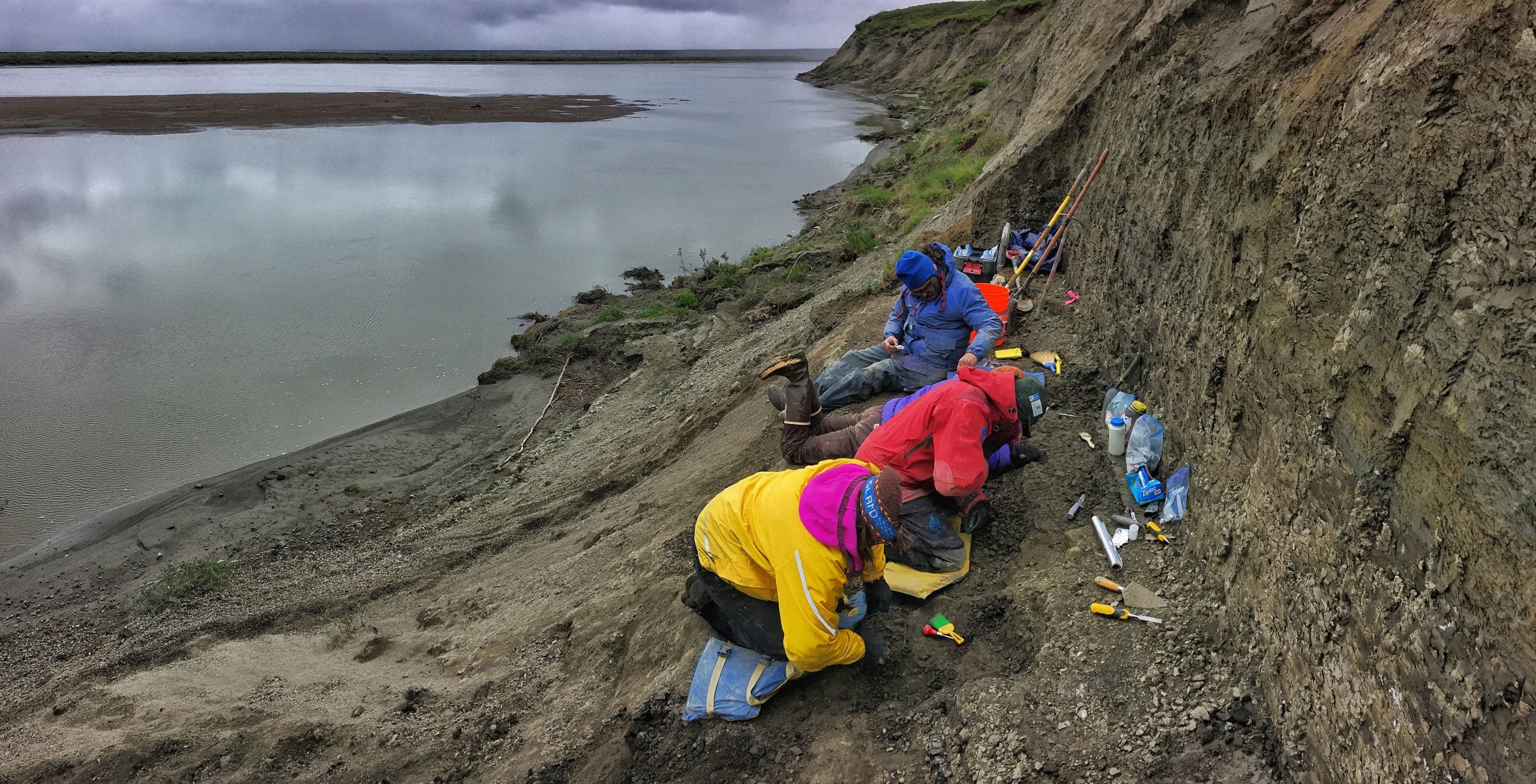
The new species are the latest discovery to come from the Prince Creek Formation, which is famous for dinosaur fossils found at a series of sites along the Colville River in northern Alaska. In the Cretaceous, Alaska was much closer to the North Pole than it is today. For more than a decade, UAF scientists have been poring over thousands of sometimes microscopic fossils to paint a picture of a polar ecosystem during the age of the dinosaurs, including mammals, birds, and fish.
“These types of fossils are often overlooked,” Druckenmiller said. He and his colleagues intentionally aim to recover all the vertebrate fossils available, no matter how small.
“You couldn’t begin to understand a modern Arctic ecosystem without understanding the smallest animals that live there,” he said. The same is true for ancient ecosystems.
Fossils from the Prince Creek Formation
Fish fossils are one of the most abundant types of fossils at the Prince Creek Formation, Druckenmiller said, but they are very difficult to see and distinguish in the field. So, the scientists hauled buckets of fine sand and gravel back to their museum lab, where they used microscopes to find the bones and teeth.
The findings in the current paper are primarily based on tiny, fossilized jaws, some of which would easily fit on the end of a pencil eraser, Druckenmiller said. To get a good look at the fossils, members of the research team from Western University in Ontario and the University of Colorado Boulder used micro-computed tomography to digitally reconstruct the tiny jaws, teeth, and other bones.
“We found a really distinct jaw and other parts that we recognized as a member of the salmon family,” he said.
The presence of salmonids in the Cretaceous polar regions and the absence of common lower-latitude fish from this same time period indicate that the salmon family likely originated in the North, Druckenmiller said. “Northern high latitude regions were probably the crucible of their evolutionary history.”
Reference: “Fishes from the Upper Cretaceous Prince Creek Formation, North Slope of Alaska, and their palaeobiogeographical significance” by Donald B. Brinkman, J. Andrés López, Gregory M. Erickson, Jaelyn J. Eberle, Xochitl Muñoz, Lauren N. Wilson, Zackary R. Perry, Alison M. Murray, Lisa Van Loon, Neil R. Banerjee and Patrick S. Druckenmiller, 7 May 2025, Papers in Palaeontology.
DOI: 10.1002/spp2.70014
Funding: U.S. National Science Foundation, U.S. National Science Foundation, Council on Research and Creativity, Florida State University
The lead author of the paper is Donald Brinkman of the Royal Tyrrell Museum of Palaeontology. Other UAF co-authors include Lauren Wilson and Zackary Perry. Scientists from Florida State University, the University of Colorado, Princeton University, Western University and LISA CAN Analytical Solutions Inc. also co-authored the paper.
Never miss a breakthrough: Join the SciTechDaily newsletter.
Follow us on Google and Google News.
11 Comments
Evolution is a hoax and a lie. No self-respecting soul admits it is true. Example: What is the origin of the sun? How is it that we can predict exactly when the son will come up 10 years from today? Order does not come out of chaos. God created the heavens and the earth in 6, 24 hour days. Live with it!!!
The sun is a celestial fart nothing more . The highly explosive combination that set in motion everything in the galaxy. And , since our arrival and supposedly huge intellect we’ve been trying like hell to impose order over it. One of the earliest and most persistent was and is to gain mastery through divine intervention on our part. Thus , we’re always provided with an escape clause !
Do your own research. There are scientific studies that have the answers available. There’s even people on YouTube who break it down.
Including your questions about the sun.
Most people have opinions uninformed with no critical analysis that they believe is their right as part of their claim of freedom of speech. They don’t realize it doesn’t formal knowledge and research apart from a google search doesn’t enter into their preview.
Since evolution is a lie this is all laughable. Actually more like criminal.
(The faster you stop playing the game the better it will be for your career.)
🤣🤣🤣🤣🤣🤣🤣🤣🤣🤣🤣🤣🤣
Only 73 million years old? I’m shock they didn’t reach for a higher number like a half a billion like they usually do.
Oh lookie another “rewrites history” article.
It has to constantly be rewritten because all of this is made up on “best guesses”.
Looking at what we see no in no way tells us what actually happened over the course of history.
We just get to see what had been.
Keep your eye on the ball is your best bet. That way you don’t have anything to worry about
wow
dakjbkjbajkfbdkjsAHFDJKSHFKJDS