
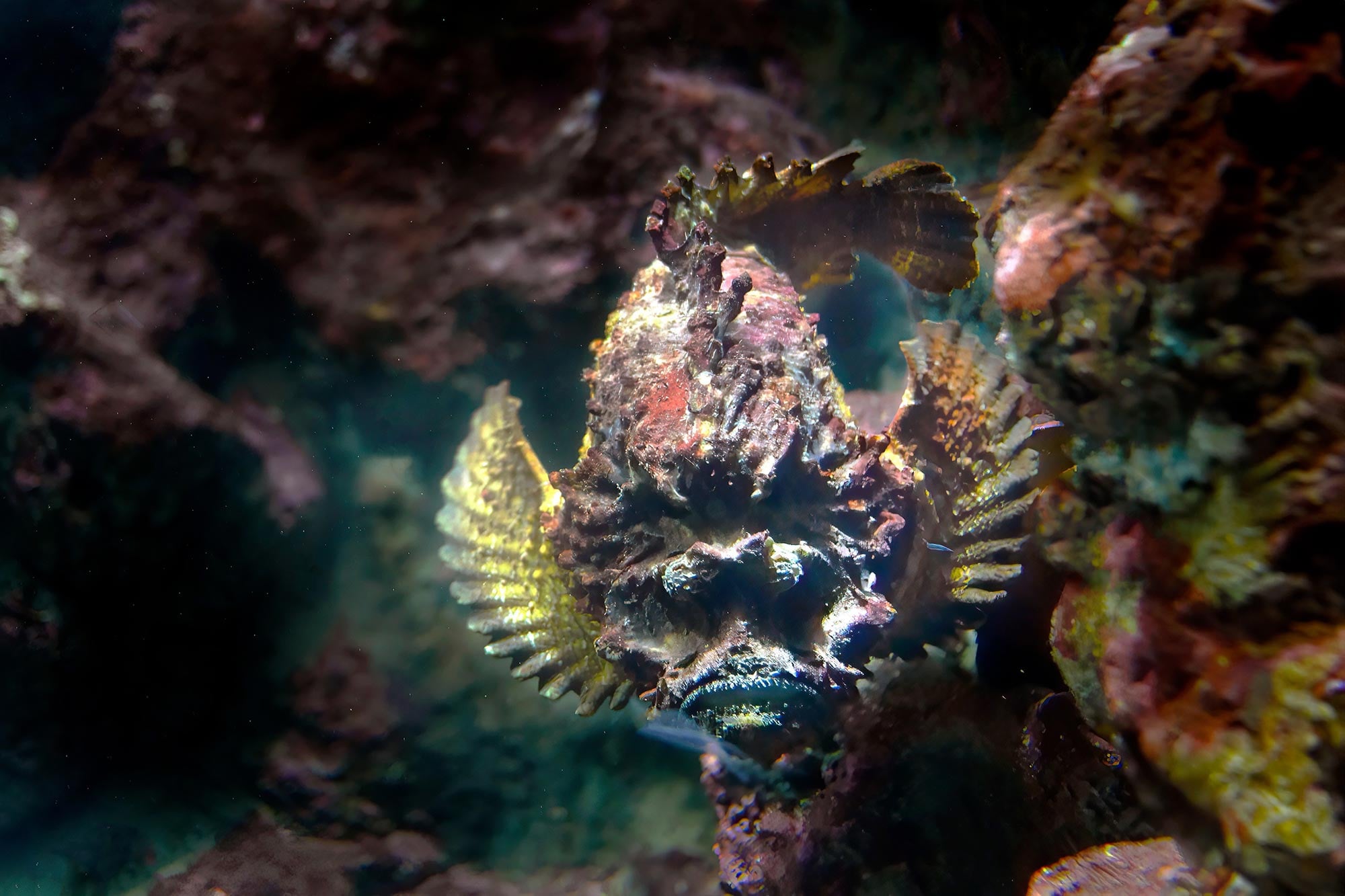
Researchers have uncovered new aspects of the venom of two deadly stonefish species, revealing the presence of three neurotransmitters previously unidentified in fish venom.
This breakthrough in understanding could lead to advancements in treating venom effects and in the development of new drugs derived from these venoms.
Stonefish Venom Research
New research published today (November 20) in FEBS Open Bio sheds light on the venom of two of the world’s most venomous fish: the estuarine stonefish (Synanceia horrida) and the reef stonefish (Synanceia verrucosa). These species are commonly found in warm, shallow waters across the Indo-Pacific, the Persian Gulf, and the Red Sea.
Discovery of New Neurotransmitters in Venom
Using advanced analytical techniques, scientists identified three neurotransmitters in stonefish venom that had not been previously associated with these species: gamma-aminobutyric acid (GABA), choline, and 0-acetylcholine.
While these molecules are known to occur in the venoms of other creatures, such as hornets and spiders, this marks the first discovery of GABA in fish venom. GABA plays a role in modulating cardiovascular functions, with effects that range from increasing heart rate to lowering blood pressure.
Implications and Medical Applications
“Characterization of the specific composition of each of these fish species’ venom not only provides us with a better understanding of envenomation mechanisms, which are needed for the development of targeted treatments against venom effects, but may also aid in the exploration and development of venom-derived compounds in drug discovery,” said corresponding author Silvia Luiza Saggiomo, PhD, who was at the Australian Institute of Tropical Health and Medicine while conducting this research and is currently at the QIMR Berghofer Medical Research Institute.
Reference: “Interrogating stonefish venom: small molecules present in envenomation caused by Synanceia spp.” by Silvia Luiza Saggiomo, Steve Peigneur, Jan Tytgat, Norelle L. Daly and David Thomas Wilson, 20 November 2024, FEBS Open Bio.
DOI: 10.1002/2211-5463.13926
Never miss a breakthrough: Join the SciTechDaily newsletter.
Follow us on Google and Google News.