
Close Menu
    Facebook X (Twitter) Instagram
    SciTechDaily
    • Biology
    • Chemistry
    • Earth
    • Health
    • Physics
    • Science
    • Space
    • Technology
    Facebook X (Twitter) Pinterest YouTube RSS
    SciTechDaily
    Home»Space»Galaxy’s Edge: Mystery Substructures Discovered in Milky Way’s Outer Disk
    Space

    Galaxy’s Edge: Mystery Substructures Discovered in Milky Way’s Outer Disk

    By University of BarcelonaDecember 20, 2021No Comments3 Mins Read
    Facebook Twitter Pinterest Telegram LinkedIn WhatsApp Email Reddit
    Share
    Facebook Twitter LinkedIn Pinterest Telegram Email Reddit
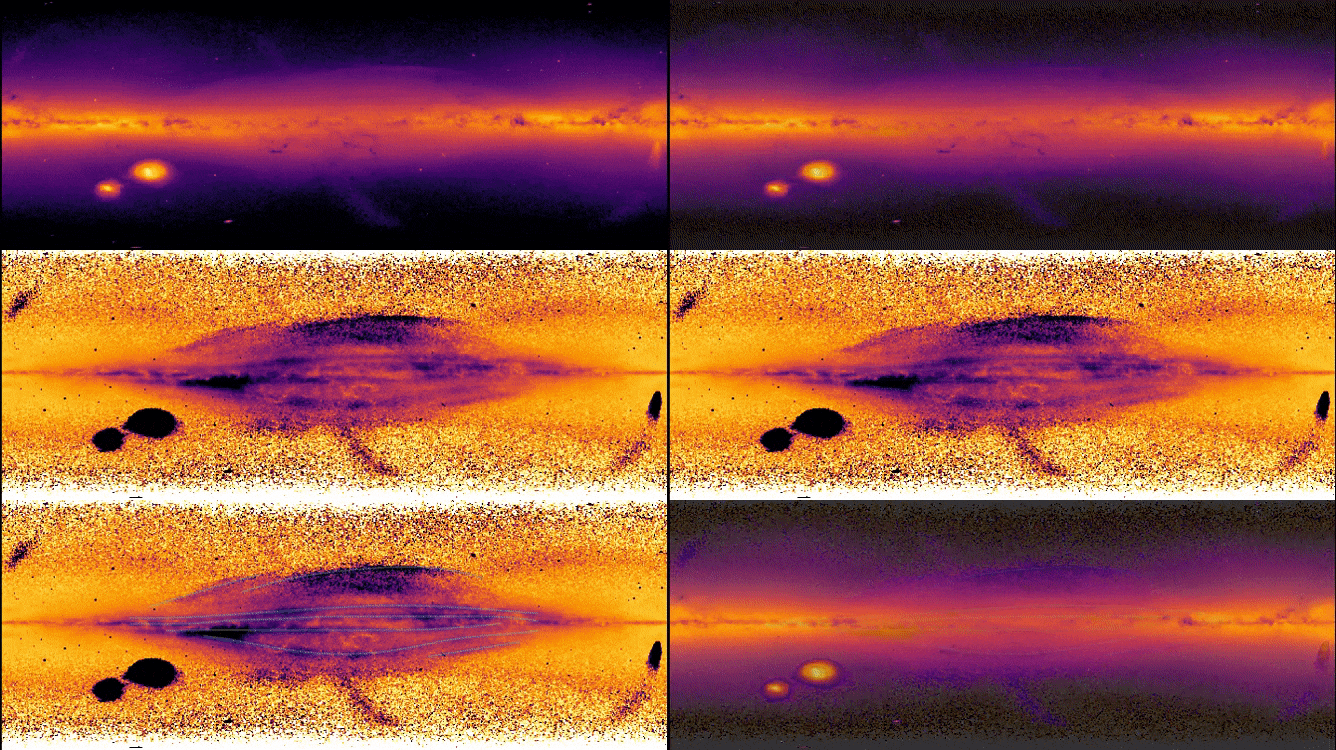
    Milky Way Outer Disc Substructure
    The new map has revealed a new substructure of the Milky Way’s outer disk using data from the Gaia space misison. Credit: C. Laporte et al. (MNRAS, 2021)

    An international team of astronomers led by researcher Chervin Laporte of the Institute of Cosmos Sciences of the University of Barcelona (ICCUB-IEEC) has revealed a new map of the Milky Way’s outer disk using data from the Gaia space misison. The findings have been published in the journal Monthly Notices of the Royal Astronomical Society.

    “Typically, this region of the Milky Way has remained poorly explored due to the intervening dust which severely obscures most of the Galactic midplane”, says Chervin Laporte, first signer of the article. “While dust affects the luminosity of stars, it has no effect on their motion. As a result, one can use the stars’ motion to perform a tomography of the Galaxy’s outermost regions,” adds the ICCUB researcher. The team analyzed the Gaia motion data, available from December 2020, to identify coherent structures.

    The map reveals the existence of many previously unknown coherently rotating filamentary structures at the edge of the disk. It also gives a sharper global view of previously known structures. Numerical simulations predict such filamentary structures to form in the outer disk from past satellite interactions, however the sheer quantity of substructure revealed by this map was not expected and it remains a mystery.
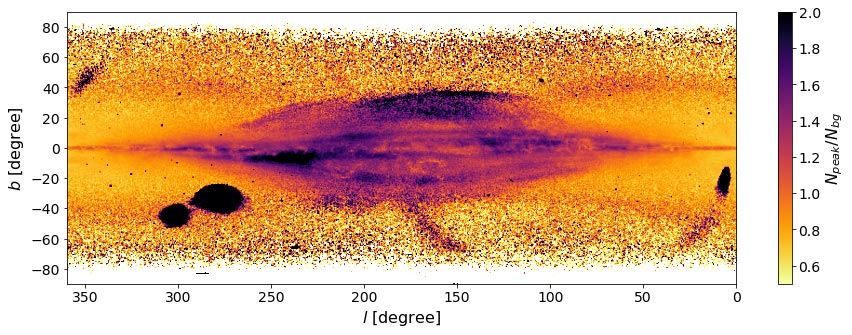
    Milky Way Galaxy Substructure
    The new map has revealed a new substructure of the Milky Way’s outer disc using data from the Gaia space misison. Credit: C. Laporte et al. (MNRAS, 2021)

    What could these filamentary structures be?

    Our Galaxy is surrounded by fifty satellite galaxies and has engulfed numerous galaxies in its past. At present, the Milky Way is thought to have been perturbed by the Sagittarius dwarf galaxy, a fact that confirmed Laporte’s earlier theoretical models. However, in its more distant past it interacted with another intruder, the Gaia Sausage, which has now dispersed its debris into the stellar halo. The researchers formulated the hypothesis that states that these filamentary structures are remains of tidal arms from the Milky Way disk, which were excited at different times by various satellite galaxies.

    Laporte notes that in an earlier study, they already showed that one of the thread-like structures in the outer disk, called the Anticenter Stream, had stars that were predominantly older than eight billion years, “making it potentially too old to have been caused by Sagittarius alone, but more in line with a Sausage origin. “Another possibility,” adds the researcher “would be that not all these structures are actually genuine disk substructures, but instead form the crests of vertical density waves in the disk seen in projection, forming an optical illusion that the disk is highly substructured.”

    The team has secured a dedicated follow-up program with the WEAVE spectrograph to study the similarities and differences in stellar populations in each substructure. Through the study of radial velocities, chemical abundances, and potentially stellar ages, the upcoming surveys WEAVE, SDSS-V, and PFS will also shed light into the origins of the substructures.

    For more on this research, see ESA’s Gaia Space Mission Discovers Mysterious Fossil Spiral Arms in Milky Way.

    Reference: “Kinematics beats dust: unveiling nested substructure in the perturbed outer disc of the Milky Way” by Chervin F P Laporte, Sergey E Koposov, Vasily Belokurov, 18 October 2021, Monthly Notices of the Royal Astronomical Society: Letters.
    DOI: 10.1093/mnrasl/slab109

    Never miss a breakthrough: Join the SciTechDaily newsletter.
    Follow us on Google and Google News.

    Astronomy Astrophysics Milky Way Popular University of Barcelona
    Share. Facebook Twitter Pinterest LinkedIn Email Reddit

    Related Articles

    Our Sun May Have Escaped the Milky Way’s Dangerous Center Billions of Years Ago

    Something Is Ticking Near the Milky Way’s Supermassive Black Hole

    The Center of Our Galaxy May Not Be a Black Hole

    Astronomers Reveal the Hidden Magnetic Skeleton of the Milky Way

    A Strange Glow in the Milky Way May Be Our First Glimpse of Dark Matter

    Planck Space Telescope Reveals the Magnetic Field Lines of the Milky Way

    Researchers Discover the First Binary System Consisting of a Black Hole and a Be-Type Star

    Hubble Reveals the First Visual Evidence of Changes in the Milky Way

    New Survey Maps Where Stars Are Born

    Leave A Reply Cancel Reply

    • Facebook
    • Twitter
    • Pinterest
    • YouTube

    Don't Miss a Discovery

    Subscribe for the Latest in Science & Tech!

    Trending News

    Mezcal “Worm” in a Bottle Mystery: DNA Testing Reveals a Surprise

    New Research Reveals That Your Morning Coffee Activates an Ancient Longevity Switch

    This Is What Makes You Irresistible to Mosquitoes

    Shockingly Powerful Giant Octopuses Ruled the Seas 100 Million Years Ago

    Scientists Stunned by New Organic Molecules Found on Mars

    Rewriting Dinosaur Evolution: Scientists Unearth Remarkable 150-Million-Year-Old Stegosaur Skull

    Omega-3 Supplements Linked to Cognitive Decline in Surprising New Study

    First-of-Its-Kind Discovery: Homer’s Iliad Found Embedded in a 1,600-Year-Old Egyptian Mummy

    Follow SciTechDaily
    • Facebook
    • Twitter
    • YouTube
    • Pinterest
    • Newsletter
    • RSS
    SciTech News
    • Biology News
    • Chemistry News
    • Earth News
    • Health News
    • Physics News
    • Science News
    • Space News
    • Technology News
    Recent Posts
    • Male Birth Control Breakthrough: Scientists Find Way To Turn Sperm Production Off and Back On
    • A Common Vitamin Could Hold the Key to Treating Fatty Liver Disease
    • New Research Shows Vitamin B12 May Hold the Key to Healthy Aging
    • Scientists Map Thousands of Brain Connections With RNA Barcodes
    • This Gene Tweak Turns Strawberries Into Healthier, Tastier Superfruit
    Copyright © 1998 - 2026 SciTechDaily. All Rights Reserved.
    • Science News
    • About
    • Contact
    • Editorial Board
    • Privacy Policy
    • Terms of Use

    Type above and press Enter to search. Press Esc to cancel.