
Close Menu
    Facebook X (Twitter) Instagram
    SciTechDaily
    • Biology
    • Chemistry
    • Earth
    • Health
    • Physics
    • Science
    • Space
    • Technology
    Facebook X (Twitter) Pinterest YouTube RSS
    SciTechDaily
    Home»Biology»Harnessing Nature’s Power: Yeast Becomes a Factory for Herbal Medicine
    Biology

    Harnessing Nature’s Power: Yeast Becomes a Factory for Herbal Medicine

    By Kobe UniversityNovember 12, 2024No Comments4 Mins Read
    Facebook Twitter Pinterest Telegram LinkedIn WhatsApp Email Reddit
    Share
    Facebook Twitter LinkedIn Pinterest Telegram Email Reddit
    Bioengineered Yeast Mass Produces Herbal Medicine
    Through introducing plant enzymes that can catalyze key steps along the molecular production line of artepillin C into yeast cells, and by tuning the balance of precursor molecules, the team around Kobe University bioengineer Tomohisa Hasunuma produced artepillin C in fermenters at unprecedented concentrations. Credit: Kobe University

    Producing herbal medicines on an industrial scale is challenging. However, a team of bioengineers from Kobe University has successfully modified the cellular machinery of a specific yeast species, enabling it to produce a medicinal compound at record concentrations in a fermenter.

    This breakthrough not only makes large-scale production of this molecule possible but also opens the door to microbial production of other plant-derived compounds.

    Bioengineered Medicinal Compounds

    Herbal medicines offer many health benefits, but they are often difficult to produce on a large scale. A good example is artepillin C—a compound with antimicrobial, anti-inflammatory, antioxidant, and anticancer properties—which is currently only available as a bee-derived product. Kobe University bioengineer Tomohisa Hasunuma explains, “To obtain a high-yield and low-cost supply, it is desirable to produce it in bioengineered microorganisms which can be grown in fermenters.” However, this approach presents technical challenges.
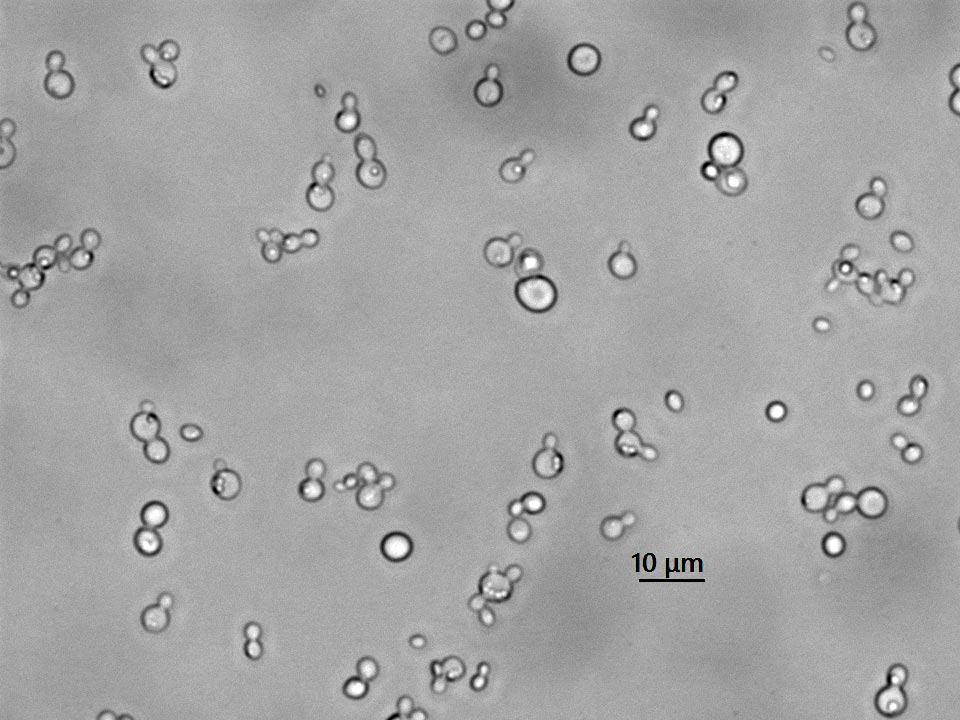
    Komagataella phaffii Yeast
    The yeast Komagataella phaffii is well-suited to produce components for the class of chemicals artepillin C belongs to, can be grown at high cell densities, and does not produce alcohol, which limits cell growth. Credit: Takahiro Bamba

    Challenges in Microbial Production

    First, scientists need to identify the enzyme, or molecular machinery, that plants use to produce the target compound. “The plant enzyme that’s key to artepillin C production had only recently been discovered by Kazufumi Yazaki at Kyoto University,” Hasunuma notes. “He asked us whether we can use it to produce the compound in microorganisms due to our experience with microbial production.” The team then worked to introduce the gene responsible for this enzyme into the yeast Komagataella phaffii. Compared to brewer’s yeast, K. phaffii is better suited to produce chemicals in this class, supports higher cell densities, and doesn’t produce alcohol, which can restrict cell growth.

    Achievements in Artepillin C Production

    In the journal ACS Synthetic Biology, they now report that their bioengineered yeast produced ten times as much artepillin C as could be achieved before. They accomplished this feat by carefully tuning key steps along the molecular production line of artepillin C. Hasunuma adds: “Another interesting aspect is that artepillin C is not excreted into the growth medium readily and tends to accumulate inside the cell. It was therefore necessary to grow the yeast cells in our fermenters to high densities, which we achieved by removing some of the mutations introduced for technical reasons but that stand in the way of the organism’s dense growth.”
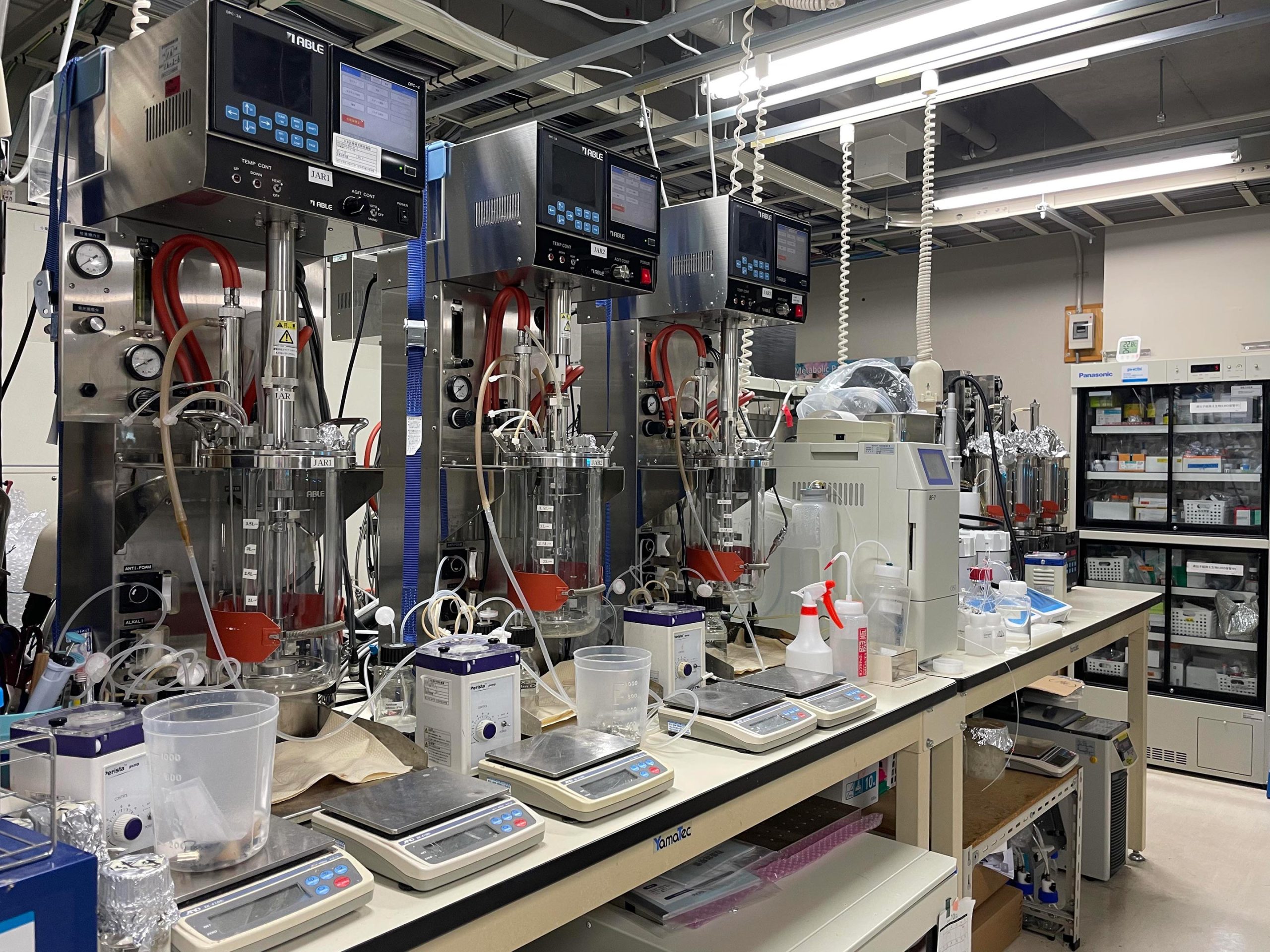
    Microbial Production of Plant-Derived Compounds
    The Kobe University bioengineer Tomohisa Hasunuma explains, “Since thousands of compounds with a very similar chemical structure exist naturally, there is the very real possibility that the knowledge gained from the production of artepillin C can be applied to the microbial production of other plant-derived compounds.” Credit: Takahiro Bamba

    Future Prospects and Broader Implications

    The Kobe University bioengineer already has ideas how to further improve the production. One approach will be to further raise the efficiency of the final and critical chemical step by modifying the responsible enzyme or by increasing the pool of precursor chemicals. Another approach may be to find a way of transporting artepillin C out of the cell. “If we can modify a transporter, a molecular structure that transports chemicals in and out of cells, such that it exports the product into the medium while keeping the precursors in the cell, we could achieve even higher yields,” Hasunuma says.

    The implications of this study, however, go beyond the production of this particular compound. Hasunuma explains, “Since thousands of compounds with a very similar chemical structure exist naturally, there is the very real possibility that the knowledge gained from the production of artepillin C can be applied to the microbial production of other plant-derived compounds.”

    Reference: “De Novo Production of the Bioactive Phenylpropanoid Artepillin C Using Membrane-Bound Prenyltransferase in Komagataella phaffii” by Takahiro Bamba, Ryosuke Munakata, Yuya Ushiro, Ryota Kumokita, Sayaka Tanaka, Yoshimi Hori, Akihiko Kondo, Kazufumi Yazaki and Tomohisa Hasunuma, 12 November 2024, ACS Synthetic Biology.
    DOI: 10.1021/acssynbio.4c00472

    This research was funded by the Japan Society for the Promotion of Science (grant 23H04967), the RIKEN Cluster for Science, Technology and Innovation Hub and the Japan Science and Technology Agency (grant JPMJGX23B4). It was conducted in collaboration with researchers from Kyoto University and the RIKEN Center for Sustainable Resource Science.

    Never miss a breakthrough: Join the SciTechDaily newsletter.
    Follow us on Google and Google News.

    Kobe University Plant Science Synthetic Biology Yeast
    Share. Facebook Twitter Pinterest LinkedIn Email Reddit

    Related Articles

    The Surprising Way Deadwood Brings Orchids to Life

    Bizarre Plants That Quit Photosynthesis Still Find a Way to Thrive

    This Orchid Hacks Fungi to Supercharge Its Growth

    Crafting Programmable Living Materials With Synthetic Biology & 3D Printing

    New Insights Into Evolution, Biofuels, Cellular Aging – Biologists Have Developed Light-Powered Yeast

    The Future Is Here: Synthetic Yeast Genome Nears Completion With New Milestone

    Rediscovery of the Elusive Fairy Lantern: Thismia kobensis Emerges After 30 Years

    Researchers Induce Magnetism to a Non-Magnetic Organism

    Researchers Discover that Prions Play Role in Yeast Survival and Evolution

    Leave A Reply Cancel Reply

    • Facebook
    • Twitter
    • Pinterest
    • YouTube

    Don't Miss a Discovery

    Subscribe for the Latest in Science & Tech!

    Trending News

    5 Simple Ways To Remember More and Forget Less

    The Atomic Gap That Could Cost the Semiconductor Industry Billions

    Researchers Finally Solve 50-Year-Old Blood Group Mystery

    Scientists Discover “Molecular Switch” That Fuels Alzheimer’s Brain Inflammation

    Trees Emit Tiny Lightning Flashes During Storms and Scientists Finally Prove It

    Pomegranate Compound Could Help Protect Against Heart Disease

    Your Blood Test Might Already Show Alzheimer’s Risk

    Scientists Were Wrong About This Strange “Rule-Breaking” Particle

    Follow SciTechDaily
    • Facebook
    • Twitter
    • YouTube
    • Pinterest
    • Newsletter
    • RSS
    SciTech News
    • Biology News
    • Chemistry News
    • Earth News
    • Health News
    • Physics News
    • Science News
    • Space News
    • Technology News
    Recent Posts
    • Scientists Complete Largest 3D Map of the Universe to Probe Dark Energy
    • Hidden Parasite Found in Popular Portuguese Lake Raises Health Concerns
    • This Simple Trick Can Boost Your Workout Endurance by 20%
    • This Popular Supplement May Interfere With Cancer Treatment, Scientists Warn
    • Scientists Propose Radical New Way To Detect Alien Life – Without Traditional Biosignatures
    Copyright © 1998 - 2026 SciTechDaily. All Rights Reserved.
    • Science News
    • About
    • Contact
    • Editorial Board
    • Privacy Policy
    • Terms of Use

    Type above and press Enter to search. Press Esc to cancel.