
Close Menu
    Facebook X (Twitter) Instagram
    SciTechDaily
    • Biology
    • Chemistry
    • Earth
    • Health
    • Physics
    • Science
    • Space
    • Technology
    Facebook X (Twitter) Pinterest YouTube RSS
    SciTechDaily
    Home»Space»Hubble Captures Breathtaking View of the “Fireworks Galaxy”
    Space

    Hubble Captures Breathtaking View of the “Fireworks Galaxy”

    By ESA/HubbleJanuary 4, 20211 Comment2 Mins Read
    Facebook Twitter Pinterest Telegram LinkedIn WhatsApp Email Reddit
    Share
    Facebook Twitter LinkedIn Pinterest Telegram Email Reddit
    Galaxy NGC 6946
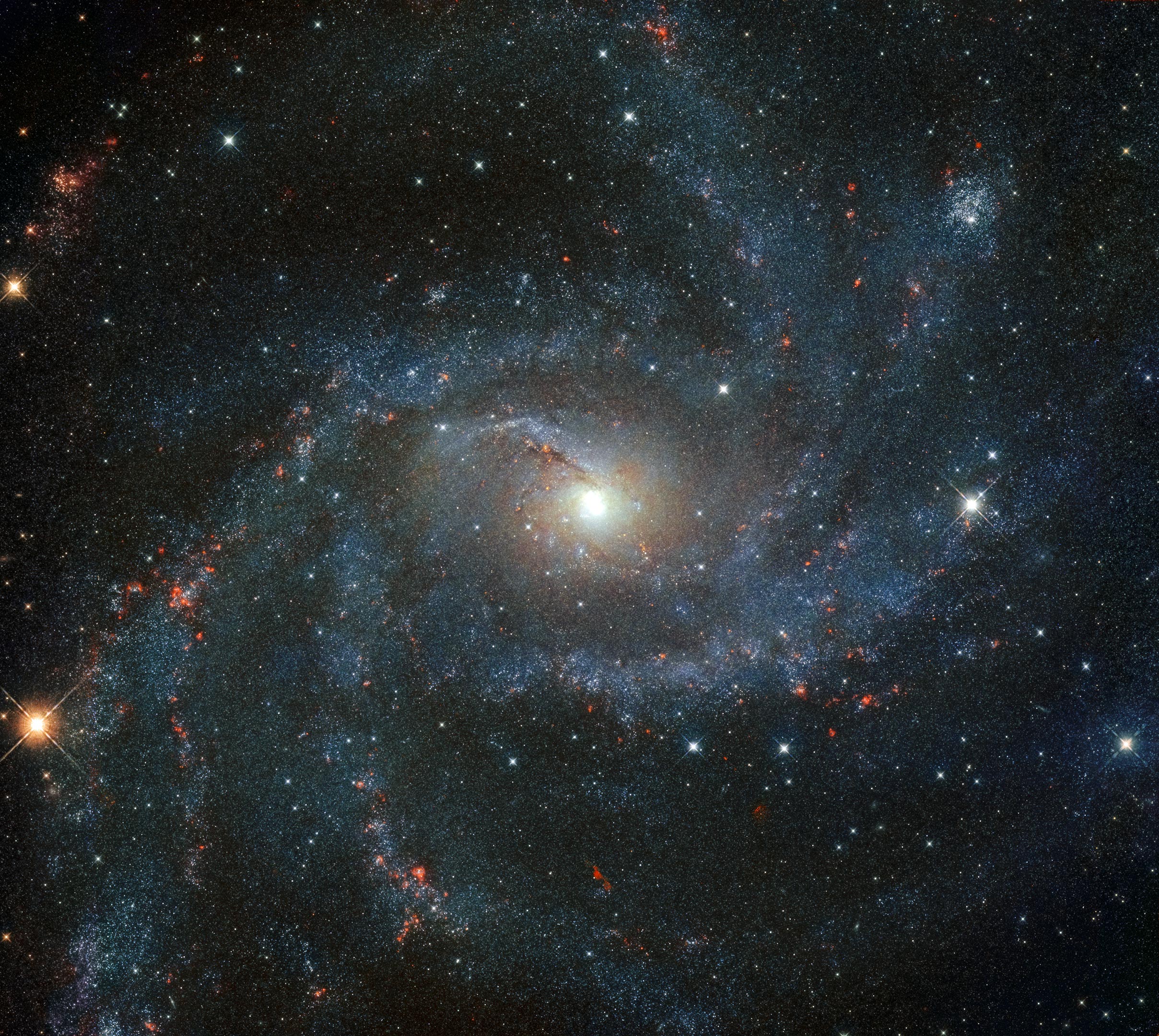
    NASA/ESA Hubble Space Telescope image of galaxy NGC 6946, which has earned the nickname the “Fireworks Galaxy.” Credit: ESA/Hubble & NASA, A. Leroy, K. S. Long

    NGC 6946, the Fireworks Galaxy, has hosted 10 supernovae in the last century and is a starburst galaxy with intense star formation. Its face-on view reveals spiral arms and stellar activity, and it’s located 25.2 million light-years away near Cepheus and Cygnus.

    The galaxy NGC 6946 is nothing short of spectacular. In the last century alone, NGC 6946 has experienced 10 observed supernovae, earning its nickname as the Fireworks Galaxy. In comparison, our Milky Way averages just 1-2 supernova events per century. This NASA/ESA Hubble Space Telescope image shows the stars, spiral arms, and various stellar environments of NGC 6946 in phenomenal detail. 

    We are able to marvel at NGC 6946 as it is a face-on galaxy, which means that we see the galaxy “facing” us, rather than seeing it from the side (known as edge-on). The Fireworks Galaxy is further classified as an intermediate spiral galaxy and as a starburst galaxy. The former means the structure of NGC 6946 sits between a full spiral and a barred spiral galaxy, with only a slight bar in its center, and the latter means it has an exceptionally high rate of star formation.
    Constellation Cygnus
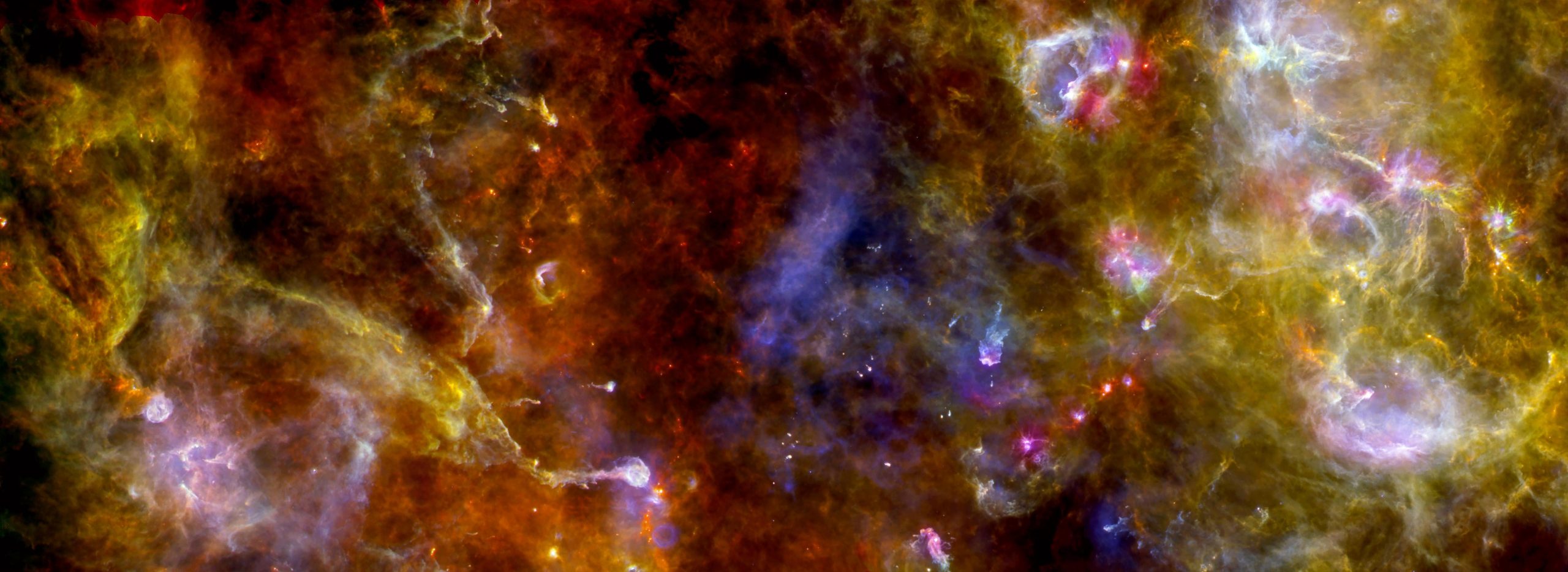
    Best known as a swan winging its way across the night, the constellation Cygnus is easily seen in the northern hemisphere’s summertime sky. This new view of the Cygnus-X star-forming region by the Herschel Telescope highlights chaotic networks of dust and gas that point to sites of massive star formation. This image combines far-infrared data acquired at 70 micron (corresponding to the blue channel); 160 micron (corresponding to the green channel); and 250 micron (corresponding to the red channel). Credit: ESA/PACS/SPIRE/Martin Hennemann & Frederique Motte, Laboratoire AIM Paris-Saclay, CEA/Irfu – CNRS/INSU – Univ. Paris Diderot, France

    The galaxy resides 25.2 million light-years away, along the border of the northern constellations of Cepheus and Cygnus (The Swan).

    Never miss a breakthrough: Join the SciTechDaily newsletter.
    Follow us on Google and Google News.

    Astronomy European Space Agency Hubble Space Telescope NASA
    Share. Facebook Twitter Pinterest LinkedIn Email Reddit

    Related Articles

    Hubble’s Newest Discovery Isn’t a Star, It’s a Window Into the Dark Universe

    This Nearby Galaxy Shows How Frozen Clouds Ignite Into Stars

    This Chaotic Spiral Galaxy Is Still Recovering From a Cosmic Collision

    This Strange Spiral Galaxy Is Hiding a Massive Black Hole

    Hubble Zooms In on a Galaxy That Maps the Universe’s Expansion

    Hubble Captures a Dazzling Spiral Galaxy Alive With Birth and Destruction

    Hubble Spots a Glowing “Ring of Fire” in a Distant Spiral Galaxy

    Dust, Light & Ancient Collisions: The Sombrero Galaxy Like You’ve Never Seen It

    Star Formation in Motion: Hubble Reveals Spiraling Stars and Sculpted Nebulae

    1 Comment

    1. Rafael on January 4, 2021 11:56 am

      Ya queda menos para conocer al creador de todo esto

      Reply
    Leave A Reply Cancel Reply

    • Facebook
    • Twitter
    • Pinterest
    • YouTube

    Don't Miss a Discovery

    Subscribe for the Latest in Science & Tech!

    Trending News

    Goodbye Plastic? Scientists Create New Supermaterial That Could Transform Modern Manufacturing

    Beyond Pain Relief: Scientists Discover a Protein That Could Stop Osteoarthritis in Its Tracks

    Scientists Discover Why Alcohol Prevents the Liver From Healing, Even After You Quit

    Scientists Stunned As Volcano Removes Methane From the Air

    Scientists Discover Signs Africa May Be Splitting Apart Beneath Zambia

    Common Blood Pressure Drug Supercharges Cancer Treatment in Surprising New Study

    540-Million-Year-Old Fossils Reveal a Huge Surprise About Early Life on Earth

    Scientists Reverse Stroke Damage Using Stem Cells in Breakthrough Study

    Follow SciTechDaily
    • Facebook
    • Twitter
    • YouTube
    • Pinterest
    • Newsletter
    • RSS
    SciTech News
    • Biology News
    • Chemistry News
    • Earth News
    • Health News
    • Physics News
    • Science News
    • Space News
    • Technology News
    Recent Posts
    • Goodbye Plastic? Scientists Create New Supermaterial That Could Transform Modern Manufacturing
    • Scientists Uncover Hidden Biological Differences Between Men and Women’s Immune Systems
    • Scientists Challenge a Long-Held Belief About Why Human Childbirth Is So Difficult
    • Too Much Sleep May Age Your Body Faster, New Study Warns
    • Scientists Uncover Promising New Strategy To Stop Parkinson’s in Its Tracks
    Copyright © 1998 - 2026 SciTechDaily. All Rights Reserved.
    • Science News
    • About
    • Contact
    • Editorial Board
    • Privacy Policy
    • Terms of Use

    Type above and press Enter to search. Press Esc to cancel.