

Tools from South Africa’s Robberg caves match styles found in Namibia and Lesotho, suggesting early humans shared methods and maintained widespread connections.
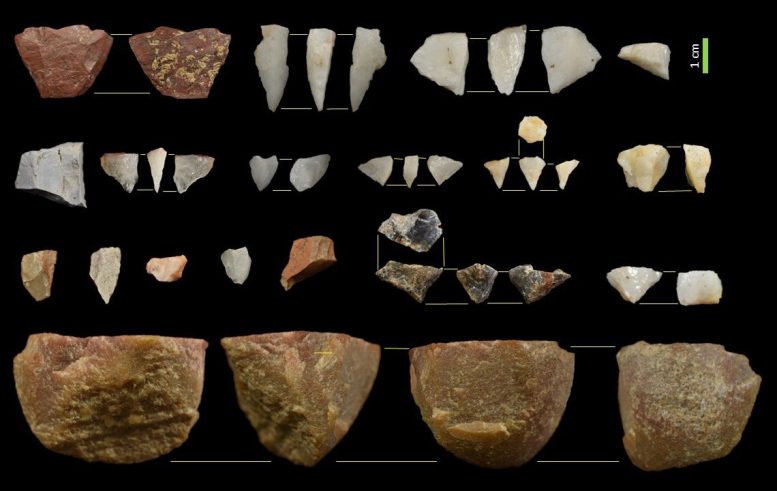
In a cave perched above the ocean on South Africa’s southern coast, archaeologists have uncovered thousands of stone tools crafted by ancient humans around 20,000 years ago. By closely examining the fine details along the chipped edges of the blades and stones, researchers can determine how the tools were made.
In a new study published in the Journal of Paleolithic Archaeology, the team analyzed these artifacts to explore how different manufacturing techniques reflect patterns of prehistoric movement, interaction, and knowledge-sharing among early human communities.
“This is an important insight into how people who lived in this region were living and hunting and responding to their environment,” says Sara Watson, a postdoctoral scientist at the Field Museum’s Negaunee Integrative Research Center and the study’s lead author.
Understanding ice age environments and adaptation
During the time these tools were produced, between 24,000 and 12,000 years ago, the planet was approaching the end of the last major ice age. Much of the Earth’s water was locked in glaciers, causing sea levels to drop. As a result, the South African coastline was several miles farther out than it is today.
“Instead of being right on the water like they are today, these caves would have been near vast, open plains with large game animals like antelope,” Watson explains. “People hunted those animals, and to do that, they developed new tools and weapons.”
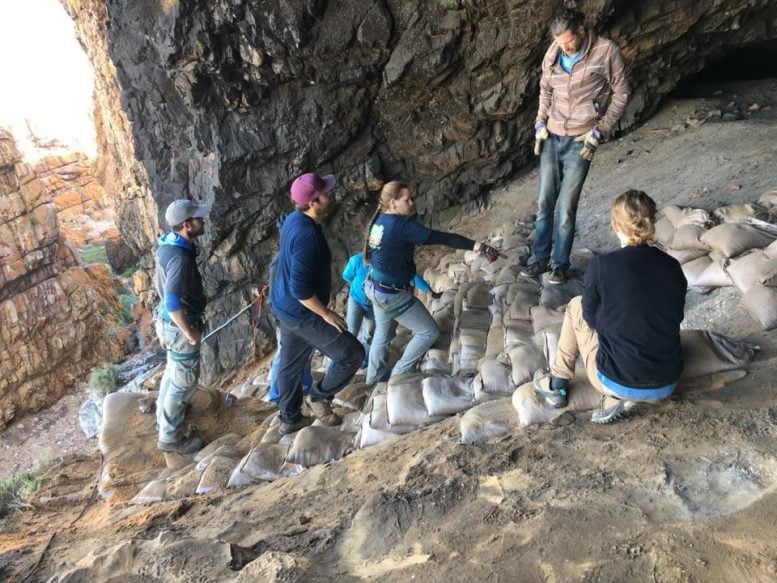
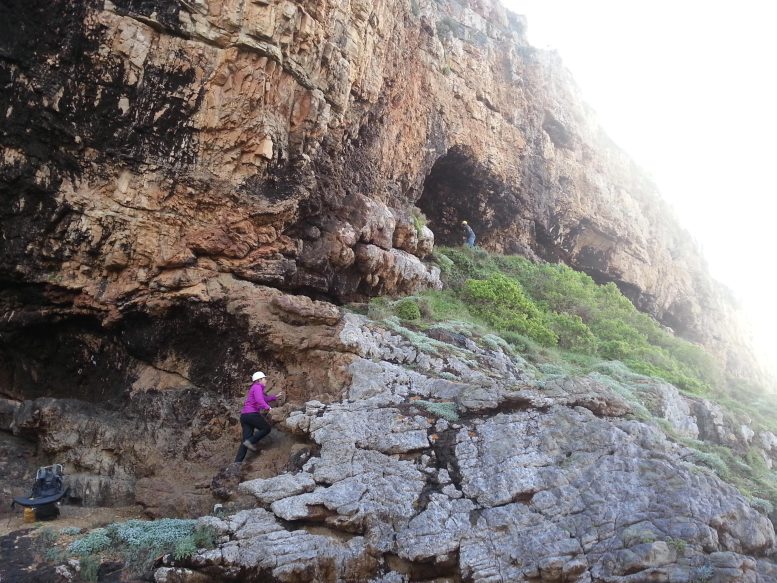
The caves, part of what archaeologists call the Robberg technocomplex, no longer overlook a plain— they’re in a towering cliff face over a rocky beach. “It’s a 75-foot climb up to the cave from the shoreline,” says Watson. “We had safety ropes and a staircase made of sandbags, and we had to be harnessed in while doing the excavation.”
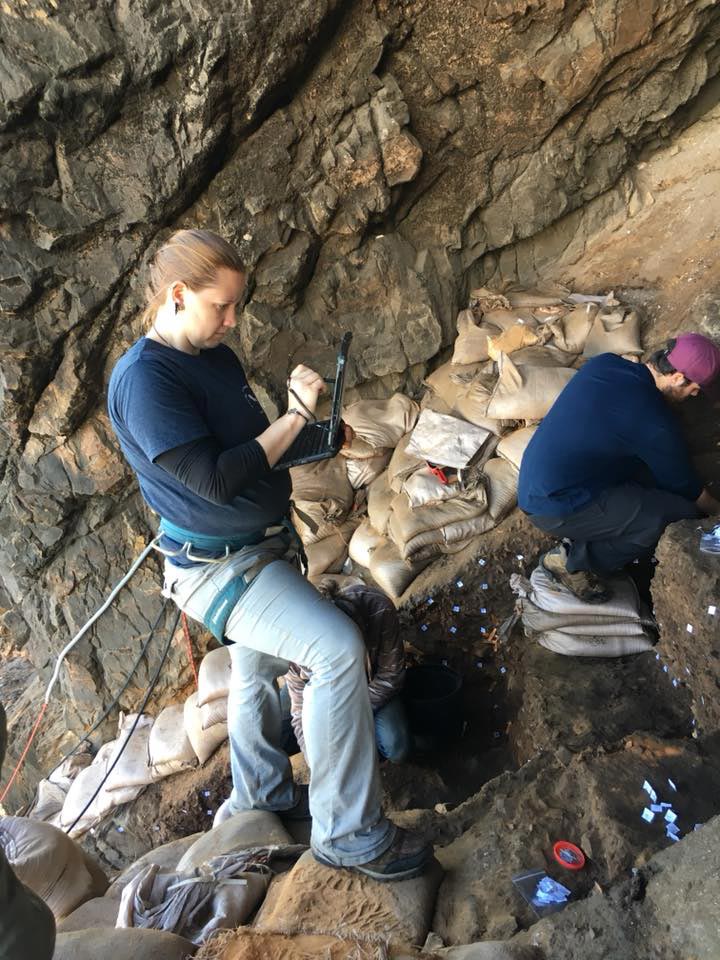
Every day, Watson and her colleagues made the climb with all their excavation and photography equipment, weighing up to 50 pounds per person. “Since these are extremely, extremely old sites, from before the end of the last ice age, we had to be very careful with our excavation,” says Watson. “We used little tiny dental tools and mini trowels so that we could remove each little individual layer of sediment.”
Toolmaking evidence and importance of stone cores
Beneath ancient dust and dirt, Watson and her team found thousands of stone tools: small, sharp blades, as well as the larger pieces of rock from which these blades were chipped. The bigger rock that blades are made from is called a core.
“When your average person thinks about stone tools, they probably focus on the detached pieces, the blades and flakes. But the thing that is the most interesting to me is the core, because it shows us the particular methods and order of operations that people went through in order to make their tools,” says Watson.
Watson and her colleagues observed several distinct patterns of how the cores had been broken into smaller blades.
“In a lot of these technologies, the core reduction is very specific, and it’s something that you are taught and learn, and that’s where the social information is,” says Watson. “If we see specific methods of core reduction at multiple sites across the landscape, as an archaeologist, it tells me that these people were sharing ideas with one another.”
Shared techniques across distant regions
For instance, one particular method of breaking tiny bladelets off of a core that Watson found in the Robberg caves is a style also found hundreds of miles away in places including Namibia and Lesotho.
“Same core reduction pattern, same intended product,” says Watson. “The pattern is repeated over and over and over again, which indicates that it is intentional and shared, rather than just a chance similarity.”
Overall, Watson says that the study reveals how much there still is to learn about the Robberg caves and the people who used them thousands of years ago. “We have a very long and rich history as a species, and humans go back a lot farther in time than most people realize,” says Watson. “People living around the last ice age were very similar to people today.”
Reference: “Robberg Lithic Technology from Knysna Eastern Heads Cave 1” by Sara E. Watson, Nicolas Zwyns, Teresa E. Steele, Alex Mackay and Naomi Cleghorn, 9 April 2025, Journal of Paleolithic Archaeology.
DOI: 10.1007/s41982-025-00214-5
Never miss a breakthrough: Join the SciTechDaily newsletter.
Follow us on Google and Google News.