
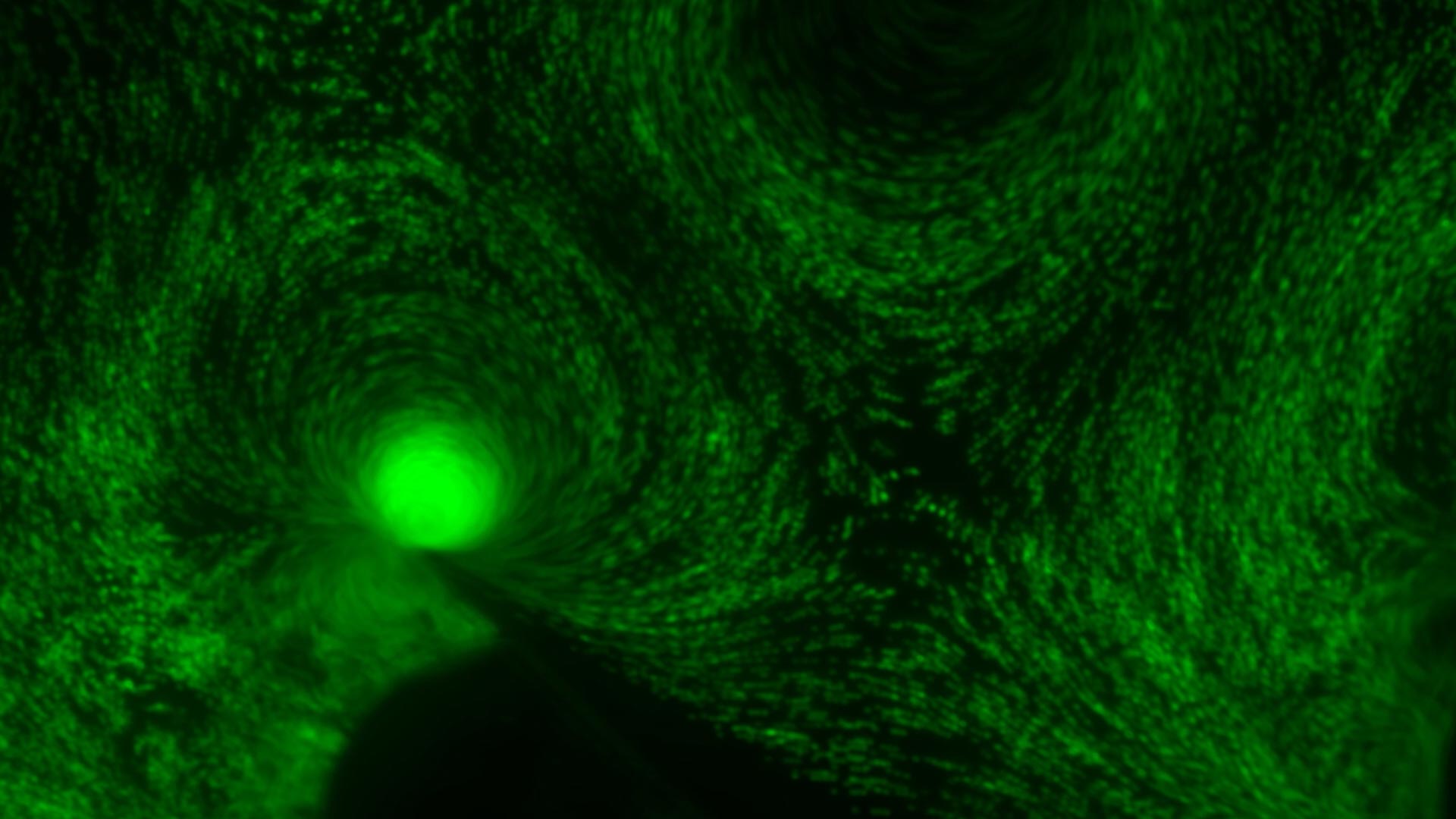
Whirlpools are now at the forefront of medical technology, helping to purify and concentrate biomarkers for diagnostic tests.
These specially engineered whirlpools efficiently separate harmful bioparticles from critical diagnostic elements like antibodies and viruses, paving the way for a new single-chip diagnostic device.
Whirlpool Technology in Diagnostics
Whirlpools are often linked to danger and destruction at sea, but these innovative glowing vortexes are proving to be valuable tools in medical diagnostics. One of the biggest challenges in developing diagnostic tests is effectively purifying samples — removing unwanted particles while concentrating the biomarkers needed for accurate detection. Using precisely tuned vibrations, these whirlpools efficiently capture cells, bacteria, and other large bioparticles found in saliva, while allowing smaller molecules like antibodies and viruses to pass through multiple biosensing chambers for further analysis.
Developed by Tony Jun Huang, the William Bevan Distinguished Professor of Mechanical Engineering and Materials Science at Duke University, and his Acoustofluidics Lab, this technology marks a crucial first step toward a single-chip diagnostic device. This innovative system is designed to detect viral RNA and a wide range of antibodies, offering a powerful tool to improve disease detection and better prepare for future pandemics.
Whirlpools efficiently trap cells, bacteria, and other larger bioparticles to purify samples for biomedical tests. Credit: Tony Jun Huang, Duke University
Reference: “Rapid and comprehensive detection of viral antibodies and nucleic acids via an acoustofluidic integrated molecular diagnostics chip: AIMDx” by Jiao Qian, Jianping Xia, Samantha Chiang, Jessica F. Liu, Ke Li, Feng Li, Fang Wei, Mohammad Aziz, Yong Kim, Vinson Go, James Morizio, Ruoyu Zhong, Ye He, Kaichun Yang, Otto O. Yang, David T. W. Wong, Luke P. Lee and Tony Jun Huang, 15 January 2025, Science Advances.
DOI: 10.1126/sciadv.adt5464
Never miss a breakthrough: Join the SciTechDaily newsletter.
Follow us on Google and Google News.