

NASA’s DAVINCI mission is set to revolutionize our understanding of Venus. This daring expedition will send a probe plunging through the planet’s scorching, high-pressure atmosphere, offering humanity its first glimpse of Venus’ surface in over 40 years.
Scientists hope to unlock the mysteries of Venus’ ancient landscape, explore its towering tesserae formations, and analyze its lower atmosphere for clues about the planet’s past. By studying noble gases and chemical compositions, DAVINCI could reveal whether Venus once had oceans and how it became Earth’s toxic twin. Armed with cutting-edge technology, the mission will brave the planet’s extreme conditions, unraveling a history that could reshape our understanding of planetary evolution.
Unveiling the Mysteries of Venus with DAVINCI
NASA’s DAVINCI — Deep Atmosphere Venus Investigation of Noble gases, Chemistry, and Imaging — mission embodies the spirit of curiosity and innovation that defined its namesake, Leonardo da Vinci.
Set to launch in the early 2030s, DAVINCI will explore Venus using both an orbiting spacecraft and a descent probe. This probe will be the first in the 21st century to travel through Venus’ thick atmosphere, descending from the cloud tops to the planet’s surface. DAVINCI is one of three major missions targeting Venus in the 2030s, alongside NASA’s VERITAS and ESA’s EnVision, which will focus on studying the planet from orbit.
The DAVINCI spacecraft will conduct two flybys to study Venus’ clouds and highland regions before releasing a three-foot-wide spherical probe. This probe will plunge through Venus’ dense, corrosive atmosphere, collecting data and capturing high-resolution images as it descends.
Breaking New Ground in Venus Exploration
DAVINCI will achieve several historic firsts, pushing the boundaries of what we know about Earth’s enigmatic twin planet. Here’s what makes this mission groundbreaking:
Exploring the Solar System’s One-of-a-Kind Terrain
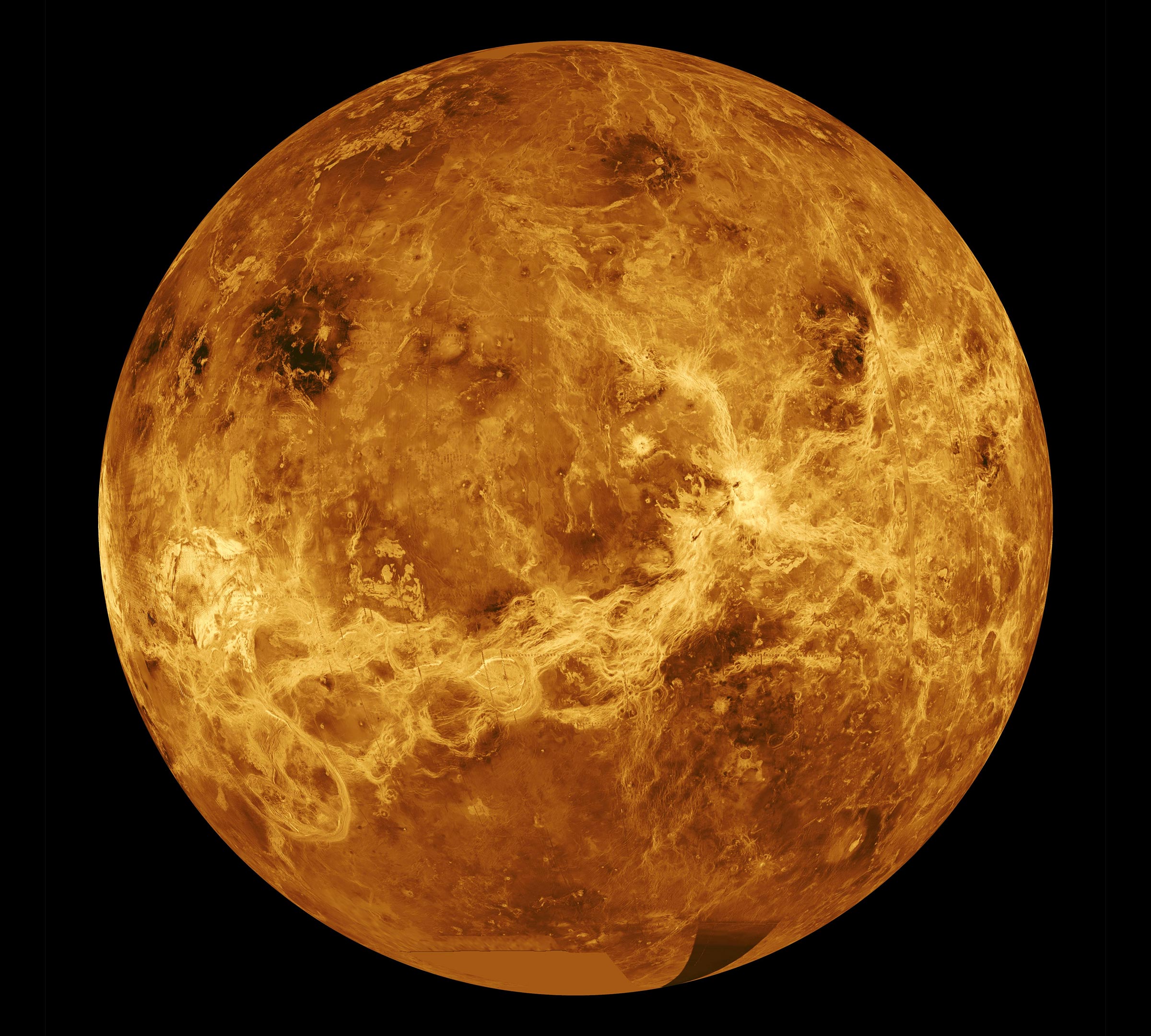
The DAVINCI mission will be the first to closely explore Alpha Regio, a region known as a “tessera.” So far found only on Venus, where they make up about 8% of the surface, tesserae are highland regions similar in appearance to rugged mountains on Earth. Previous missions discovered these features using radar instruments, but of the many international spacecraft that dove through Venus’ atmosphere between 1966 and 1985, none studied or photographed tesserae.
Thought to be ancient continents, tesserae like Alpha Regio may be among the oldest surfaces on the planet, offering scientists access to rocks that are billions of years old.
By studying these rocks from above Alpha Regio, DAVINCI scientists may learn whether ancient Venus had continents and oceans, and how water may have influenced the surface.
Photographing One of the Oldest Surfaces on Venus
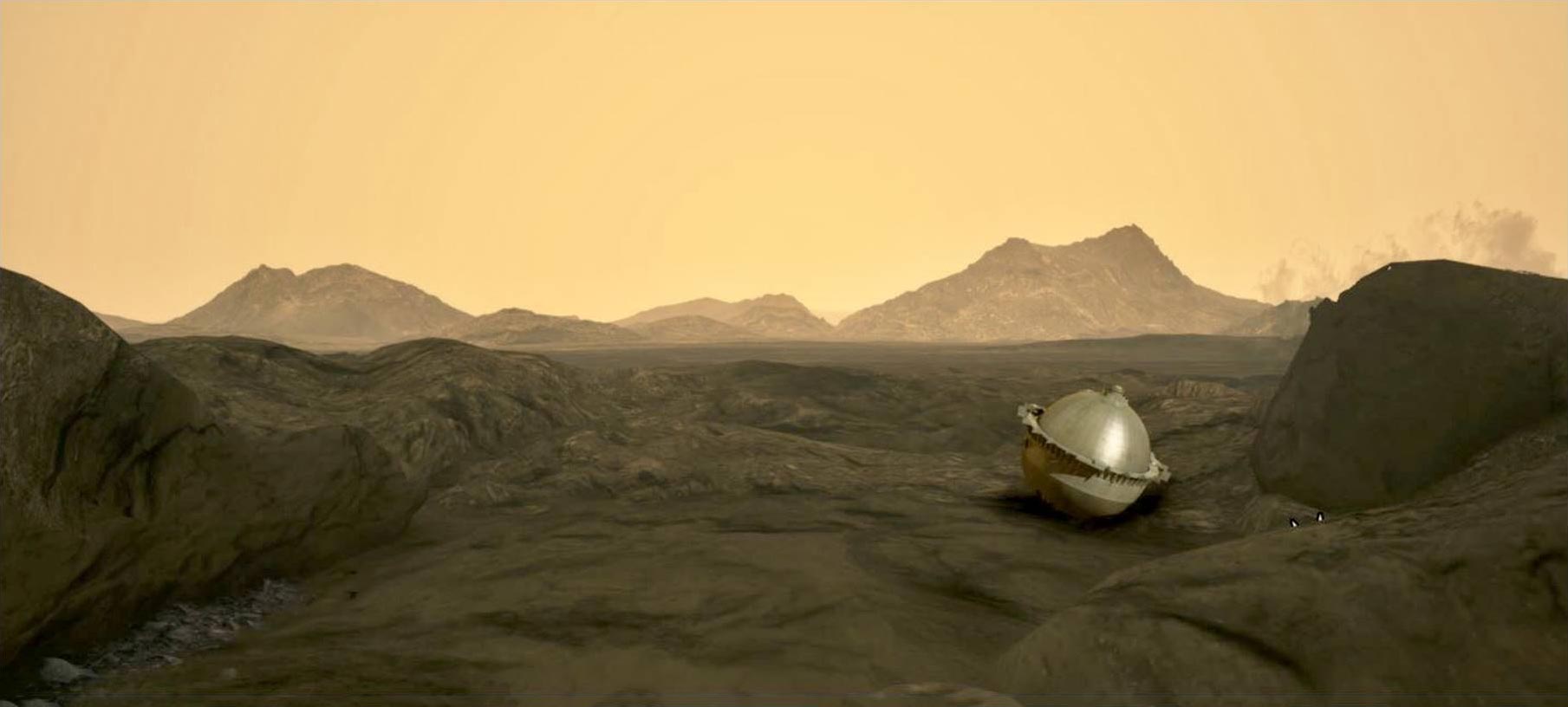
The DAVINCI probe will capture the first close-up views of Alpha Regio with its infrared and optical cameras; these will also be the first photos of the planet’s surface taken in more than 40 years.
With surface temperatures reaching 900° F and air pressure 90 times that of Earth’s, Venus’ harsh environment makes exploration challenging, while its opaque atmosphere obscures direct views. Typically, scientists rely on radar instruments from Earth or Venus-orbiting spacecraft to study its terrain.
But DAVINCI’s probe will descend through the atmosphere and below the clouds for a clear view of the mountains and plains. It will capture images comparable to an airplane’s landing view of Earth’s surface. Scientists will use the photos to compile 3D maps of Alpha Regio that will provide more detail than ever of Venus’ terrain, helping them look for rocks that are usually only made in association with water.
Unveiling Secrets of Venus’ Mysterious Lower Atmosphere
The DAVINCI mission will be the first to analyze the chemical composition of Venus’ lower atmosphere through measurements taken at regular intervals, starting from approximately 90,000 feet above the surface and continuing until just before impact.
This region is critical because it contains gases and chemical compounds that may originate from Venus’ lower clouds, surface, or even subsurface.
For example, sulfur compounds detected here could indicate whether Venusian volcanoes are currently active or were active in the recent past. Noble gases (like helium or xenon), on the other hand, remain chemically inert and maintain stable concentrations, offering invaluable clues about Venus’ ancient history, such as the planet’s past water inventory.
By comparing Venus’ noble gas composition with that of Earth and Mars, scientists can better understand why these planets — despite forming from similar starting materials — evolved into dramatically different worlds.
Moreover, DAVINCI’s measurements of isotopes and trace gases in the lower atmosphere will shed light on Venus’ water history, from ancient times to the present, and the processes that triggered the planet’s extreme greenhouse effect.
State-of-the-Art Technology to Study Venus in Detail
Thanks to modern technology, the DAVINCI probe will be able to do things 1980s-era spacecraft couldn’t.
The descent probe will be better equipped than previous probes to protect the sensitive electronics inside of it, as it will be lined on the inside with high-temperature, multi-layer insulation — layers of advanced ceramic and silica fabrics separated by aluminum sheets.
Venus’ super-thick atmosphere will slow the probe’s descent, but a parachute will also be released to slow it down further. Most Earth-friendly parachute fabrics, like nylon, would dissolve in Venus’ sulfuric acid clouds, so DAVINCI will have to use a different type of material than previous Venus missions did: one that’s resistant to acids and five times stronger than steel.
About NASA’s DAVINCI
DAVINCI (Deep Atmosphere Venus Investigation of Noble gases, Chemistry, and Imaging) is an upcoming NASA mission designed to explore Venus’ atmosphere and surface with unprecedented detail. Managed by NASA’s Goddard Space Flight Center in Greenbelt, Maryland, the mission will combine a carrier/relay spacecraft and a descent probe to study the planet up close. Goddard is leading project management, science leadership, systems engineering, and development of the atmospheric probe, supported by a science team drawn from institutions across the United States. The spacecraft itself will be built by Lockheed Martin Space in Denver, Colorado.
DAVINCI is part of NASA’s Discovery Program, overseen by the Marshall Space Flight Center in Huntsville, Alabama, for the agency’s Science Mission Directorate. Through atmospheric sampling and high-resolution imaging during its descent, DAVINCI aims to answer key questions about Venus’ history, climate evolution, and potential past habitability.
Never miss a breakthrough: Join the SciTechDaily newsletter.
Follow us on Google and Google News.
1 Comment
Looks better than bronx.