
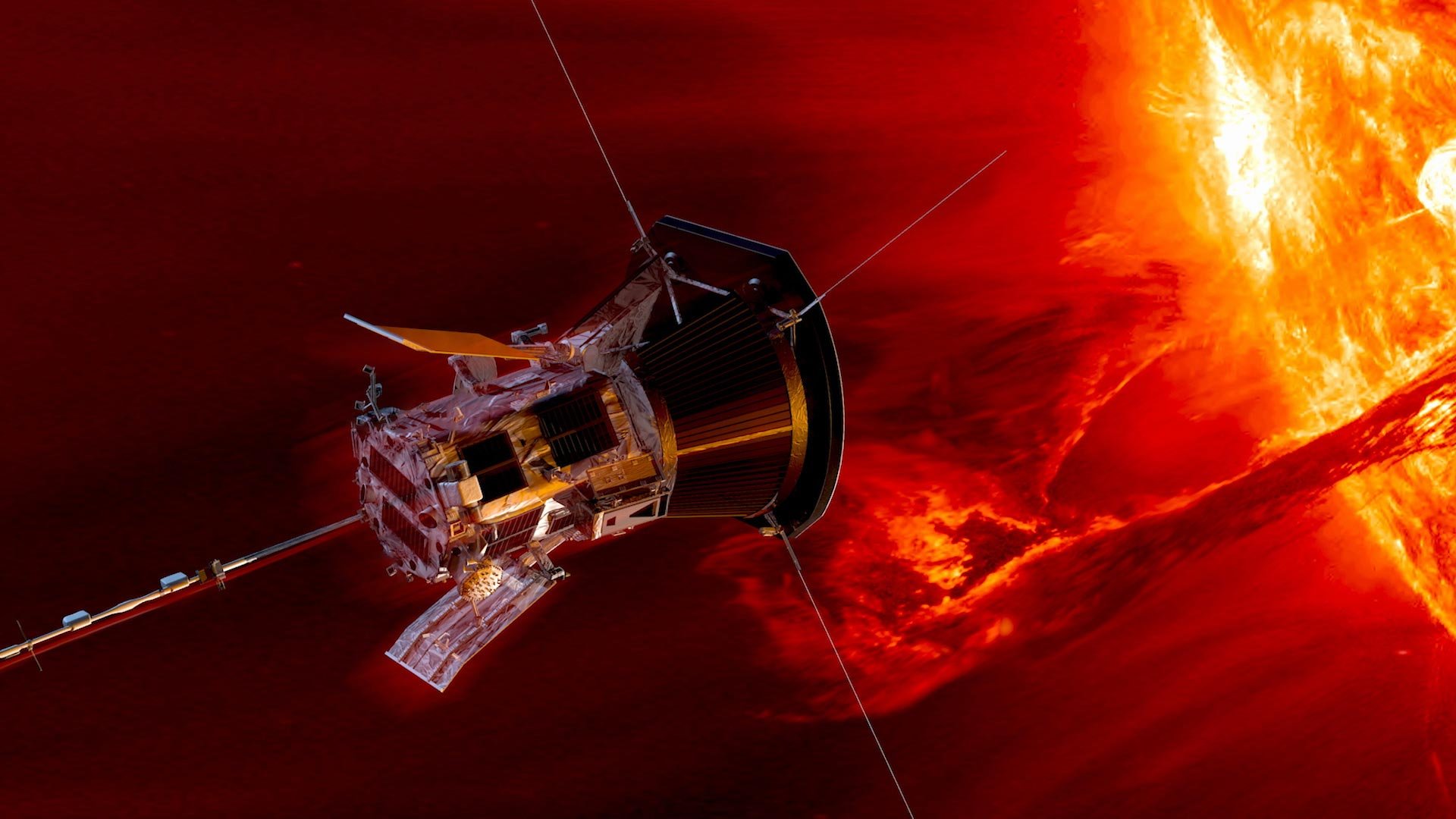
NASA’s Parker Solar Probe once again dived deep into the Sun’s atmosphere, matching its own record for speed and proximity. Racing at 430,000 mph and skimming just 3.8 million miles from the solar surface, the probe gathered rare data from within the Sun’s corona.
On March 22, NASA’s Parker Solar Probe completed its 23rd close encounter with the Sun, reaching a distance of just 3.8 million miles (6.1 million kilometers) from the solar surface, matching its previous record for proximity.
During the flyby, the spacecraft also hit its top speed of 430,000 miles per hour (692,000 kilometers per hour), a milestone it first achieved during its December 24 encounter.
All four of Parker’s scientific instruments were active during the flyby, collecting valuable data from inside the Sun’s outer atmosphere, or corona. The spacecraft had been operating autonomously during its closest approach, as planned, and was confirmed to be functioning normally during its most recent contact with mission controllers at the Johns Hopkins Applied Physics Laboratory (APL) in Maryland, where it was designed and built. Parker is expected to transmit health and science data back to Earth on Tuesday, March 25.
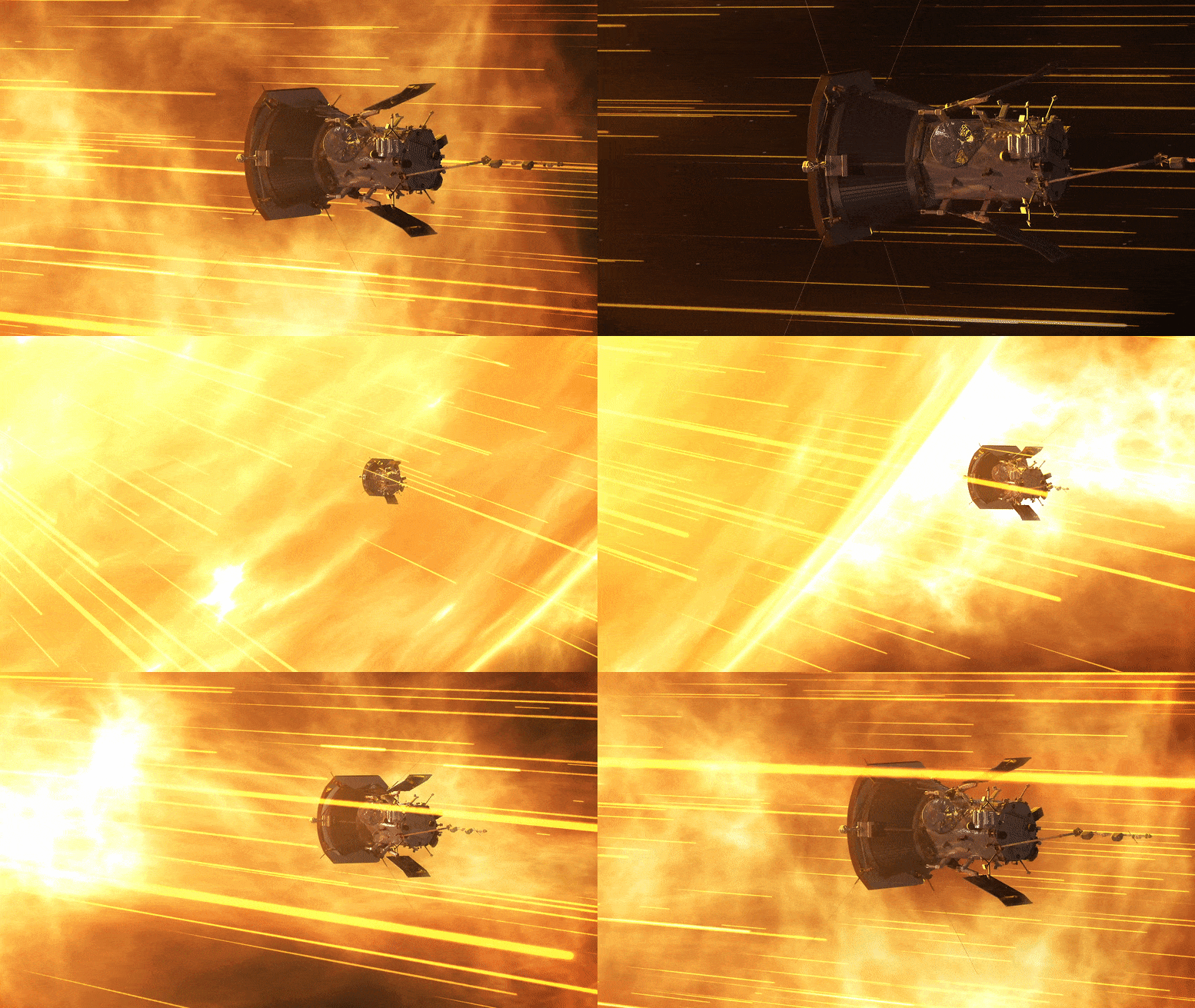
The flyby, as the second several at this distance and speed, is allowing the spacecraft to conduct unrivaled scientific measurements of the solar wind and related activity. At the same time, scientists continue to dig into the data still streaming back from the December closest approach.
The Parker Solar Probe is a NASA spacecraft designed to study the Sun up close. Launched in 2018, it’s the first mission to enter the Sun’s outer atmosphere, or corona. The probe’s goal is to help scientists better understand solar wind, space weather, and the Sun’s overall behavior—factors that can affect satellites, astronauts, and power grids on Earth. To survive the extreme heat and radiation, the probe is equipped with a heat shield that protects its instruments as it flies closer to the Sun than any spacecraft in history. Over its seven-year mission, Parker will complete multiple close flybys, gathering data that could unlock long-standing solar mysteries.
Never miss a breakthrough: Join the SciTechDaily newsletter.
Follow us on Google and Google News.