
Close Menu
    Facebook X (Twitter) Instagram
    SciTechDaily
    • Biology
    • Chemistry
    • Earth
    • Health
    • Physics
    • Science
    • Space
    • Technology
    Facebook X (Twitter) Pinterest YouTube RSS
    SciTechDaily
    Home»Earth»Nature’s Fury Unleashed in the Pacific: Hurricane Hone Wreaks Havoc
    Earth

    Nature’s Fury Unleashed in the Pacific: Hurricane Hone Wreaks Havoc

    By Adam Voiland, NASA Earth ObservatoryAugust 27, 2024No Comments3 Mins Read
    Facebook Twitter Pinterest Telegram LinkedIn WhatsApp Email Reddit
    Share
    Facebook Twitter LinkedIn Pinterest Telegram Email Reddit
    Storms Line Northeast Pacific August 2024 Annotated
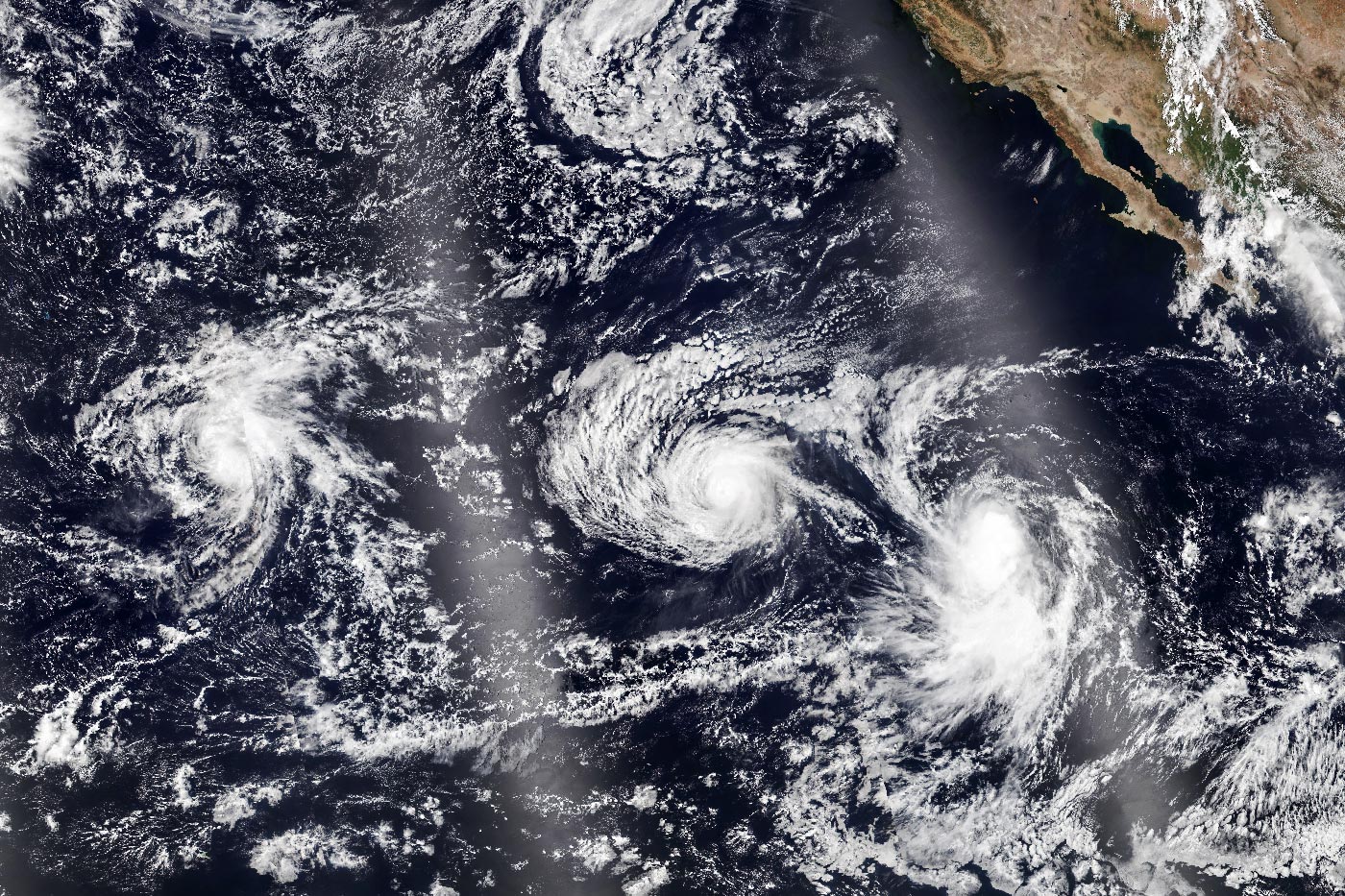
    Satellite image of storms in the Northeast Pacific Basin acquired on August 25, 2024, by the Visible Infrared Imaging Radiometer Suite on the NOAA-21 satellite.

    Late in the 2024 hurricane season, the Northeast Pacific Basin saw significant storm activity, including Hurricane Hone, which, despite not making direct landfall, caused substantial damage in Hawaii with high winds and floods.

    Following Hone, Hurricanes Gilma and Hector also emerged but were forecast to weaken due to less favorable environmental conditions. This season contributed significantly to the basin’s cyclone energy, with Hone and Gilma accounting for the majority.

    Season Overview and Hurricane Hone’s Path

    The first few months of the 2024 hurricane season were quiet in the Northeast Pacific Basin, but storm activity picked up in late August.

    On August 20, a disturbance emerged southeast of Hawaii and strengthened steadily until five days later, when it passed 50 miles (80 kilometers) south of South Point on the Island of Hawai‘i as a Category 1 storm. When the VIIRS (Visible Infrared Imaging Radiometer Suite) on the NOAA-21 satellite captured this image on August 25, Hurricane Hone was moving west-northwest at 14 miles (23 kilometers) per hour and weakening.

    Impact of Hurricane Hone on Hawaii

    Though Hone did not strike the island chain directly, it still delivered damaging winds, soaking rains, and life-threatening surf. Some parts of Hawaii received more than 10 inches (25 centimeters) of rain within 24 hours and faced localized flash floods. Some 24,000 utility customers lost power initially, though the number dropped to 2,400 by the afternoon of August 26, according to PowerOutage.us.

    Following Storms: Gilma and Hector

    Trailing a few thousand kilometers behind Hone was Gilma, a disturbance that had grown to Category 3 strength when the image was acquired. Forecasters expect the storm to weaken in the coming days as it moves westward and northward and encounters an environment with higher wind shear, cooler water temperatures, and dry air.

    Ever farther to the east was Hector, a tropical storm with maximum sustained winds of 45 miles (75 kilometers) per hour at the time of this image. Like Gilma, forecasters expect Hector to weaken in the coming days as it encounters unfavorable conditions, including Gilma’s cold water wake.

    Seasonal Analysis and Tropical Storm Trends

    As of August 26, the northeastern Pacific had seen nine named storms since the start of the hurricane season. Most were short-lived storms that fizzled soon after forming, so Hone and Gilma together accounted for roughly 60 percent of the basin’s total accumulated cyclone energy (ACE) through August 26, according to statistics compiled by Colorado State University researchers. ACE is an index that incorporates storm longevity, making it easier to compare individual storms and seasons. The total ACE on August 26, 2024, was 43.1 compared to the 1991–2020 climatological average of 72.8 for that date.

    Though tropical storms often brush Hawaii, it is unusual for them to hit the islands directly. That’s because ocean temperatures around the island are often lower than in other parts of the Pacific; a subtropical high usually helps steer storms away; and high wind shear around the island tends to break storms up, according to The Weather Channel.

    NASA Earth Observatory image by Michala Garrison, using VIIRS data from NASA EOSDIS LANCE, GIBS/Worldview, and the Joint Polar Satellite System (JPSS).

    Never miss a breakthrough: Join the SciTechDaily newsletter.
    Follow us on Google and Google News.

    Hurricane NASA NASA Earth Observatory Storms Weather
    Share. Facebook Twitter Pinterest LinkedIn Email Reddit

    Related Articles

    Dramatic Satellite Images Show Power Outages After Hurricane Ian

    Fuel for Hurricane Ian: Fearsome Power Comes From the Ocean

    Hurricane Ian Enters the Gulf of Mexico – Headed Toward the West Coast of Florida

    Hurricane Fiona & Typhoon Nanmadol: Powerful Storms Hit Puerto Rico and Japan

    Hurricane Ida Leaves a Trail of Oil in the Gulf of Mexico

    A Changed Landscape in Southern Louisiana After Hurricane Ida: Large New Patches of Open Water

    NASA Satellite Observes Massive Power Outages in New Orleans

    Hurricane Ida Batters Louisiana: 5th-Strongest Storm Ever To Make Landfall in the Continental U.S.

    Incredible View of Tropical Storm Elsa Captured From Space

    Leave A Reply Cancel Reply

    • Facebook
    • Twitter
    • Pinterest
    • YouTube

    Don't Miss a Discovery

    Subscribe for the Latest in Science & Tech!

    Trending News

    289-Million-Year-Old Reptile Mummy Reveals Origin of Human Breathing System

    New Brain Discovery Challenges Long-Held Theory of Teenage Brain Development

    Scientists Discover Plants “Scream” – We Just Couldn’t Hear Them Until Now

    Scientists Discover a Surprising Reason Intermittent Fasting Extends Life

    This Simple Fruit Wash Could Make Produce Safer and Last Days Longer

    Scientists Say Adding This Unusual Seafood to Your Diet Could Reverse Signs of Aging

    Scientists Say a Hidden Structure May Exist Inside Earth’s Core

    Doctors Surprised by the Power of a Simple Drug Against Colon Cancer

    Follow SciTechDaily
    • Facebook
    • Twitter
    • YouTube
    • Pinterest
    • Newsletter
    • RSS
    SciTech News
    • Biology News
    • Chemistry News
    • Earth News
    • Health News
    • Physics News
    • Science News
    • Space News
    • Technology News
    Recent Posts
    • Breakthrough Bowel Cancer Trial Leaves Patients Cancer-Free for Nearly 3 Years
    • New Immune Pathway Could Supercharge mRNA Cancer Vaccines
    • Natural Compound Shows Powerful Potential Against Rheumatoid Arthritis
    • 100,000-Year-Old Neanderthal Fossils in Poland Reveal Unexpected Genetic Connections
    • Unexpected Hormone Discovery Could Change How We Treat Arthritis
    Copyright © 1998 - 2026 SciTechDaily. All Rights Reserved.
    • Science News
    • About
    • Contact
    • Editorial Board
    • Privacy Policy
    • Terms of Use

    Type above and press Enter to search. Press Esc to cancel.