
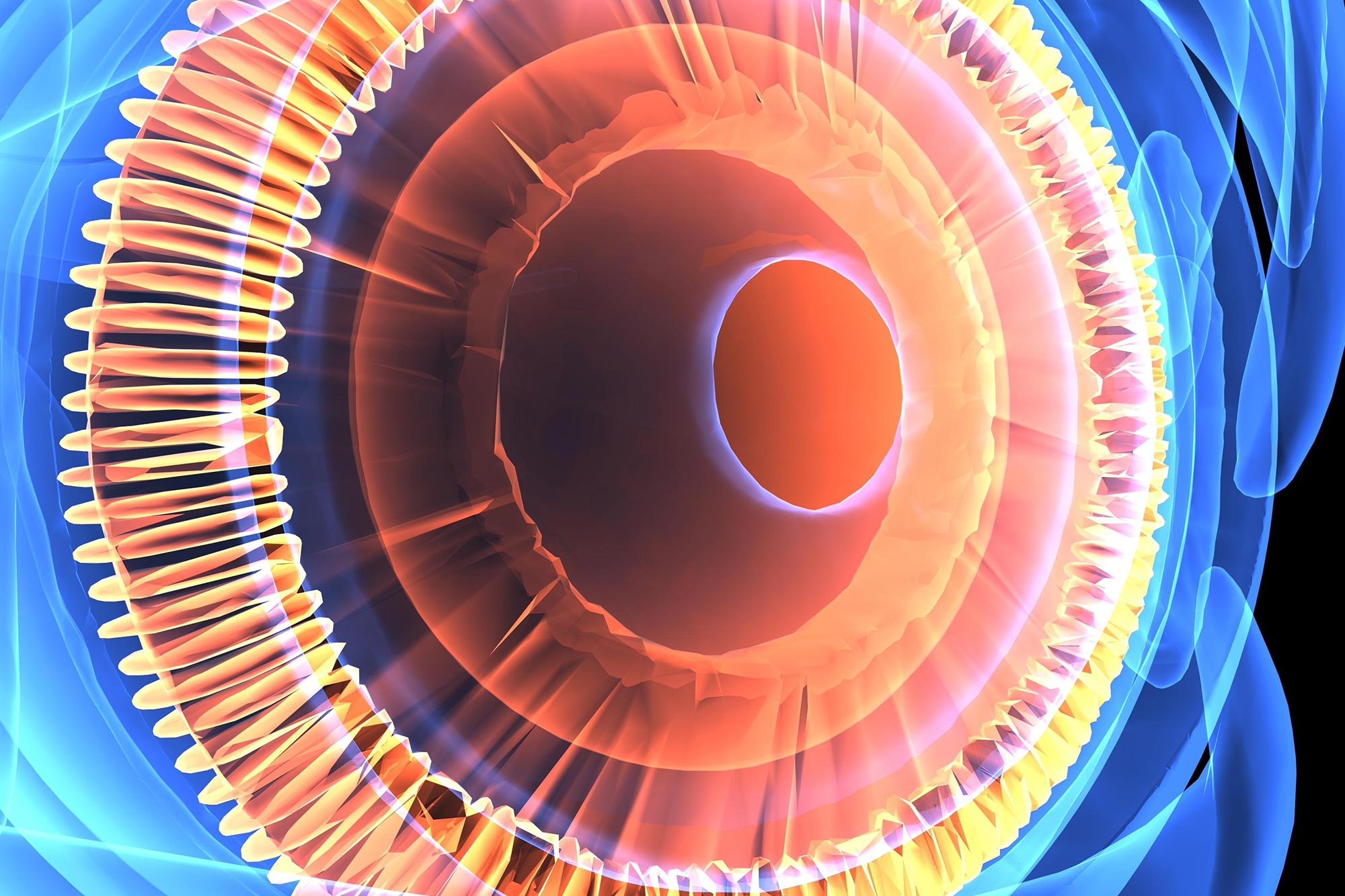
A newly discovered visual cell in deep-sea fish larvae is reshaping long-held assumptions about how vertebrates see the world.
Down in the ocean’s “twilight zone,” sunlight fades fast. Colors disappear, shadows soften, and even small improvements in sensitivity can mean the difference between finding food and going hungry. Now, researchers say deep-sea fish larvae have revealed a surprise that does not fit the classic rulebook of vertebrate vision.
Scientists have identified a previously unknown kind of light-sensing cell in larval deep-sea fish. The discovery challenges a long-standing idea that vertebrate retinas rely on just two main photoreceptors: cones for bright conditions and rods for darkness.
Dr. Fabio Cortesi from The University of Queensland’s School of the Environment said the work could eventually inform both new imaging tools and biomedical research.
“For more than 150 years, textbooks have taught that vision in most vertebrates is made of cones and rods – cones which work in bright light and rods for dark situations,” Dr Cortesi said.
“But our study of deep-sea fish larvae revealed a new cell type – a photoreceptor that optimizes vision in gloomy or twilight conditions.
“It combines the molecular machinery and genes of cones with the shape and form of rods.
“This hybrid cell has the best bits of both the bright light and dark light systems to be something new that’s really efficient for twilight vision.”
Exploring Vision in the Deep Sea
To investigate how these fish see early in life, the research team examined larval retinas from specimens collected in the Red Sea, at depths between 20 and 200 meters. The team included Dr. Lily Fogg and Dr. Fanny de Busserolles, and the samples were gathered during a series of marine exploration voyages.
“It was very tricky because the larvae are only half a centimeter long and their eyes are smaller than a millimeter,” Dr Fogg said.
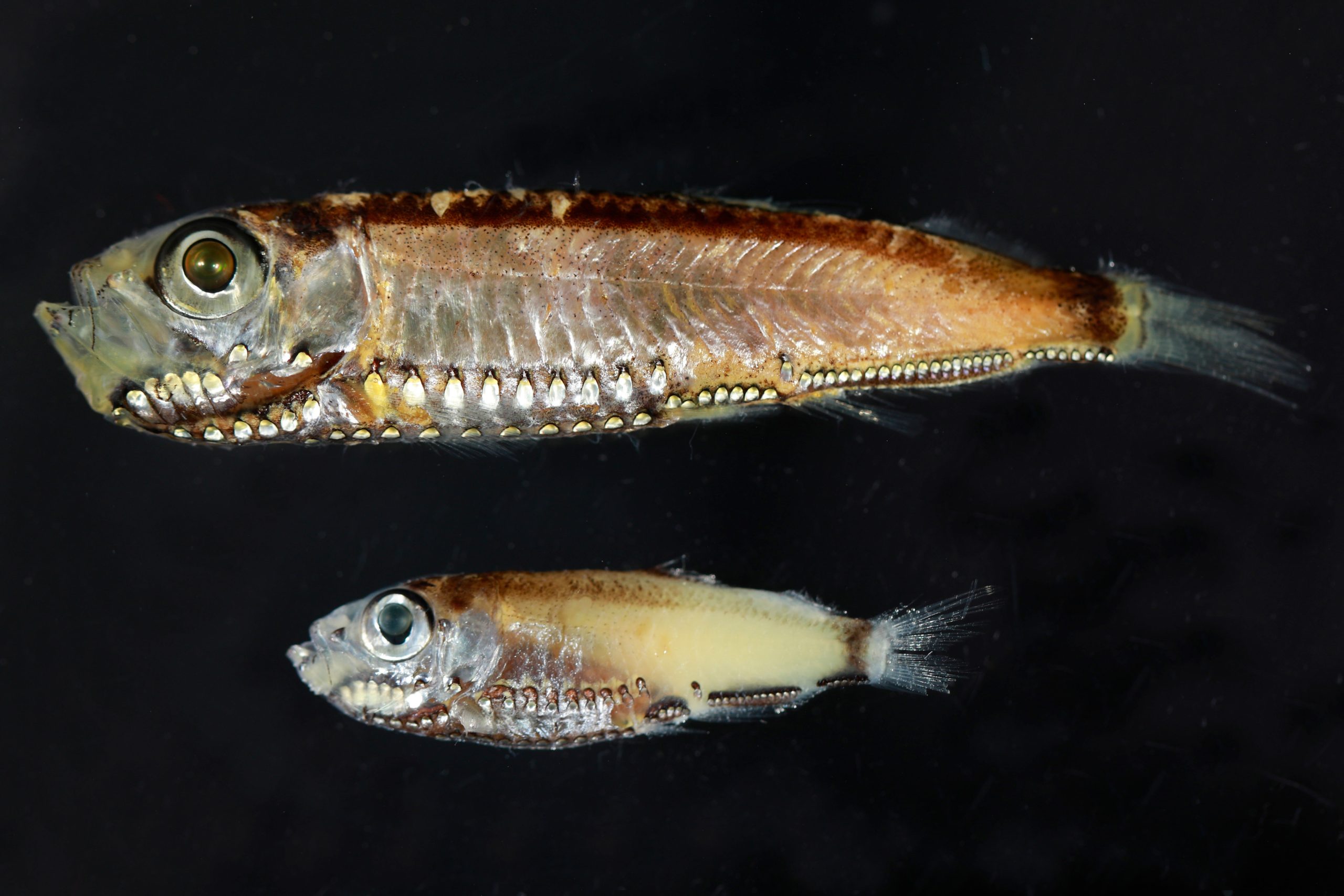
This focus on larvae matters because many deep-sea fish do not start life in the deep. They feed and grow closer to the surface, then shift downward as they mature. That migration exposes them to dramatically different light environments during development, essentially forcing their vision to keep up as the world around them grows dimmer.
“We know in adulthood some of these fish descend to live up to 1 kilometer below the surface where they optimize their vision to see in the dark,” says Dr Fogg.
“We wanted to investigate how their early vision develops in half-light closer to the surface, where they feed and grow before descending into one of the dimmest and largest habitats on Earth.”
Potential Applications in Technology and Medicine
Biology often solves problems that engineers still struggle with, especially when it comes to extracting useful information from very little light. Dr. Cortesi said the team hopes this discovery will inspire applied research.
“This finding is fascinating because it builds on the little we know about the deep sea, but there are also practical applications for this knowledge,” he said.
“In technology, creating sensors based on this unique cell structure could lead to more efficient cameras or goggles for low-light situations without sacrificing image sharpness.
“In medicine, learning how these fish build this type of visual cell in the high-pressure environment of the deep ocean could unlock new biological pathways relevant to human eye conditions such as glaucoma.”
If those ideas pan out, the impact could extend well beyond marine biology. Low-light imaging is a constant challenge in everything from underwater exploration to emergency response and night-time navigation.
Reference: “Deep-sea fish reveal an alternative developmental trajectory for vertebrate vision” by Lily G. Fogg, Stamatina Isari, Jonathan E. Barnes, Jagdish Suresh Patel, N. Justin Marshall, Walter Salzburger, Fanny de Busserolles and Fabio Cortesi, 11 February 2026, Science Advances.
DOI: 10.1126/sciadv.adx2596
Funding: Australian Research Council, King Abdullah University of Science and Technology, National Institute of General Medical Sciences of the National Institutes of Health, University of Basel, Australian Government Research Training Program Stipend
Never miss a breakthrough: Join the SciTechDaily newsletter.
Follow us on Google and Google News.
1 Comment
thank you for this information