
Close Menu
    Facebook X (Twitter) Instagram
    SciTechDaily
    • Biology
    • Chemistry
    • Earth
    • Health
    • Physics
    • Science
    • Space
    • Technology
    Facebook X (Twitter) Pinterest YouTube RSS
    SciTechDaily
    Home»Health»Non-Opioid “Pain Sponge” Therapy Stops Cartilage Loss and Eases Chronic Pain
    Health

    Non-Opioid “Pain Sponge” Therapy Stops Cartilage Loss and Eases Chronic Pain

    By International Society for Stem Cell ResearchDecember 19, 2025No Comments3 Mins Read
    Facebook Twitter Pinterest Telegram LinkedIn WhatsApp Email Reddit
    Share
    Facebook Twitter LinkedIn Pinterest Telegram Email Reddit
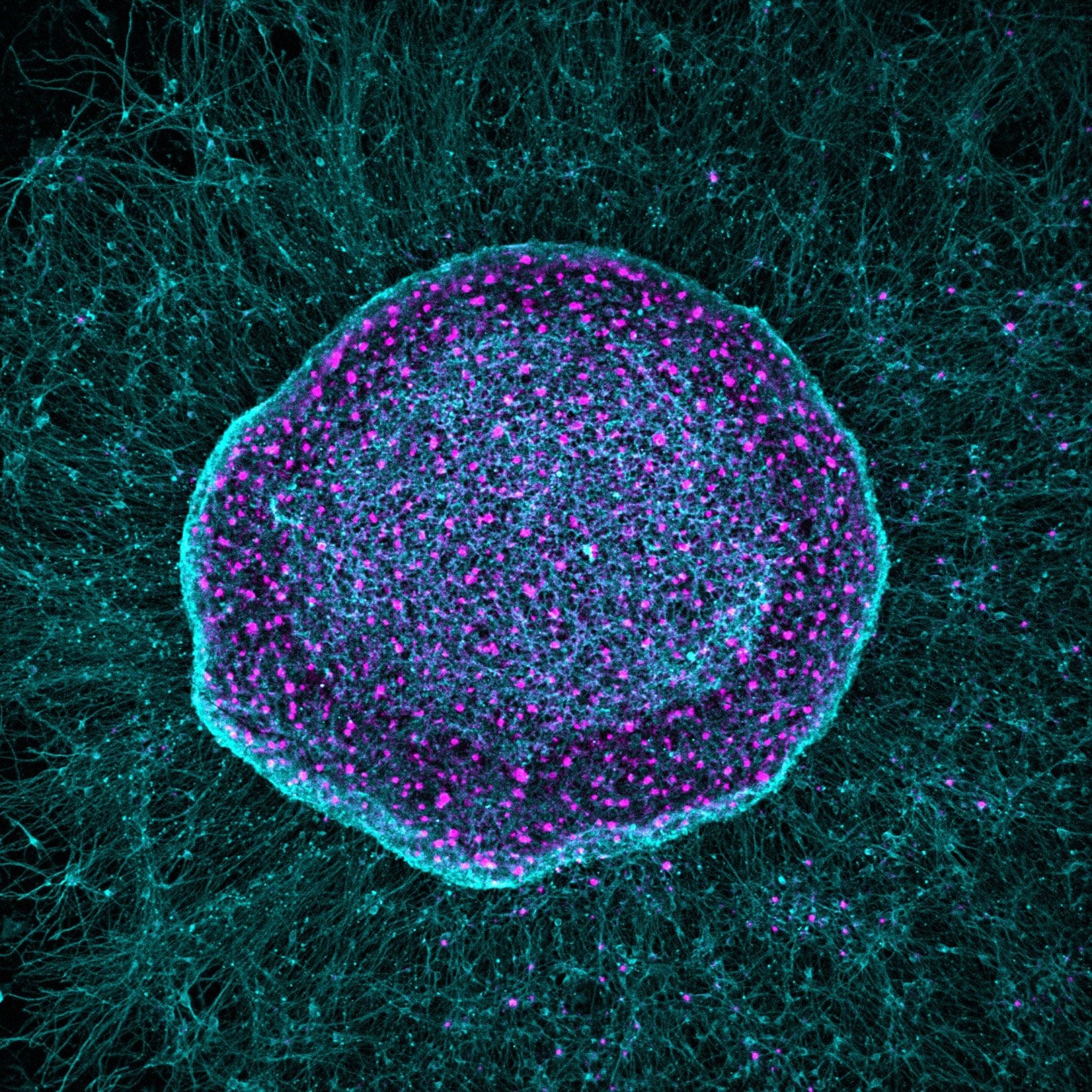
    iPSC Derived Peripheral Pain Sensing Neurons
    A fluorescence microscopy image displays iPSC-derived peripheral pain-sensing neurons (nociceptors) stained for TUJ1 (cyan) and TRKA (magenta). The cells, which form the basis of SereNeuro’s SN101 therapy function as a “pain sponge” to sequester inflammatory pain factors and halt cartilage degeneration. Credit: SereNeuro Therapeutics

    A new stem cell–based therapy challenges traditional pain treatment by using pain-sensing neurons to reduce inflammation and protect joints.

    Newly released preclinical data describes an unconventional strategy for managing chronic pain while helping preserve joint tissue. The findings focus on SN101, a first-in-class therapy developed from induced pluripotent stem cells (iPSC), and outline a biological approach that departs from traditional methods of pain control.

    SN101 is composed of mature, iPSC-derived peripheral pain-sensing neurons, known as nociceptors, and is designed to treat long-term joint pain associated with osteoarthritis. Instead of blocking pain signals directly, the data suggests the therapy works by engaging pain pathways in an unexpected way.

    “Our approach utilizes high-purity, iPSC-derived nociceptors (SN101) that effectively function as a sponge for pain factors. By injecting SN101 cells, we counterintuitively relieve pain and halt cartilage degradation,” said Gabsang Lee, scientific co-founder of SereNeuro and a professor of neurology and neuroscience at Johns Hopkins University.

    After administration, SN101 neurons absorb inflammatory molecules linked to pain without transmitting pain signals to the brain. The cells also release mechanistically confirmed regenerative factors, positioning SN101 as a potential disease-modifying osteoarthritis drug (DMOAD).

    The research was presented by SereNeuro Therapeutics, a preclinical biotechnology company focused on developing non-opioid therapies for chronic pain.

    Differentiation From Existing Pain Therapies

    The research distinguishes SN101 from emerging single-target therapies, such as Nav 1.8 inhibitors. While ion channel inhibitors are designed to block a solitary pathway, SN101 cells express all canonical pain receptors and ion channels. This biological complexity allows SN101 therapy to inherently operate on all channels simultaneously to downregulate pain and inflammation.

    Furthermore, the data contrasts SN101 with current standards, such as corticosteroids.

    “Current standard-of-care treatments, particularly corticosteroids, provide temporary relief but are known to accelerate cartilage degradation over time, ultimately worsening the disease,” said Dr. Daniël Saris, a member of SereNeuro’s Clinical Advisory Board and a professor of orthopedics and regenerative medicine at Mayo Clinic.

    In contrast to those degenerative effects, SN101 creates an environment that preserves joint tissues and relieves chronic pain, without the risk of addiction.

    Reference: “Rebuilding the Body’s Interfaces: Cell Therapy for Neuroskeletal and Surface Tissues” by Gabsang Lee, 12 December 2025, ISSCR PSC-Derived Therapies Symposium.

    Never miss a breakthrough: Join the SciTechDaily newsletter.
    Follow us on Google and Google News.

    Biotechnology Pain Management Popular Regenerative Medicine Stem Cells
    Share. Facebook Twitter Pinterest LinkedIn Email Reddit

    Related Articles

    Breakthrough Drug Restores Vision: Researchers Successfully Reverse Retinal Damage

    Regenerative Medicine Breakthrough: New Method Creates 854x More Mitochondria

    Can a Broken Heart Heal Itself? Science Unveils the Answer

    Scientists Discover Self-Healing Secrets of the Human Heart

    Cartilage Regeneration Breakthrough Ushers In a New Era of Joint Health

    New Hope for Treatment of Parkinson’s Disease: Designer Neurons

    Gene Therapy Reverses Effects of Autism-Linked Mutation in Human Brain Organoids

    MIT Scientists Develop New Regenerative Drug That Reverses Hearing Loss

    “Time Jump” by 30 Years: Old Skins Cells Reprogrammed To Regain Youthful Function

    Leave A Reply Cancel Reply

    • Facebook
    • Twitter
    • Pinterest
    • YouTube

    Don't Miss a Discovery

    Subscribe for the Latest in Science & Tech!

    Trending News

    Bone-Strengthening Discovery Could Reverse Osteoporosis

    Scientists Uncover Hidden Trigger Behind Stem Cell Aging

    Scientists Find Way to Reverse Fatty Liver Disease Without Changing Diet

    Could Humans Regrow Limbs? New Study Reveals Promising Genetic Pathway

    Scientists Reveal Eating Fruits and Vegetables May Increase Your Risk of Lung Cancer

    Scientists Reverse Brain Aging With Simple Nasal Spray

    Scientists Uncover Potential Brain Risks of Popular Fish Oil Supplements

    Scientists Discover a Surprising Way To Make Bread Healthier and More Nutritious

    Follow SciTechDaily
    • Facebook
    • Twitter
    • YouTube
    • Pinterest
    • Newsletter
    • RSS
    SciTech News
    • Biology News
    • Chemistry News
    • Earth News
    • Health News
    • Physics News
    • Science News
    • Space News
    • Technology News
    Recent Posts
    • Europe’s Most Active Volcano Just Got Stranger – Here’s Why Scientists Are Rethinking It
    • Why Are Giant Ants Letting Tiny Ants Crawl All Over Them?
    • Revolutionary Technique Sends Healthy Mitochondria Exactly Where They’re Needed
    • This Student Recreated the Universe in a Bottle. What She Discovered Could Help Reveal How Life Started on Earth
    • Alzheimer’s Symptoms May Start Outside the Brain, Study Finds
    Copyright © 1998 - 2026 SciTechDaily. All Rights Reserved.
    • Science News
    • About
    • Contact
    • Editorial Board
    • Privacy Policy
    • Terms of Use

    Type above and press Enter to search. Press Esc to cancel.