
Close Menu
    Facebook X (Twitter) Instagram
    SciTechDaily
    • Biology
    • Chemistry
    • Earth
    • Health
    • Physics
    • Science
    • Space
    • Technology
    Facebook X (Twitter) Pinterest YouTube RSS
    SciTechDaily
    Home»Chemistry»Poultry Power: Transforming Waste Chicken Fat into Clean Energy
    Chemistry

    Poultry Power: Transforming Waste Chicken Fat into Clean Energy

    By American Chemical SocietyJune 19, 20241 Comment4 Mins Read
    Facebook Twitter Pinterest Telegram LinkedIn WhatsApp Email Reddit
    Share
    Facebook Twitter LinkedIn Pinterest Telegram Email Reddit
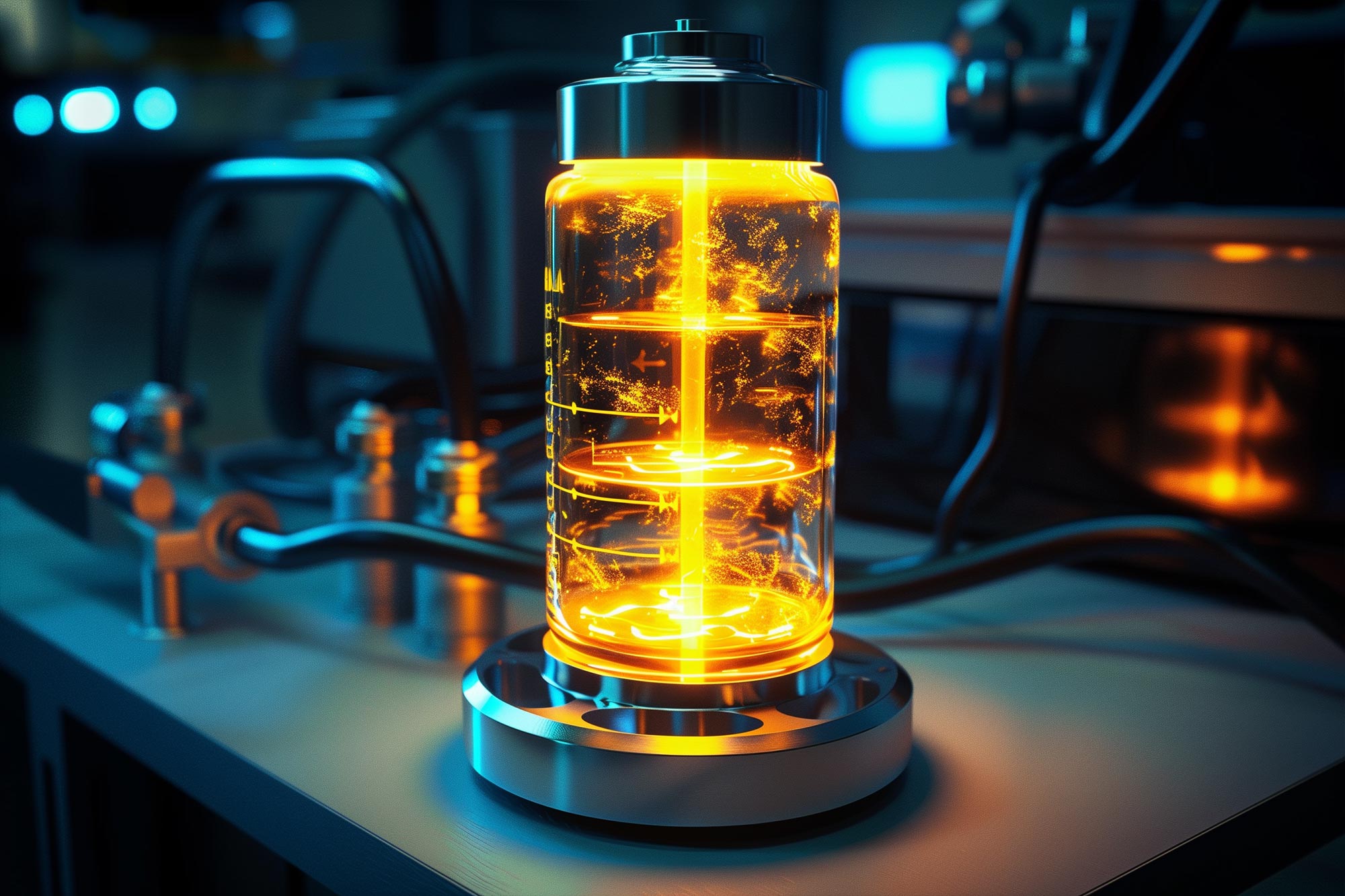
    Supercapacitor Energy Storage Device Art Concept
    In a recent study, scientists have successfully converted chicken fat into electrodes for supercapacitors, offering a sustainable alternative to conventional materials like graphene. This innovative process creates high-performance electrodes from a cost-effective and eco-friendly source, demonstrating improved energy storage capabilities and the potential to utilize bio-waste for green energy solutions. (Artist’s concept.) Credit: SciTechDaily.com

    Researchers have developed a novel method to convert chicken fat into carbon-based electrodes for supercapacitors, offering an eco-friendly alternative to traditional materials.

    This innovation not only addresses the cost and environmental issues associated with existing storage devices but also enhances the performance and efficiency of energy storage technologies.

    Global Shift to Sustainable Energy and Storage Needs

    The global move toward more sustainable, green energy has increased power reserves and the demand for energy storage devices. Unfortunately, some materials for these devices can be expensive and environmentally problematic. Producing alternative energy storage devices from things that are usually thrown away could help resolve these challenges.

    Now, researchers in ACS Applied Materials & Interfaces report a method to transform chicken fat into carbon-based electrodes for supercapacitors that store energy and power LEDs.
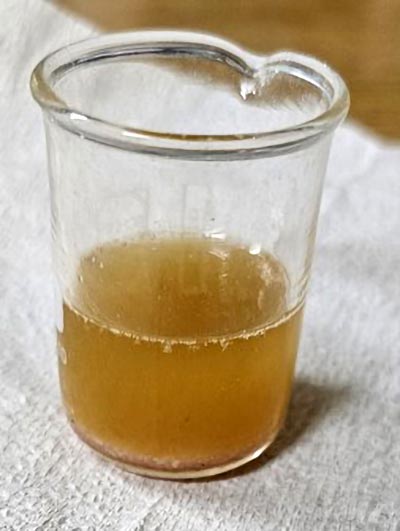
    Extracted Chicken Fat for Supercapacitor
    This extracted chicken fat created a carbon-based material for a supercapacitor. Credit: Mohan Reddy Pallavolu

    Renewable Energy Growth and Storage Challenges

    In 2023, global renewable energy capacity experienced an unprecedented almost 50 percent increase versus the previous year, according to the International Energy Agency. But that excess energy must be stored somewhere for the world to benefit from its production later.

    For example, sunny days in California have recently triggered negative energy prices due to excess supply from rooftop solar panels. Recent efforts to design high-performance storage devices have taken advantage of carbon materials, such as graphene, because of their efficient charge transportation and natural abundance, but their fabrication is expensive and generates pollution and greenhouse gases.

    Looking for an alternative carbon source material, Mohan Reddy Pallavolu, Jae Hak Jung, Sang Woo Joo, and colleagues wanted to develop a simple, cost-effective method for converting waste chicken fat into electrically conductive nanostructures for supercapacitor energy storage devices.

    Innovative Use of Chicken Fat for Energy Storage

    The researchers first used a gas flame gun to render the fat from a chicken and burned the melted oil using a flame wick method, much as one would use an oil lamp. They then collected the soot on the bottom of a flask, which was suspended above the flame.

    Electron microscopy showed that the soot contained carbon-based nanostructures that were uniform spherical lattices of concentric graphite rings, like the layers of onions. The researchers tested a way to enhance the electrical characteristics of the carbon nanoparticles by soaking them in a solution of thiourea.
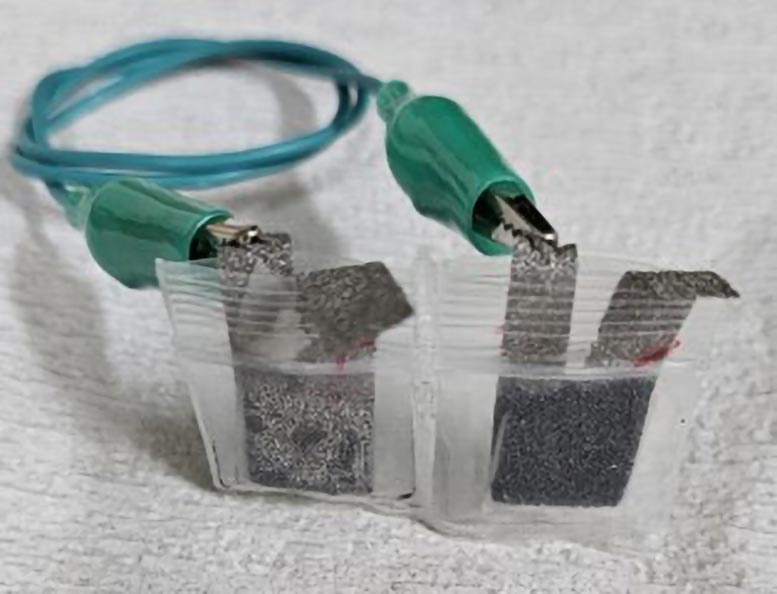
    Chicken Fat Sourced Carbon Material Electrode
    An LED can light up when a chicken-fat-sourced carbon material is used as an electrode in these asymmetric supercapacitors. Credit: Mohan Reddy Pallavolu

    Development and Testing of Carbon-Based Electrodes

    Assembled into the negative electrode of an asymmetric supercapacitor, the chicken fat-sourced carbon nanoparticles demonstrated good capacitance and durability, as well as high energy and power density. As predicted, these properties were improved further when the electrodes were made of the thiourea-treated carbon nanoparticles.

    The researchers then demonstrated that the new supercapacitor could perform real-time applications — charging and connecting two of them to light up red, green, and blue LEDs. The results highlight the potential advantages of using food waste like chicken fat as a carbon source in the search for even greener green energy.

    Reference: “Strategic Way of Synthesizing Heteroatom-Doped Carbon Nano-onions Using Waste Chicken Fat Oil for Energy Storage Devices” by Jyothi Nallapureddy, Thupakula Venkata Madhukar Sreekanth, Mohan Reddy Pallavolu, P. S. Srinivasa Babu, Ramesh Reddy Nallapureddy, Jae Hak Jung and Sang Woo Joo, 24 April 2024, ACS Applied Materials & Interfaces.
    DOI: 10.1021/acsami.4c02753

    The authors acknowledge funding from the National Research Foundation of Korea through the Regional Leading Research Center (RLRC) for Autonomous Vehicle Parts and Materials Innovation.

    Never miss a breakthrough: Join the SciTechDaily newsletter.
    Follow us on Google and Google News.

    American Chemical Society Energy Green Energy Popular Supercapacitors
    Share. Facebook Twitter Pinterest LinkedIn Email Reddit

    Related Articles

    Machinery of Photosynthesis Supercharges Solar Energy to Hydrogen Fuel Conversion

    Clean Energy Technology Revolutionized by “Needle in a Haystack” Discovery

    Harnessing the Entire Spectrum of Sunlight to Make Solar Energy More Efficient

    Gasification Goes Green: Low-Temp Photocatalyst Slashes Carbon Footprint for Syngas

    Researchers Find New Way to Convert Carbon Dioxide Into Usable Fuel

    Solving a Riddle That Would Provide the World With Entirely Clean, Renewable Energy

    Turning Plastic Trash Into Treasure: Upcycling Plastic Into High-Quality Liquid Products

    Powered by Sunlight, ‘Artificial Leaf’ Successfully Produces Clean Gas From CO2 and Water

    Catalytic Reactor Turns Greenhouse Gas Into Pure Liquid Fuel

    1 Comment

    1. Chris on June 21, 2024 2:42 pm

      Makes a fantastic poutine gravy too!

      Reply
    Leave A Reply Cancel Reply

    • Facebook
    • Twitter
    • Pinterest
    • YouTube

    Don't Miss a Discovery

    Subscribe for the Latest in Science & Tech!

    Trending News

    Wasp Colonies Explode Into Violence After Losing Their Queen

    Scientists Create “Living Plastic” That Self-Destructs in Just Six Days

    Your Blood May Carry a 700-Million-Year-Old Secret

    Scientists Discover Some “Zombie Cells” May Actually Help You Live Longer

    Earth May Be Seeding Venus With Life, According to New Research

    What Scientists Found Inside a 117-Year-Old Woman Reveals New Clues to Long Life

    Scientists Discover Mysterious Creature Living in the Great Salt Lake – and It Exists Nowhere Else on Earth

    It’s Alive? Surprising Discovery Changes What We Know About Fog

    Follow SciTechDaily
    • Facebook
    • Twitter
    • YouTube
    • Pinterest
    • Newsletter
    • RSS
    SciTech News
    • Biology News
    • Chemistry News
    • Earth News
    • Health News
    • Physics News
    • Science News
    • Space News
    • Technology News
    Recent Posts
    • Scientists Crack Major Ammonia Problem With a Platinum Catalyst Breakthrough
    • MIT Engineers Solve a Major Lidar Problem That Has Stumped Researchers for Years
    • NASA’s X-59 Sonic Boom Killer Is Ready for Its Biggest Test Yet
    • Why Some Cancers Turn Deadly: Researchers Uncover a Hidden Trigger
    • The Best Exercise Combination for Longevity, According to a 30-Year Study
    Copyright © 1998 - 2026 SciTechDaily. All Rights Reserved.
    • Science News
    • About
    • Contact
    • Editorial Board
    • Privacy Policy
    • Terms of Use

    Type above and press Enter to search. Press Esc to cancel.