
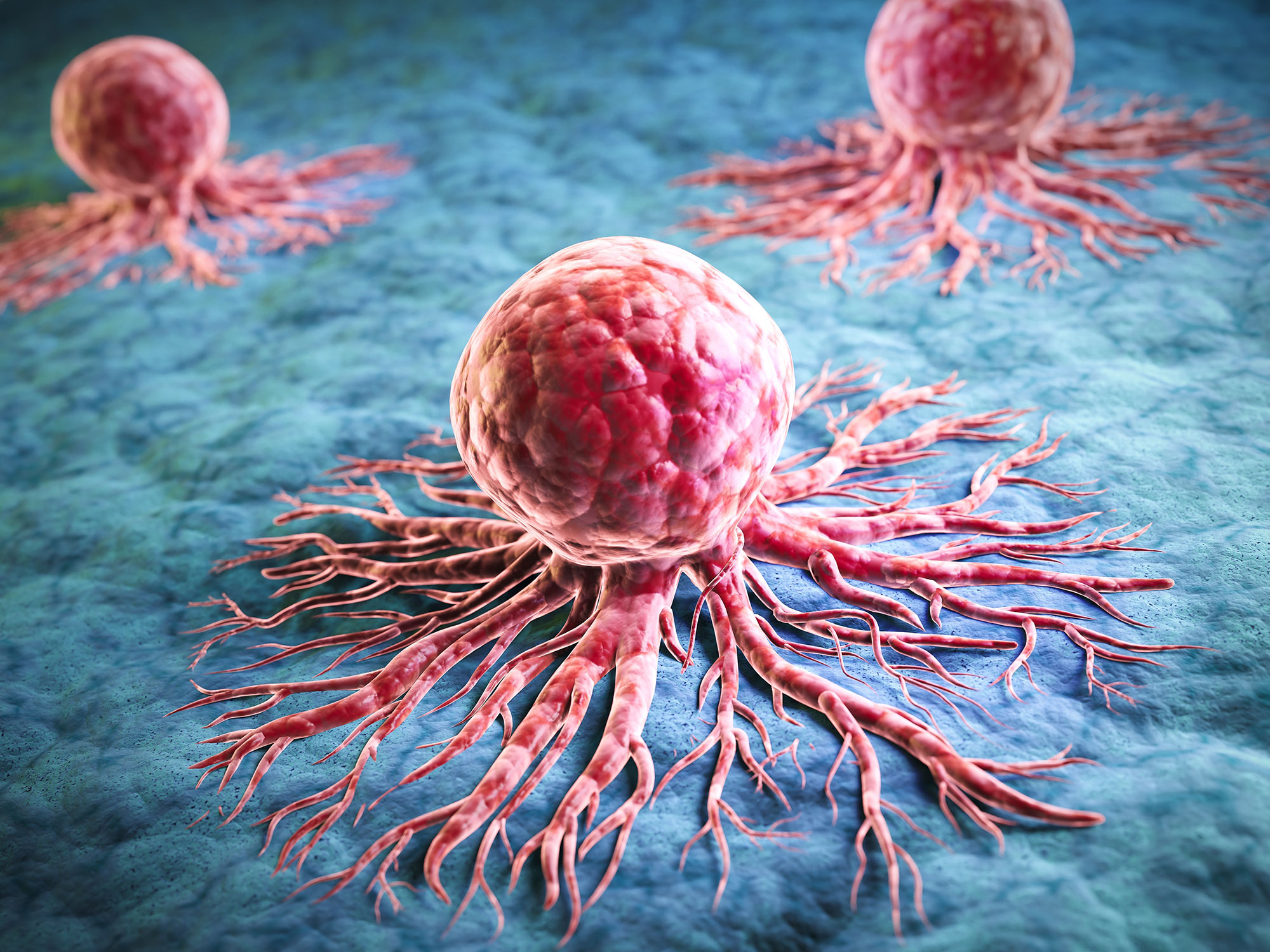
Scientists have discovered how leukemia cells outsmart a leading treatment and may have found a way to stop them.
Scientists from Rutgers Health and collaborating institutions have uncovered why a widely used leukemia drug stops working for many patients and have identified a possible method to reverse that resistance.
The research team found that a specific protein enables cancer cells to alter their mitochondria, the structures that generate cellular energy, in a way that shields them from venetoclax (brand name, Venclexta). This medication is a common therapy for acute myeloid leukemia but often becomes less effective after extended treatment.
When the scientists blocked this protein using experimental compounds in mice carrying human acute myeloid leukemia, the treatment regained its strength and significantly increased survival.
Published in Science Advances, the study reveals a previously unknown reason for drug resistance and points to a promising new strategy for combating one of the most lethal blood cancers in adults.
“We found that mitochondria change their shape to prevent apoptosis, a type of cell suicide induced by these drugs,” said senior study author Christina Glytsou, an assistant professor at Rutgers’ Ernest Mario School of Pharmacy and Robert Wood Johnson Medical School and a member of the Rutgers Cancer Institute’s Pediatric Hematology and Oncology Research Center of Excellence (NJPHORCE).
Although venetoclax induces remission in many acute myeloid leukemia patients by triggering cancer cell death, resistance develops in nearly all cases. The five-year survival rate remains at 30% and the disease kills about 11,000 Americans each year.
The Role of OPA1 in Cancer Cell Survival
Using electron microscopy and genetic screens, members of Glytsou’s team discovered that treatment-resistant leukemia cells produce high levels of a protein called OPA1, which controls the internal structure of mitochondria. Cells with these elevated OPA1 levels develop tighter, more numerous folds in their mitochondrial membranes — compartments called cristae – that trap cytochrome c, a molecule that normally triggers cell death when released.
The researchers confirmed the finding by examining cells from leukemia patients. Those who had relapsed after treatment showed sharply narrower cristae than newly diagnosed patients, with the most pronounced changes in patients who had been treated with venetoclax.
To test whether they restore drug efficacy by blocking this structural change, team members used two experimental OPA1 inhibitors. In mice transplanted with human leukemia cells, combining the OPA1 inhibitors with venetoclax at least doubled survival time compared with venetoclax alone.
The combination worked across diverse leukemia subtypes, including cells with mutations in the p53 gene, which are strongly associated with treatment resistance and poor outcomes.
The OPA1 inhibitors also appear to work through additional mechanisms beyond restoring cell death pathways. The experiments revealed that cells lacking OPA1 become heavily dependent on the nutrient glutamine and vulnerable to ferroptosis, a different form of cell death driven by iron and lipid damage.
Tests in mice showed the compounds didn’t harm normal blood cell production, a critical safety consideration for any potential leukemia treatment in humans.
Early but Promising Progress
The research is in early stages. The OPA1 inhibitors, developed by collaborators at the University of Padua in Italy, are lead compounds that require further refinement before human testing can begin.
“There is still some time to go through,” Glytsou said, adding that a third generation of compounds may be needed to improve the drugs’ solubility and other properties.
Still, the work offers a promising direction for treating resistant leukemia and potentially other cancers, said Glytsou, who is also a member of the cancer institute’s cancer pharmacology and cancer metabolism and immunology research programs.
OPA1 is overexpressed in multiple cancer types and associated with poor prognosis and therapy resistance in breast cancer, lung cancer, and other malignancies.
Reference: “Small-molecule OPA1 inhibitors reverse mitochondrial adaptations to overcome therapy resistance in acute myeloid leukemia” by Sofia La Vecchia, Saurav Doshi, Petros Antonoglou, Tanima Kundu, Wafa Al Santli, Kleopatra Avrampou, Matthew T. Witkowski, Anna Pellattiero, Federico Magrin, Kristina Ames, Amit Verma, Kira Gritsman, Xiaoyang Su, Andrea Mattarei, Iannis Aifantis, Luca Scorrano and Christina Glytsou, 15 October 2025, Science Advances.
DOI: 10.1126/sciadv.adx8662
Never miss a breakthrough: Join the SciTechDaily newsletter.
Follow us on Google and Google News.
2 Comments
This is really a good news however, one would hope the same research could be applied to antibiotic resistant bugs such as MRSA.
Very incouraging!! Father of a son who beat AML in 1989 with a BMT,the only real cure at that time.
This discovery brings hope to those new victims of the disease.