
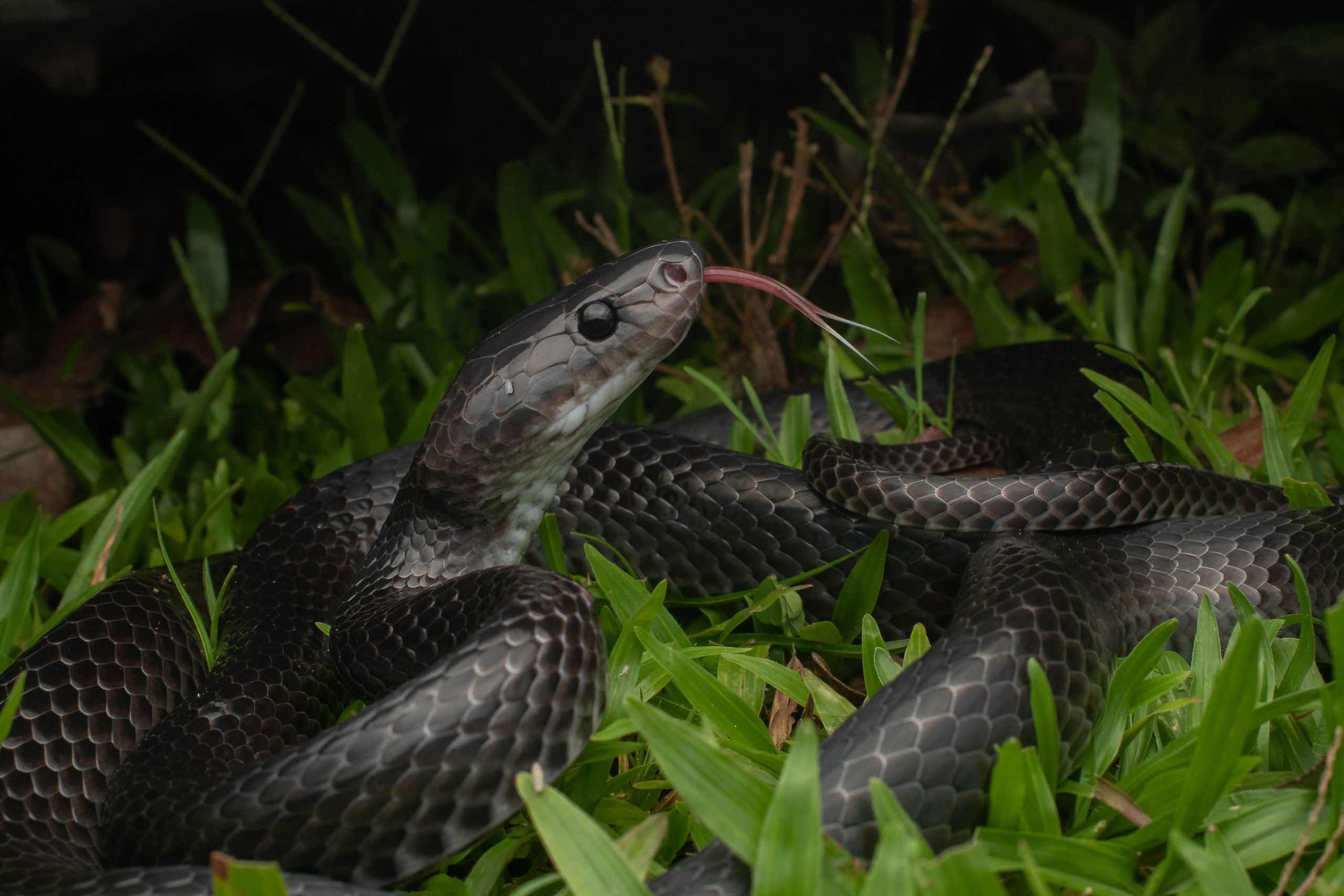
A newly identified snake species from the remote Great Nicobar Islands is offering scientists a fresh look at the region’s hidden biodiversity.
A newly identified species of wolf snake has been confirmed from the Great Nicobar Islands, India, following years of uncertainty about its true identity. The snake was originally known from a single sighting on Great Nicobar Island, and for more than a decade it had been considered part of the widespread Lycodon subcinctus group.
Recent taxonomic studies suggested that the Nicobar population might represent an undescribed lineage, prompting researchers to re-examine earlier material and collect fresh specimens to resolve the mystery.
Researchers R. S. Naveen and S. R. Chandramouli of Pondicherry University, Zeeshan A. Mirza of the Max Planck Institute for Biology and Girish Choure of Pune published the formal description of the species in the open-access journal Evolutionary Systematics.
Their investigation combined newly collected material, a previously unstudied museum specimen, and molecular analyses to demonstrate that the Nicobar snake is genetically distinct. The results show clear separation from other members of the L. subcinctus complex, including a genetic divergence of 6 percent or more, a level that supports recognition as a separate species.
The researchers named the species Irwin’s wolf snake, or Lycodon irwini, in honor of the late Stephen Robert Irwin, the renowned Australian zookeeper, conservationist, television personality, and wildlife educator.
“His passion and dedication to wildlife education and conservation have inspired naturalists and conservationists worldwide, including the authors of the paper,” they write in their study.
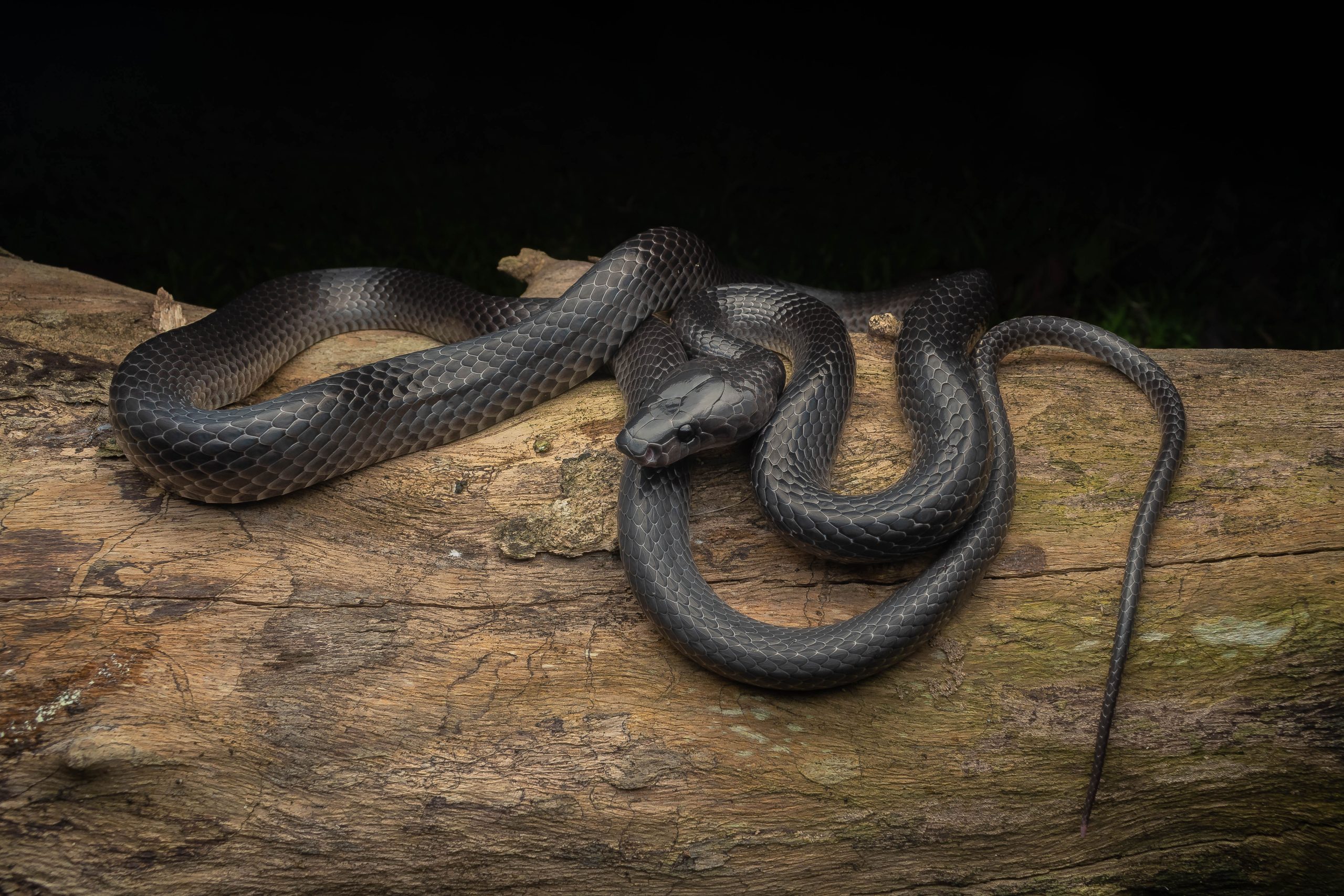
Appearance and Ecology
The adults of the new species are glossy black and can grow to a meter in length. The snakes are non-venomous and likely feed on reptiles, amphibians, and small mammals. Currently, the species appears to the endemic to the Great Nicobar Island in the Andaman and Nicobar Archipelago. Based on the narrow distribution range and potential human threats to the species, the authors suggest that it should be considered Endangered.
Although Irwin’s wolf snake fits within the broader Lycodon subcinctus group, several characteristics make it stand out from its closest relatives. The species is known from only four confirmed records, which is extremely rare even for island reptiles in the Nicobar Archipelago. Its scarcity, despite repeated surveys, suggests that the snake may be naturally uncommon, highly secretive, or tied to very specific microhabitats within the island’s moist evergreen forests.
The species also shows an unusual combination of physical traits that do not occur together in other members of the group. These include the occasional presence of a preocular scale (a feature absent in related species), prefrontal scales that do not touch the orbit, and the complete lack of the white dorsal bands typical of many wolf snakes. It also possesses unusually high counts of ventral and subcaudal scales, reinforcing its distinctiveness.
“New species continue to be discovered, exemplified by Lycodon irwini, highlighting the ongoing progress in taxonomy and the incomplete understanding of herpetofaunal diversity and distribution in the region,” the researchers write in their paper.
Reference: “A ‘Crikey’ new snake: An insular Lycodon Fitzinger, 1826 (Squamata, Colubridae) from the Nicobar Archipelago, India” by R. S. Naveen, Zeeshan A. Mirza, Girish Choure and S. R. Chandramouli, 7 November 2025, Evolutionary Systematics.
DOI: 10.3897/evolsyst.9.170645
Never miss a breakthrough: Join the SciTechDaily newsletter.
Follow us on Google and Google News.