

Summary: Researchers have created a new experimental model that reveals how changing a key Alzheimer’s risk gene can shift the brain from vulnerability toward resilience. By switching a high-risk gene variant to a protective one in adult mice, the study uncovered broad improvements in disease-related brain changes and cognitive function.
Flipping a single gene in the adult brain shifted Alzheimer’s biology from risk toward resilience.
Scientists at the University of Kentucky have created an experimental research model that may help guide the development of stronger treatments for Alzheimer’s disease. The work centers on a gene that strongly shapes both vulnerability to the illness and the brain’s ability to resist it.
The research, reported in Nature Neuroscience, examines apolipoprotein E (APOE), a gene that has been linked to Alzheimer’s risk for decades. The team designed a novel mouse model that lets researchers effectively “flip a switch,” converting the high-risk form of the gene (APOE4) into the protective version (APOE2) in adult animals.
A gene with outsized influence
Carrying the APOE4 variant can raise a person’s likelihood of developing Alzheimer’s by as much as 15 times. In contrast, individuals with APOE2 generally face lower risk and show better cognitive health as they age. In the study, activating the gene switch specifically in astrocytes led to notable improvements.
The mice developed fewer hallmark signs of Alzheimer’s, including amyloid plaque accumulation and brain inflammation, and they performed better on memory tasks.
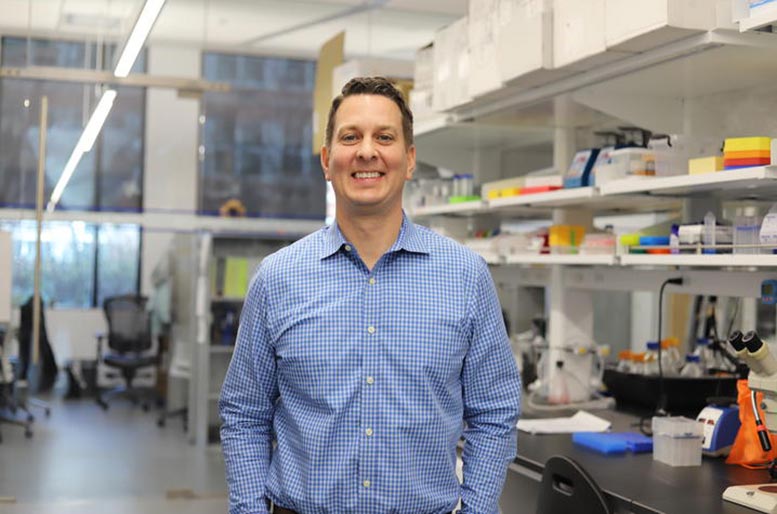
“This model allows us to test what happens when we go from risk to resilience. Remarkably, even switching the gene later in life improved multiple aspects of Alzheimer’s pathology at once,” said Lesley Golden, lead author. Golden trained with co-author Lance Johnson in the UK College of Medicine Department of Physiology through support from the UK Sanders-Brown Center on Aging.
Astrocytes take center stage
The results show that precisely altering APOE activity could influence several disease-related processes at the same time. They also highlight the importance of astrocytes, the star-shaped support cells that help regulate brain function. According to the researchers, these cells appear to be a key link between APOE and the biological mechanisms that drive Alzheimer’s disease.
Although the work was done in mice, researchers say it provides a critical foundation for future human studies exploring gene-based strategies to prevent or slow Alzheimer’s.
“By understanding and manipulating APOE, we may one day be able to transform the biology of Alzheimer’s rather than just treating its symptoms,” Johnson said.
Reference: “APOE4 to APOE2 allelic switching in mice improves Alzheimer’s disease-related metabolic signatures, neuropathology and cognition” by Lesley R. Golden, Dahlia S. Siano, Isaiah O. Stephens, Steven M. MacLean, Kai Saito, Georgia L. Nolt, Jessica L. Funnell, Akhil V. Pallerla, Sangderk Lee, Cathryn Smith, Jing Chen, Haining Zhu, Clairity Voy, Callie M. Whitus, Gabriela Hernandez, Brandon C. Farmer, Kumar Pandya, Dale O. Cowley, Shannon L. Macauley, Scott M. Gordon, Josh M. Morganti and Lance A. Johnson, 11 November 2025, Nature Neuroscience.
DOI: 10.1038/s41593-025-02094-y
This work was supported by the National Institute of Health (grant nos. R01AG062550, R01AG081421 and R01AG080589 to L.A.J.; grant nos. R01AG070830 and RF1NS118558 to J.M.M.; grant nos. R01AG068330 and R01AG093847 to S.L.M.; grant no. R01DK133184 to S.M.G.; grant no. T32AG057461 to L.R.G.), the CNS Metabolism COBRE P20 GM148326 (J.M.M., S.L.M. and L.A.J.), BrightFocus Foundation A20201775S (S.L.M.), Coins for Alzheimer’s Research Trust Grant (S.L.M.) and the Alzheimer’s Association (L.A.J., J.M.M., S.M.G.).
Never miss a breakthrough: Join the SciTechDaily newsletter.
Follow us on Google and Google News.