
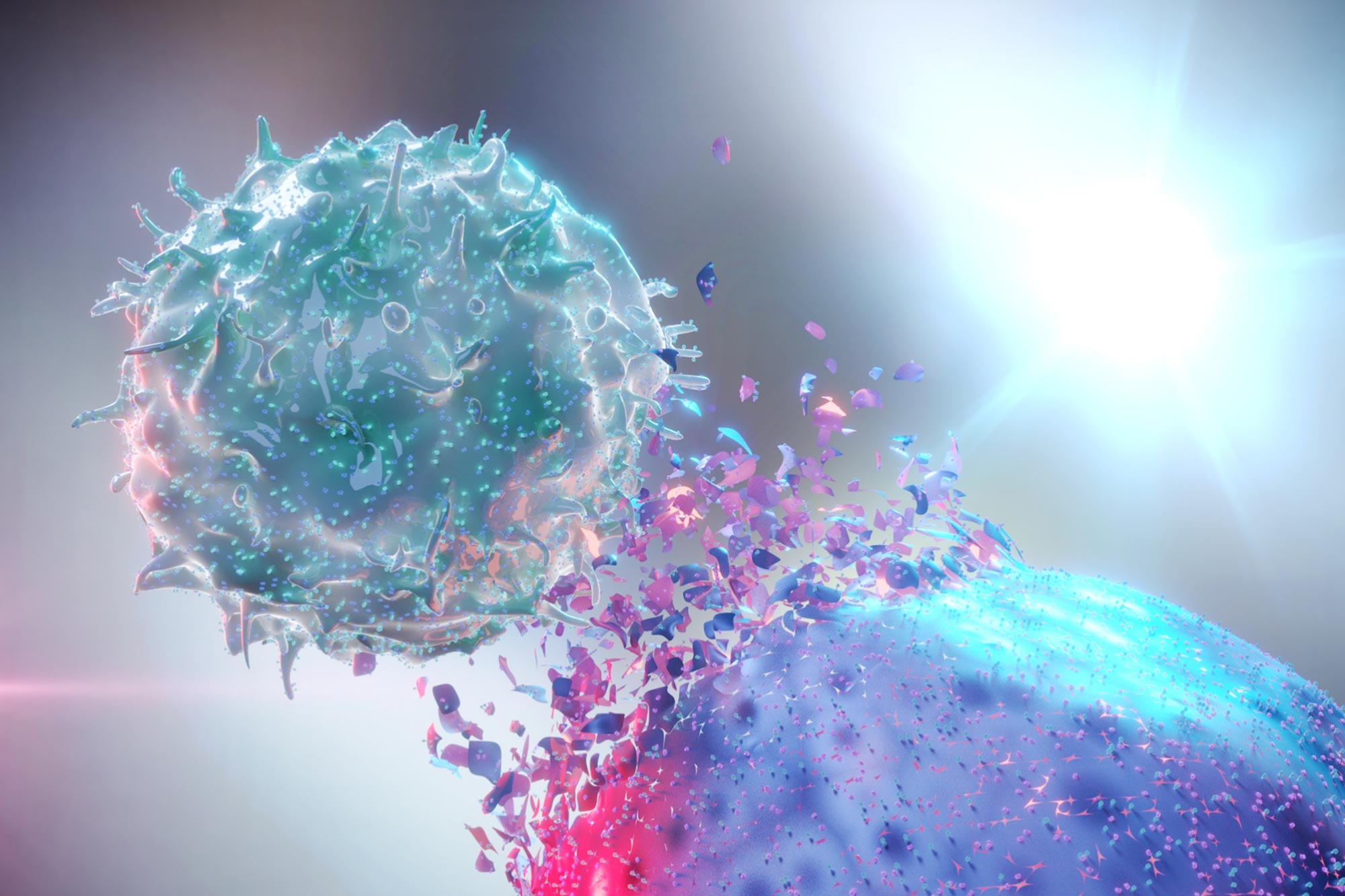
A bacterial molecule enhances chemotherapy. Its synthetic form could inspire new cancer drugs.
An international group of researchers, led by teams at the MRC Laboratory of Medical Sciences (LMS), Imperial College London, and the University of Cologne, has discovered that bacteria living within tumors can generate a molecule that influences cancer development and enhances the effectiveness of chemotherapy.
While microbes are commonly recognized for their roles on the skin or in the gut, more recent findings show that tumors also harbor their own bacterial communities. Scientists are now working to understand how these tumor-associated microbes shape cancer growth and the body’s response to treatment.
In a study published online in Cell Systems, the researchers reported a major breakthrough: they identified a strong anti-cancer compound made by bacteria linked to colorectal cancer. This discovery opens up new possibilities for therapy, including drugs designed to amplify the benefits of existing treatments.
Discovery of a bacterial metabolite
To reach this finding, the team carried out an extensive screening process, testing more than 1,100 conditions in the microscopic worm C. elegans. They discovered that E. coli produced a molecule known as 2-methylisocitrate (2-MiCit), which could increase the potency of the chemotherapy drug 5-fluorouracil (5-FU).
Computer modelling showed that the tumor-associated microbiome (bacteria located in and around tumors) in patients also had the capacity to produce 2-MiCit. To validate these results, the scientists tested the molecule in two additional systems: cultured human cancer cells and a fly model of colorectal cancer. In both cases, 2-MiCit demonstrated strong anti-cancer activity, and in the fly model, it was able to extend lifespan.
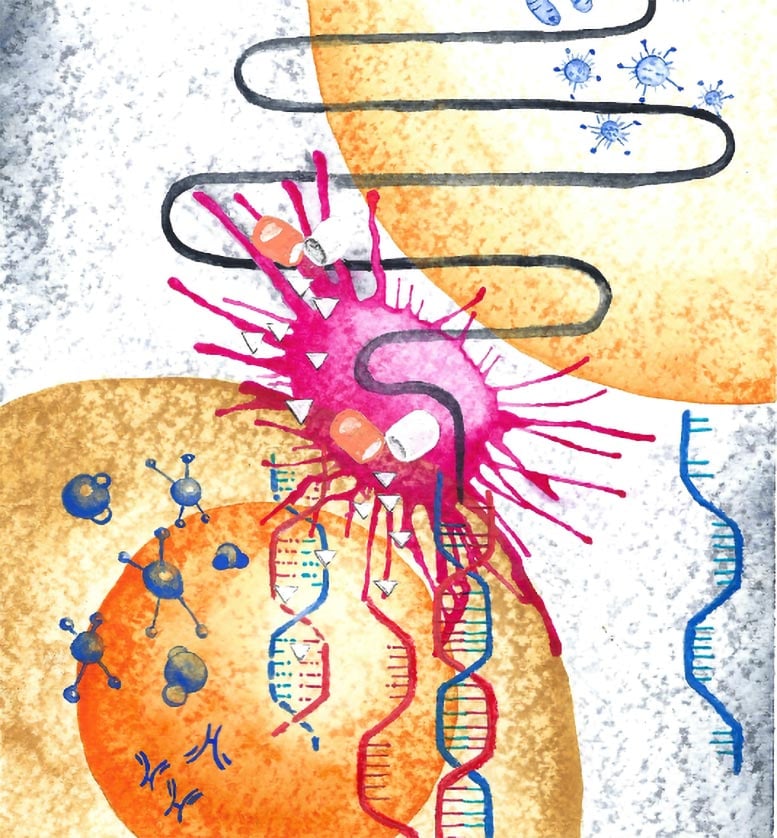
Professor Filipe Cabreiro, head of the Host-Microbe Co-Metabolism group at the LMS, and group leader at the CECAD Research Cluster in Cologne, explains the significance of the discovery: “We’ve known that bacteria are associated with tumors, and now we’re starting to understand the chemical conversation they’re having with cancer cells. We found that one of these bacterial chemicals can act as a powerful partner for chemotherapy, disrupting the metabolism of cancer cells and making them more vulnerable to the drug.”
How 2-MiCit disrupts cancer cells
The study revealed that 2-MiCit works by inhibiting a key enzyme in the mitochondria (structures inside cells that generate energy for cellular functions) of cancer cells. This leads to DNA damage and activates pathways known to reduce the progression of cancer. This multi-pronged attack weakens the cancer cells and works in synergy with 5-FU. The combination was significantly more effective at killing cancer cells than either compound alone.
Dr Daniel Martinez-Martinez, postdoctoral researcher at the LMS and first author of the paper, says: “Microbes are an essential part of us. That a single molecule can exert such a profound impact on cancer progression is truly remarkable, and another piece of evidence on how complex biology can be when considering it from a holistic point of view. It is really exciting because we are only scratching the surface of what is really happening.”
In collaboration with medicinal chemists, the researchers also modified the 2-MiCit compound to enhance its effectiveness. This synthetic version proved even more powerful at killing cancer cells, demonstrating the potential to develop new drugs based on natural microbial products. Filipe adds: “Using the natural microbial product as a starting point, we were able to design a more potent molecule, effectively improving on Mother Nature.”
These exciting discoveries highlight how the cancer-associated microbiome can impact tumor progression, and how metabolites produced by these bacteria could be harnessed to improve cancer treatments. These findings are also important in the context of personalized medicine, emphasizing the importance of considering not only the patient, but also their microbes.
Reference: “Chemotherapy modulation by a cancer-associated microbiota metabolite” by Daniel Martinez-Martinez, Tanara V. Peres, Kristin Gehling, Leonor Quintaneiro, Cecilia Cabrera, Maksym Cherevatenko, Stephen J. Cutty, Lena Best, Georgios Marinos, Johannes Zimmerman, Ayesha Safoor, Despoina Chrysostomou, Joao B. Mokochinski, Alex Montoya, Susanne Brodesser, Michalina Zatorska, Timothy Scott, Ivan Andrew, Holger Kramer, Masuma Begum, Bian Zhang, Bernard T. Golding, Julian R. Marchesi, Susumu Hirabayashi, Christoph Kaleta, Alexis R. Barr, Christian Frezza, Helena M. Cochemé and Filipe Cabreiro, 10 September 2025, Cell Systems.
DOI: 10.1016/j.cels.2025.101397
This study was primarily funded by the Leverhulme Trust, the Wellcome Trust/Royal Society, the DFG German Research Foundation, and the Medical Research Council.
Never miss a breakthrough: Join the SciTechDaily newsletter.
Follow us on Google and Google News.