
Close Menu
    Facebook X (Twitter) Instagram
    SciTechDaily
    • Biology
    • Chemistry
    • Earth
    • Health
    • Physics
    • Science
    • Space
    • Technology
    Facebook X (Twitter) Pinterest YouTube RSS
    SciTechDaily
    Home»Space»Starbirth in Action: Hubble Reveals a 9.5-Light-Year Tower in the Eagle Nebula
    Space

    Starbirth in Action: Hubble Reveals a 9.5-Light-Year Tower in the Eagle Nebula

    By ESA/HubbleApril 22, 2025No Comments4 Mins Read
    Facebook Twitter Pinterest Telegram LinkedIn WhatsApp Email Reddit
    Share
    Facebook Twitter LinkedIn Pinterest Telegram Email Reddit
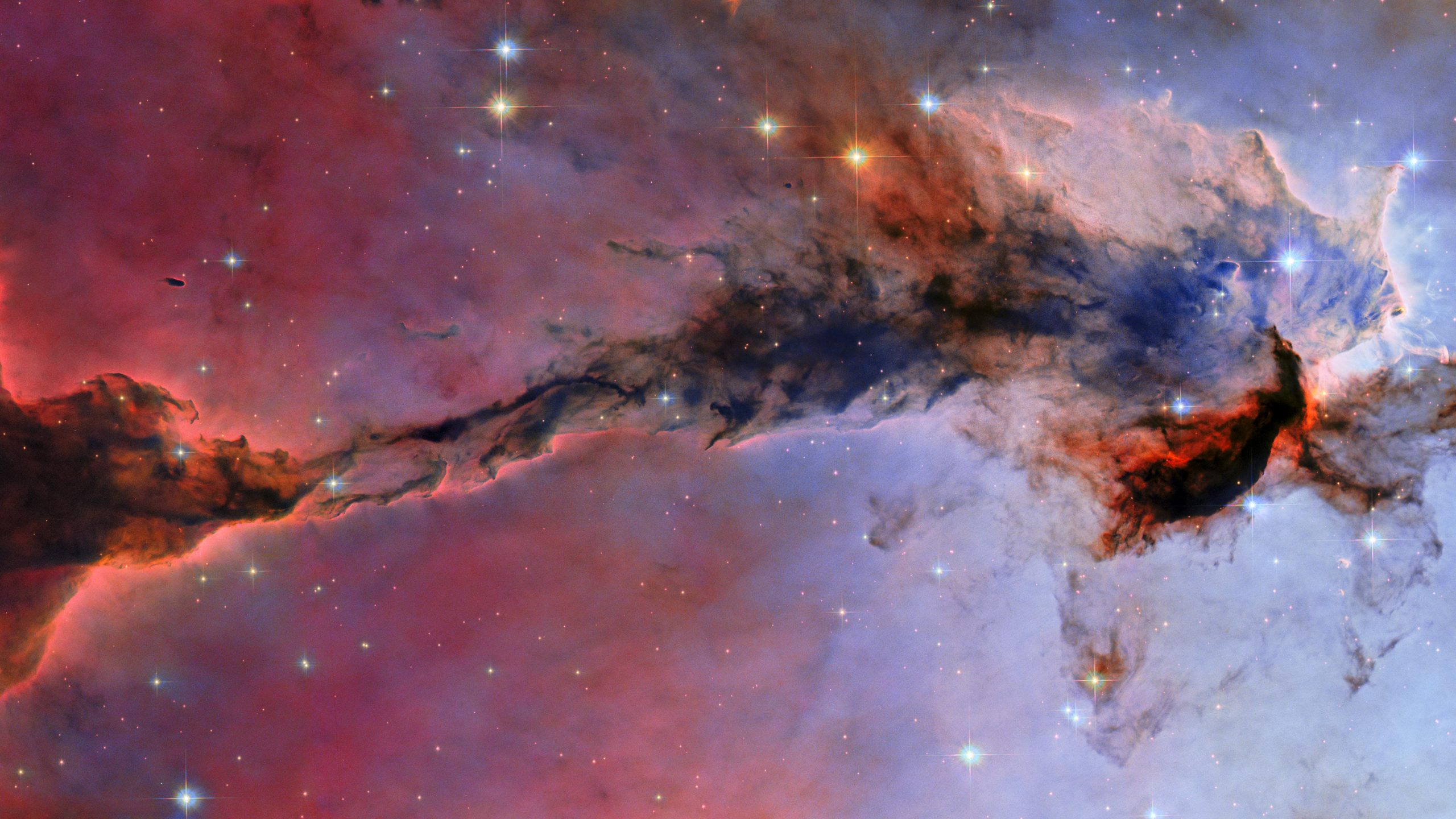
    Eagle Nebula Hubble Rotated
    To mark the Hubble Space Telescope’s 35th anniversary, ESA/Hubble has released a dazzling new image of the Eagle Nebula—a towering cosmic formation resembling smoke, streamers, or even balloons. With modern image processing, this iconic structure is revealed in greater detail than ever, showing a 9.5-light-year-tall column of gas and dust that’s only a sliver of the nebula’s majesty. Credit: ESA/Hubble & NASA, K. Noll

    ESA/Hubble celebrates 35 years with a stunning new image of the Eagle Nebula — a massive cosmic spire sculpted by star formation. Enhanced with new processing techniques, this view revisits a classic space target in even sharper detail.

    As the Hubble Space Telescope approaches its 35th anniversary, ESA/Hubble is celebrating with a newly released image of the Eagle Nebula — a vast stellar nursery filled with gas and dust. This striking new view highlights a towering pillar of cosmic material, enhanced using advanced image processing techniques developed since this region was last imaged nearly 20 years ago.

    To some, the sculpted structure may resemble a curling ribbon, a plume of smoke, or even an unusual balloon. Whatever it evokes, this dramatic formation — carved by the forces of star formation — makes for a spectacular visual tribute to Hubble’s legacy.
    Eagle Nebula Hubble
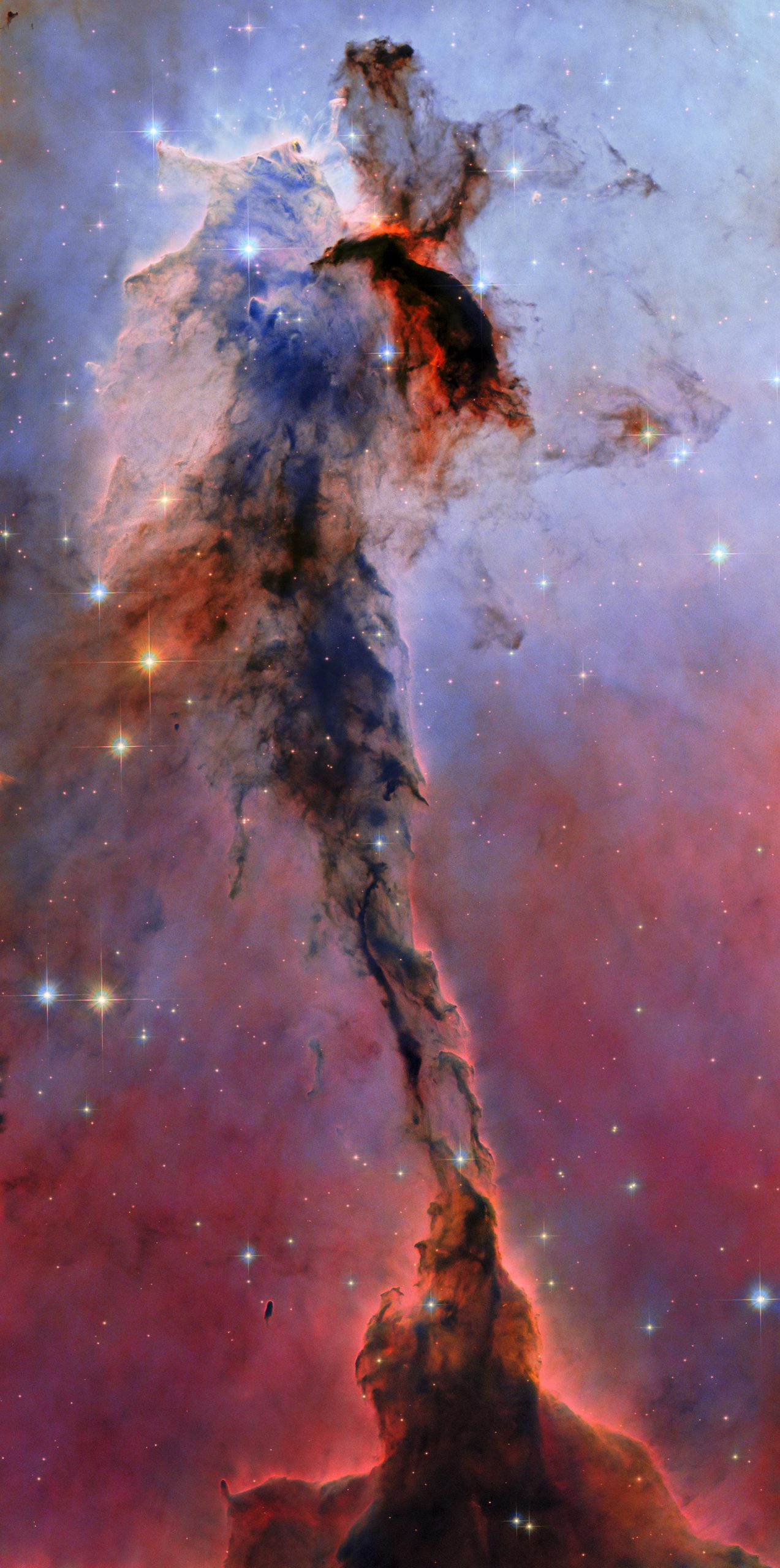
    This towering structure of billowing gas and dark, obscuring dust might only be a small portion of the Eagle Nebula, but it is no less majestic in appearance for it. 9.5 light-years tall and 7000 light-years distant from Earth, this dusty sculpture is refreshed with the use of new processing techniques. The new Hubble image is part of ESA/Hubble’s 35th anniversary celebrations. Credit: ESA/Hubble & NASA, K. Noll

    Revisiting the Classics With New Imaging Tools

    The release is part of a broader image series commemorating the anniversary by revisiting some of Hubble’s most iconic targets. Updated images of NGC 346 and the Sombrero Galaxy have already been shared. Now, the Eagle Nebula — originally featured in 2005 for Hubble’s 15th anniversary — returns with improved clarity thanks to modern processing.

    Stretching 9.5 light-years in height, the dusty pillar captured in the image is only a small part of the much larger Eagle Nebula, also known as Messier 16. The name “Messier 16” comes from French astronomer Charles Messier, who catalogued objects in the sky that could be mistaken for comets.

    How the Eagle Got Its Name

    The name Eagle Nebula was inspired by the nebula’s appearance. The edge of this shining nebula is shaped by dark clouds like this one, giving it the appearance of an eagle spreading its wings.

    Not too far from the region pictured here are the famous Pillars of Creation, which Hubble has photographed multiple times, with images released in 1995 and 2015.

    The heart of the nebula, which is located beyond the edge of this image, is home to a cluster of young stars. These stars have excavated an immense cavity in the center of the nebula, shaping otherworldly pillars and globules of dusty gas. This particular feature extends like a pointing finger toward the centre of the nebula and the rich young star cluster embedded there.

    Dusty Sculptures Forged by Stellar Winds

    The Eagle Nebula is one of many nebulae in the Milky Way that are known for their sculpted, dusty clouds. Nebulae take on these fantastic shapes when exposed to powerful radiation and winds from infant stars. Regions with denser gas are more able to withstand the onslaught of radiation and stellar winds from young stars, and these dense areas remain as dusty sculptures like the starry pillar shown here.

    This image was developed using data from the Hubble observing program #10393 (PI: K. Noll).

    Never miss a breakthrough: Join the SciTechDaily newsletter.
    Follow us on Google and Google News.

    Astronomy European Space Agency Hubble Space Telescope
    Share. Facebook Twitter Pinterest LinkedIn Email Reddit

    Related Articles

    A Diamond Necklace of Cosmic Proportions

    Hubble Snaps a Stunning Close-Up of a Magnificent Spiral Galaxy

    Extraordinary Hubble Image: Light Bends From the Beyond

    Hubble Space Telescope Sees Volcanic Activity Reforming the Atmosphere on a Rocky Exoplanet

    Hubble Spies a Luminous Heart With Dark Tendrils

    Spectacular Return to the Veil Nebula

    Hubble Spots a Peculiar Sight: Unusual Spiral Galaxy With a Heavy Arm

    A Flash of Life: Hubble Spies an Unusual Planetary Nebula

    Through the Cosmic Clouds: Hubble Spots a Beautiful Stellar Nursery

    Leave A Reply Cancel Reply

    • Facebook
    • Twitter
    • Pinterest
    • YouTube

    Don't Miss a Discovery

    Subscribe for the Latest in Science & Tech!

    Trending News

    Breakthrough Bowel Cancer Trial Leaves Patients Cancer-Free for Nearly 3 Years

    Natural Compound Shows Powerful Potential Against Rheumatoid Arthritis

    100,000-Year-Old Neanderthal Fossils in Poland Reveal Unexpected Genetic Connections

    Simple “Gut Reset” May Prevent Weight Gain After Ozempic or Wegovy

    2.8 Days to Disaster: Scientists Warn Low Earth Orbit Could Suddenly Collapse

    Common Food Compound Shows Surprising Power Against Superbugs

    5 Simple Ways To Remember More and Forget Less

    The Atomic Gap That Could Cost the Semiconductor Industry Billions

    Follow SciTechDaily
    • Facebook
    • Twitter
    • YouTube
    • Pinterest
    • Newsletter
    • RSS
    SciTech News
    • Biology News
    • Chemistry News
    • Earth News
    • Health News
    • Physics News
    • Science News
    • Space News
    • Technology News
    Recent Posts
    • MIT Laser Breakthrough Lets Scientists Watch Drugs Enter the Brain in Real Time
    • Study Reveals Malaria’s Hidden Role in Human Evolution
    • Scientists Print Artificial Neurons That Can Talk to the Brain
    • Bowel and Ovarian Cancers Are Dramatically Rising in Young Adults and Scientists Aren’t Sure Why
    • Alzheimer’s May Begin Decades Earlier Than You Think, New Mayo Clinic Study Finds
    Copyright © 1998 - 2026 SciTechDaily. All Rights Reserved.
    • Science News
    • About
    • Contact
    • Editorial Board
    • Privacy Policy
    • Terms of Use

    Type above and press Enter to search. Press Esc to cancel.