

Romaine lettuce has been linked to repeated E. coli outbreaks, but new research from Cornell University uncovers how contamination happens—and how to stop it.
The study highlights irrigation water, especially untreated surface water applied through spray systems, as a key culprit. Switching to drip or furrow irrigation and improving cold storage during transport can drastically reduce risk. The research urges a systems-wide rethink, showing how smarter farming and better logistics—from the field to the fridge—can prevent outbreaks and boost food safety.
E. coli in Romaine: A Persistent Threat
E. coli outbreaks linked to romaine lettuce have remained a persistent public health issue. New research from Cornell University highlights that a combination of on-farm strategies and post-harvest handling methods could significantly reduce the risk to consumers.
The study was co-authored by Renata Ivanek, a professor in population medicine and diagnostic sciences, and Martin Wiedmann, a food safety professor. Their findings emphasize practical steps that could meaningfully enhance the safety of romaine lettuce grown and sold in the United States.
Key Risks: Irrigation Water and Contamination
“This study supports that interventions should focus on reducing produce contamination via contaminated irrigation water, on assuring that produce washes applied during processing consistently deliver reasonably high reductions of bacterial numbers, and on improving temperature control during distribution,” Wiedmann said.
“We tried to describe the system as holistically as possible to account for different risk factors and how they could have interactions,” Ivanek said. “There’s not just one intervention that will save us all. We spent a lot of time trying to understand the preharvest component, especially the irrigation water piece, and how much risk can be explained by that.”
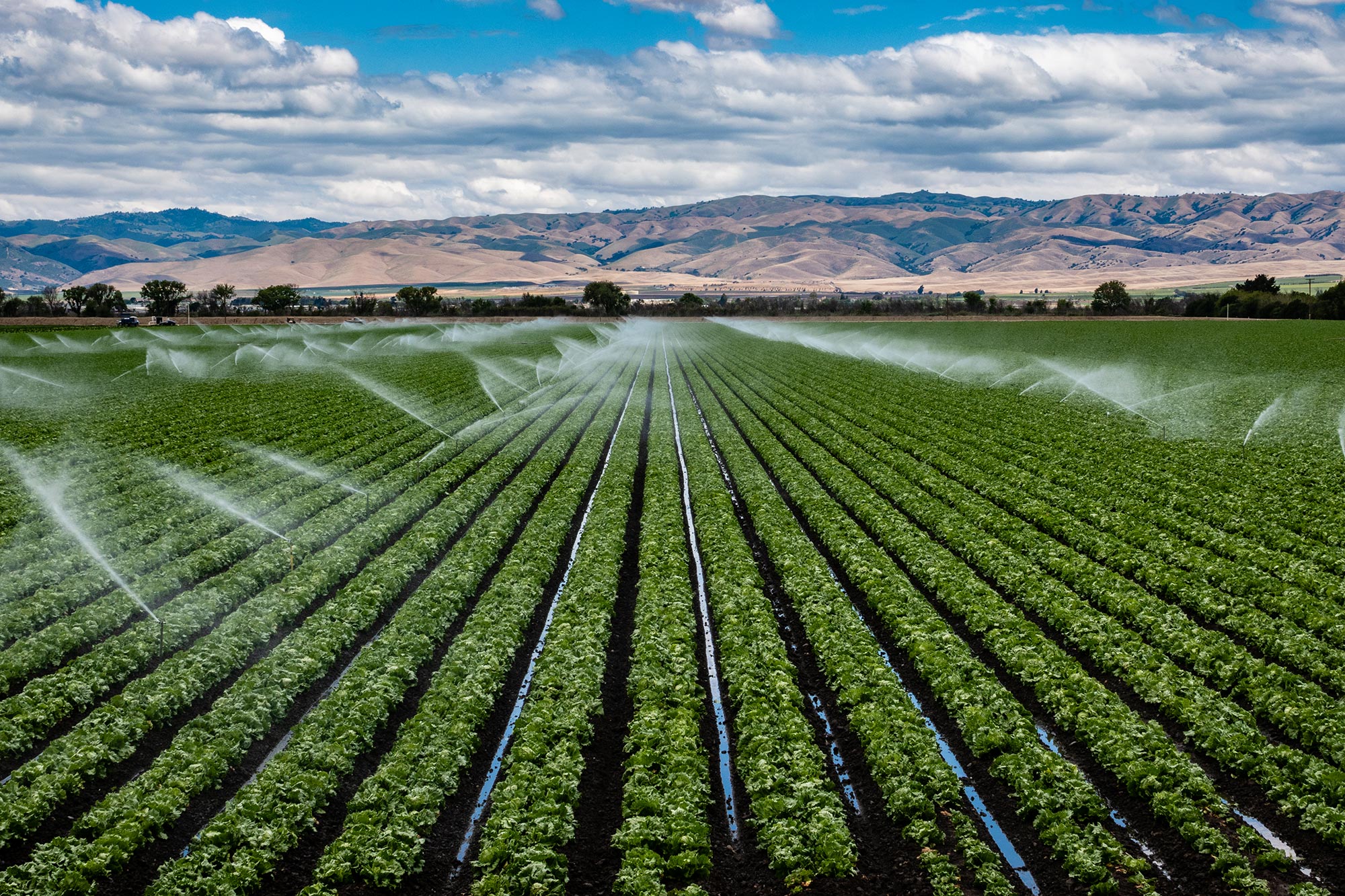
Irrigation Methods Make a Big Difference
The study found that a large portion of contamination stems from the use of untreated surface water delivered through overhead spray irrigation. The researchers observed that switching to treated water or using alternative irrigation systems, such as furrow or drip irrigation, significantly reduced the risk.
“While not the most common system, spray irrigation is used in a number of fields for its benefits during germination, its cooling effect on plants, and other reasons. But drip or furrow irrigation reduces the probability that water directly touches the leaves,” Ivanek said, acknowledging that switching to these other irrigation systems introduces significant potential additional costs to the grower.
The Cold Chain’s Crucial Role
Ivanek and her co-authors also explored the importance of maintaining proper cold storage temperatures along the entire supply chain to romaine’s final destination.
“Time and temperature play a role in food safety, and also in food quality and shelf life,” she said, describing a “perfect storm” if contamination happens at the farm or processing level and then improper transportation temperatures allow bacteria to grow.
The comprehensive practices and interventions explored in this study intend to aid decision-makers in establishing and enhancing food safety best management practices, Ivanek said.
America’s Food Supply: Safe, but There’s Room to Improve
“The big message is the American food supply chain is extremely safe compared to other countries,” she said. “We’re exploring how we can make it even safer and where we should put additional effort.”
Reference: “Risk assessment of Escherichia coli O157:H7 along the farm-to-fork fresh-cut romaine lettuce supply chain” by Ece Bulut, Sarah I. Murphy, Laura K. Strawn, Michelle D. Danyluk, Martin Wiedmann and Renata Ivanek, 20 May 2025, Scientific Reports.
DOI: 10.1038/s41598-025-01585-z
Never miss a breakthrough: Join the SciTechDaily newsletter.
Follow us on Google and Google News.