
Close Menu
    Facebook X (Twitter) Instagram
    SciTechDaily
    • Biology
    • Chemistry
    • Earth
    • Health
    • Physics
    • Science
    • Space
    • Technology
    Facebook X (Twitter) Pinterest YouTube RSS
    SciTechDaily
    Home»Earth»An Invasive Moth Killed Thousands of Acres of Oak Trees, but Some Trees Survived – Here’s Why
    Earth

    An Invasive Moth Killed Thousands of Acres of Oak Trees, but Some Trees Survived – Here’s Why

    By Harvard UniversityAugust 13, 20219 Comments3 Mins Read
    Facebook Twitter Pinterest Telegram LinkedIn WhatsApp Email Reddit
    Share
    Facebook Twitter LinkedIn Pinterest Telegram Email Reddit
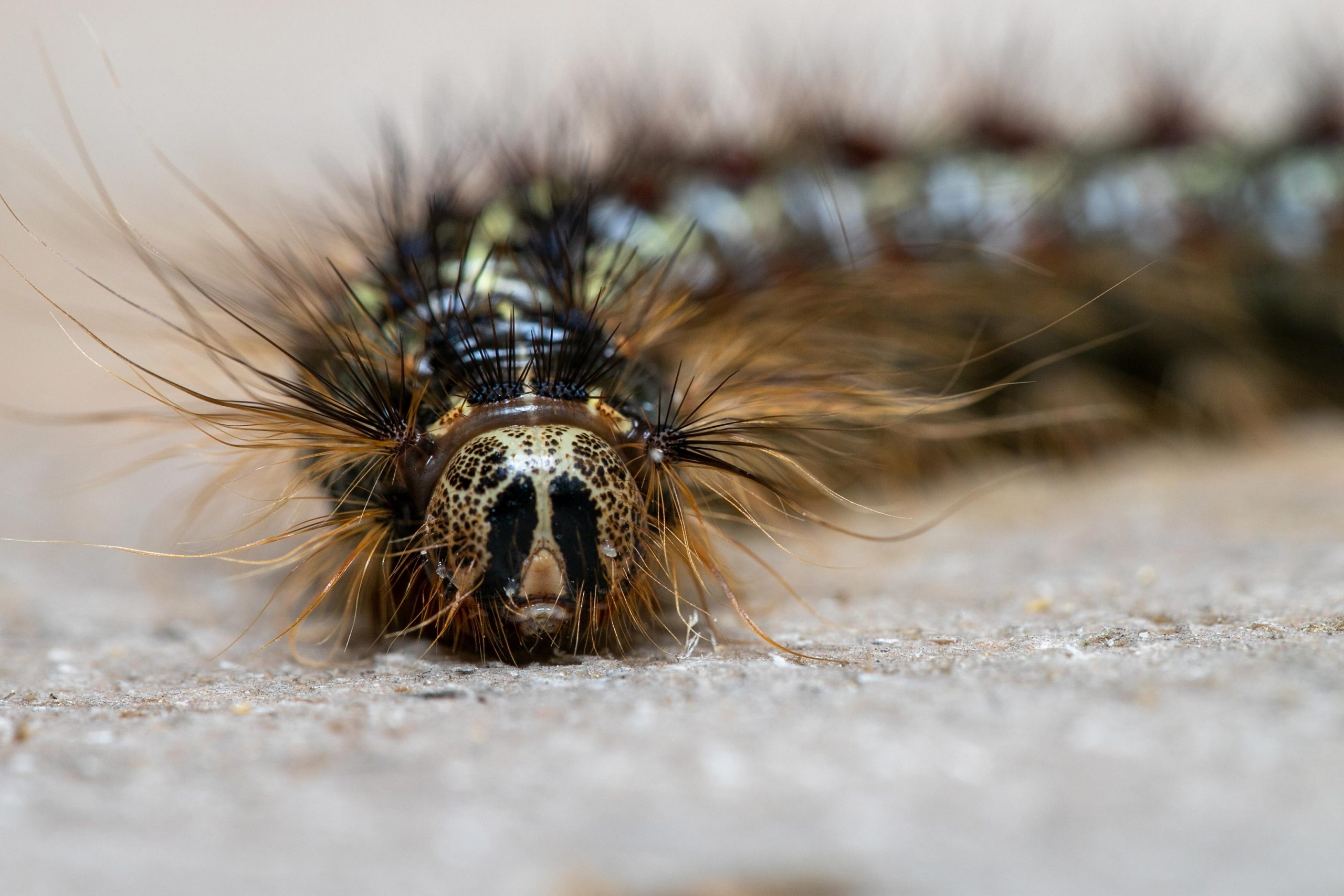
    Lymantria
    Photo of a Lymantria. Credit: Nathan Oalican

    For Trees, Carbs Are Key to Surviving Insect Defoliation

    A recent multi-year outbreak of an invasive moth killed thousands of acres of oak trees across southern New England. But interspersed among the wreckage were thousands of trees that survived. A new study published today (August 13, 2021) in Functional Ecology sheds light on why. Research by scientists from Harvard, UMass Amherst, Boston University, and MIT reveals that a tree’s carbohydrate reserves are crucial to surviving an onslaught of hungry caterpillars.

    The biology of trees makes them resilient to even the most severe stressors. “Oak trees are planners, in a way,” says Meghan Blumstein, NSF Post-doctoral Research Fellow at MIT and a co-author of the study. “Some of the food they make during the growing season is used immediately for energy and some is stored in the stems and roots for a rainy day. With stored carbs, they are able to immediately create a new flush of leaves after an insect outbreak.”

    But trees are not invincible, and the new study reveals the specific threshold of reserves necessary for them to survive: 1.5 percent carbohydrates in their dried wood– or about 20-25% of their normal storage capacity. The repeated emergence of Lymantria dispar (an insect formerly known as “gypsy moth”) from 2016 to 2018 challenged trees’ resilience by defoliating them year after year.

    “The trees that died were the trees that were out of reserves,” says lead author Audrey Barker Plotkin, a Senior Scientist at the Harvard Forest. But the location of the trees mattered, too. The research team found that trees growing along forest edges tended to have more reserves, even at the same level of defoliation, making them more resilient than interior forest trees. The research team posits that forest edge trees may have simply experienced less severe defoliation in the years before 2018. And, because edge trees get lots of light, they may also be able to rebound without drawing down their reserves as much as their interior forest counterparts.

    The new study provides direct evidence, that had until now been lacking, that trees can indeed starve to death when insects invade. This more nuanced understanding will help improve forest resilience models as new pests and a shifting climate continue to drive change in the region.

    Reference: “Defoliated trees die below a critical threshold of stored carbon” by Audrey Barker Plotkin, Meghan Blumstein, Danelle Laflower, Valerie J. Pasquarella, Jennifer L. Chandler, Joseph S. Elkinton and Jonathan R. Thompson, 12 August 2021, Functional Ecology.
    DOI: 10.1111/1365-2435.13891

    Never miss a breakthrough: Join the SciTechDaily newsletter.
    Follow us on Google and Google News.

    Ecology Entomology Forests Harvard University Plant Science Popular Trees
    Share. Facebook Twitter Pinterest LinkedIn Email Reddit

    Related Articles

    Trees Might Not Be As Effective at Combating Climate Change As We Thought

    Catastrophic Wildfires on the Fish Lake Plateau Reduced by Indigenous “Cultural Burning”

    “Paradigm Shifting” – Researchers Discover a Substantial Overlooked Source of Natural CO2

    NASA Uses Powerful Supercomputers and AI to Map Earth’s Trees, Discovers Billions of Trees in West African Drylands

    Scientists Unravel How and Why Amazon Trees Die & Why Tree Mortality Is Increasing

    Large Trees Dominate Carbon Storage in Forests: 3% of Trees Account for 42% of Carbon Storage

    Non-Native Seeds Discovered on Shipping Containers Pose Significant Threats

    New Research: Trees Absorb Less Carbon Dioxide As the World’s Temperature Rises

    Scientists Surprised: Trees Are Sources of the Greenhouse Gas Nitrous Oxide

    9 Comments

    1. Rembrandt Zegers Ph.D. on August 13, 2021 11:57 pm

      Now I suggest the next steps are 1. to broaden this to more factors in the ecology of the forests (also how diverse were the stuidied forests in the first place?). I say this before some enthousiasts take the results and start to cut down patches of forest, to have more edges. 2. to continu looking at dynamics and interrelation of factors, e.g. the role of grazers.

      Reply
    2. stephen schaffer on August 14, 2021 7:13 am

      was it so unimportant to reveal the origins of the invasive species?

      Reply
    3. Sserunjogi Robert on August 14, 2021 2:40 pm

      Are sure this will note invade other trees?. If it comes back contact me.

      Reply
    4. weasel5i2 on August 14, 2021 3:01 pm

      It seems to me that the edge trees would have higher carbohydrate reserves due to less competition. The trees in the middle have to share soil resources with all its surrounding siblings.

      Reply
    5. weasel5i2 on August 14, 2021 3:06 pm

      @stephen shaffer: https://en.wikipedia.org/wiki/Gypsy_moths_in_the_United_States 🙂

      Looks like someone needs to rename the article at some point..

      Reply
    6. John Bayer on August 16, 2021 4:24 am

      Seems we have a politically-incorrect moth.

      Reply
    7. Carl on August 16, 2021 11:48 am

      Moth Shakers.

      Reply
      • Carl on August 16, 2021 11:49 am

        Shamers

        Reply
    8. Jeksdad5 on August 17, 2021 6:31 am

      These were a problem when I was a kid in the 70’s. Why is it taking so long to do something about it.

      Reply
    Leave A Reply Cancel Reply

    • Facebook
    • Twitter
    • Pinterest
    • YouTube

    Don't Miss a Discovery

    Subscribe for the Latest in Science & Tech!

    Trending News

    AI Could Detect Early Signs of Alzheimer’s in Under a Minute – Far Before Traditional Tests

    What if Dark Matter Has Two Forms? Bold New Hypothesis Could Explain a Cosmic Mystery

    This Metal Melts in Your Hand – and Scientists Just Discovered Something Strange

    Beef vs. Chicken: Surprising Results From New Prediabetes Study

    Alzheimer’s Breakthrough: Scientists Discover Key Protein May Prevent Toxic Protein Clumps in the Brain

    Quantum Reality Gets Stranger: Physicists Put a Lump of Metal in Two Places at Once

    Scientists May Have Found the Key to Jupiter and Saturn’s Moon Mystery

    Scientists Uncover Brain Changes That Link Pain to Depression

    Follow SciTechDaily
    • Facebook
    • Twitter
    • YouTube
    • Pinterest
    • Newsletter
    • RSS
    SciTech News
    • Biology News
    • Chemistry News
    • Earth News
    • Health News
    • Physics News
    • Science News
    • Space News
    • Technology News
    Recent Posts
    • Ancient “Rock” Microbes May Reveal How Complex Life Began
    • Hidden “Trade Winds” Inside Cells Could Explain Cancer Spread
    • Humans Owe Their Eyes to a Tiny One-Eyed “Cyclops”
    • Researchers Capture Quantum Interference in One of Nature’s Rarest Atoms
    • Ancient DNA Reveals Irish Goats Have a 3,000-Year-Old Lineage Still Alive Today
    Copyright © 1998 - 2026 SciTechDaily. All Rights Reserved.
    • Science News
    • About
    • Contact
    • Editorial Board
    • Privacy Policy
    • Terms of Use

    Type above and press Enter to search. Press Esc to cancel.