
Close Menu
    Facebook X (Twitter) Instagram
    SciTechDaily
    • Biology
    • Chemistry
    • Earth
    • Health
    • Physics
    • Science
    • Space
    • Technology
    Facebook X (Twitter) Pinterest YouTube RSS
    SciTechDaily
    Home»Biology»Wild Chimpanzees Caught on Camera Sharing Alcohol for the First Time
    Biology

    Wild Chimpanzees Caught on Camera Sharing Alcohol for the First Time

    By Alex Morrison, University of ExeterMay 9, 20252 Comments3 Mins Read
    Facebook Twitter Pinterest Telegram LinkedIn WhatsApp Email Reddit
    Share
    Facebook Twitter LinkedIn Pinterest Telegram Email Reddit
    Two Adult Males Feed on Fermented African Breadfruit
    Two adult males feed on fermented African breadfruit. Credit: Bowland et al., edited

    Wild chimps share fruit containing alcohol, suggesting deep evolutionary links between fermented food and social behavior.

    For the first time, wild chimpanzees have been observed eating and sharing fruit that contains alcohol.

    A research team from the University of Exeter installed cameras in Guinea-Bissau’s Cantanhez National Park to monitor the behavior.

    The footage captured chimpanzees sharing fermented African breadfruit, which was confirmed to contain ethanol. This discovery raises intriguing questions about whether chimpanzees intentionally consume alcohol and what effects it might have on their behavior.

    Alcohol and social bonding in humans and chimps

    In humans, alcohol consumption is believed to date back deep into evolutionary history and is often associated with social bonding.

    And the new study suggests our closest relatives might be doing something similar.

    “For humans, we know that drinking alcohol leads to a release of dopamine and endorphins, and resulting feelings of happiness and relaxation,” said Anna Bowland, from the Centre for Ecology and Conservation at Exeter’s Penryn Campus in Cornwall.
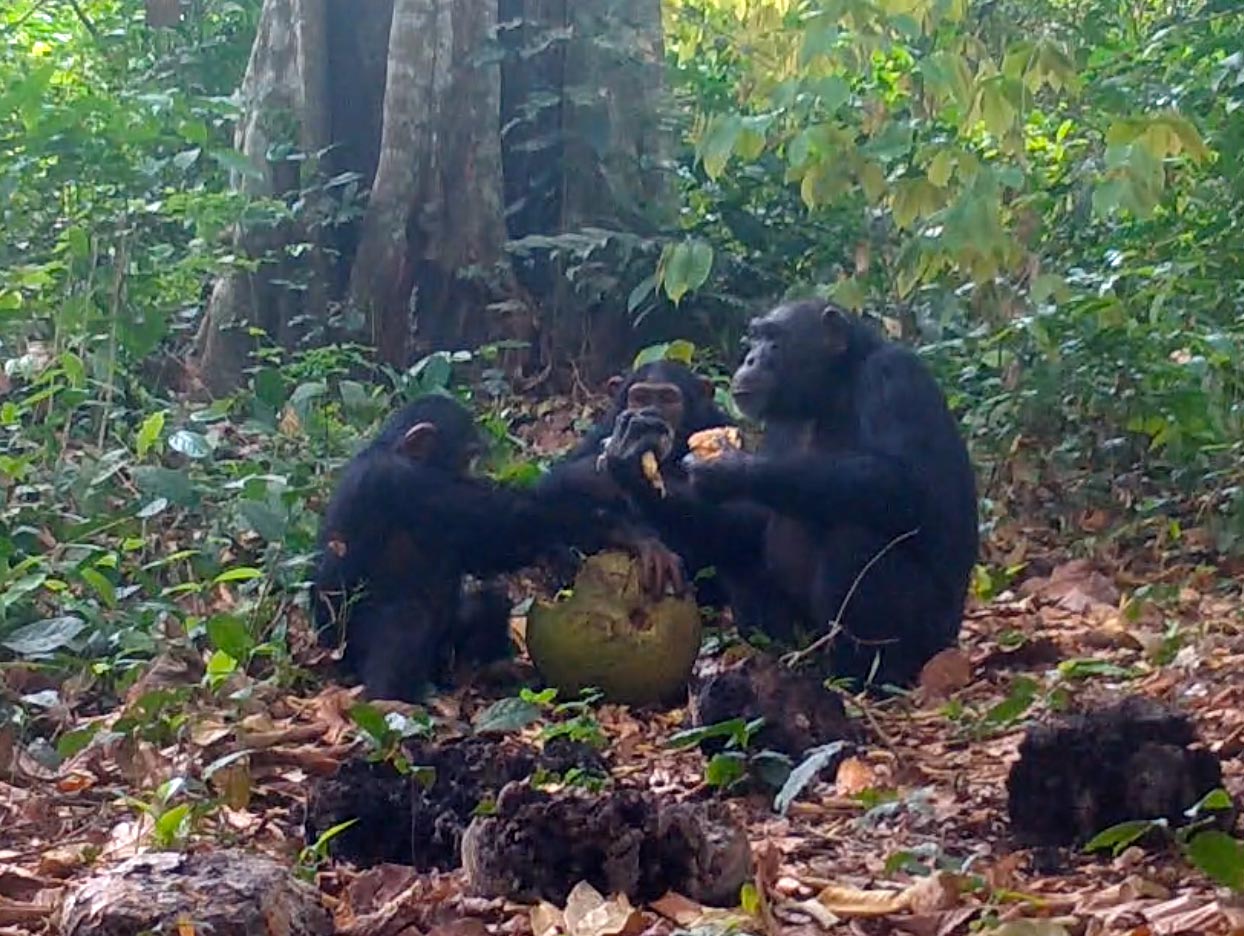
    Chimpanzees Sharing Fruit
    Chimpanzees sharing fruit. Credit: Bowland et al.

    “We also know that sharing alcohol, including through traditions such as feasting, helps to form and strengthen social bonds.

    “So – now we know that wild chimpanzees are eating and sharing ethanolic fruits – the question is: could they be getting similar benefits?”

    Chimpanzees filmed sharing low-alcohol fruit

    The researchers used motion-activated cameras, which filmed chimps sharing fermented fruits on 10 separate occasions.

    Fruit shared by these chimps was tested for alcohol content. The highest level found was the equivalent of 0.61% ABV (Alcohol By Volume – a measure used in alcoholic drinks).

    This is relatively low. But the researchers say it may be the “tip of the iceberg”, as 60-85% of chimps’ diet is fruit, so low levels of alcohol in various foods could add up to significant consumption.

    Evolutionary roots of alcohol metabolism

    The researchers stress that chimps are unlikely to get “drunk” – as this would clearly not improve their survival chances.
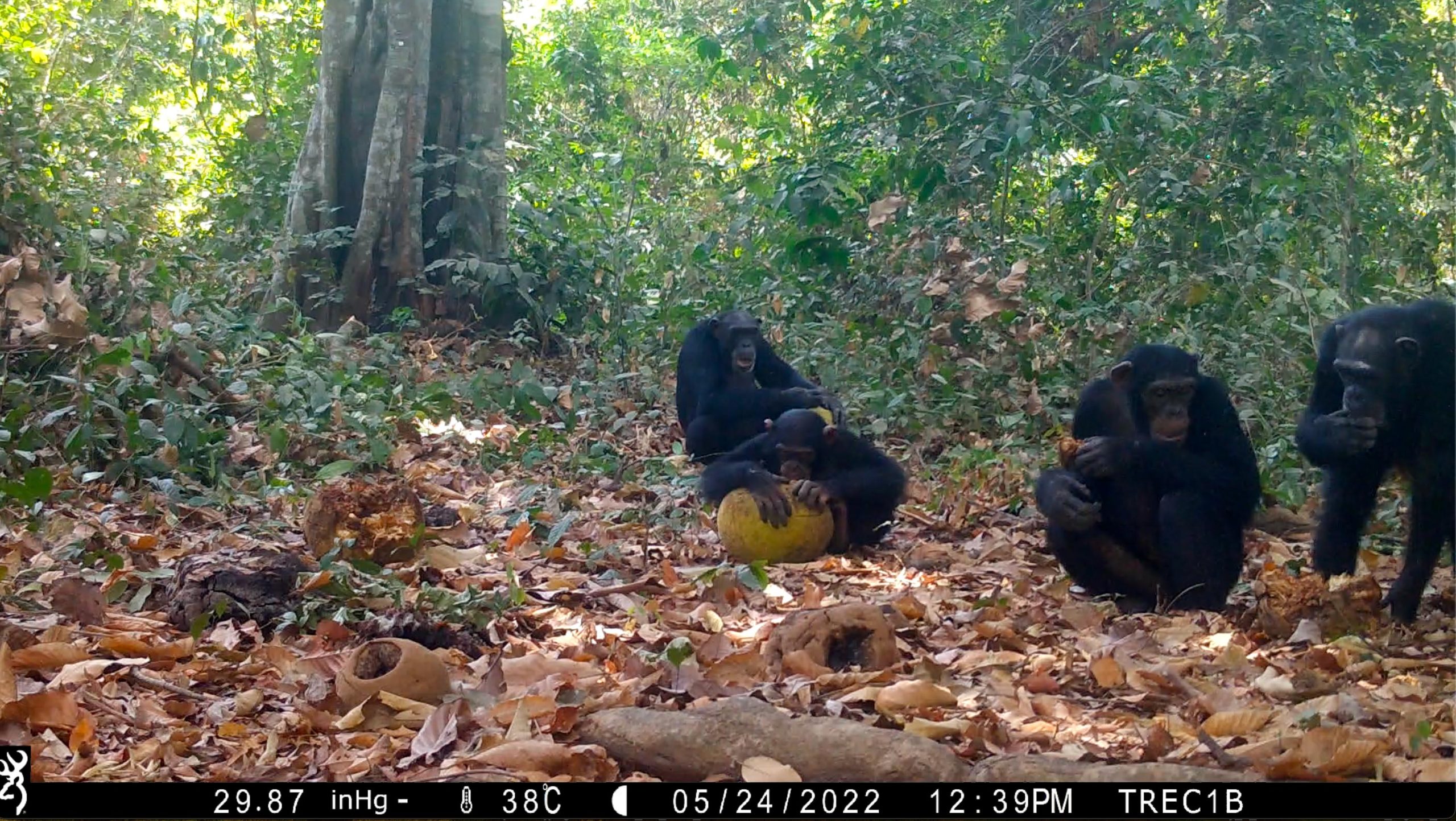
    Two Adult Females Feed on a Remnant of Fermented African Breadfruit
    Two adult females feed on a remnant of fermented African breadfruit. Credit: Bowland et al.

    The impact of alcohol on chimps’ metabolism is unknown. But recent discoveries of a molecular adaptation that greatly increased ethanol metabolism in the common ancestor of African apes suggest eating fermented fruits may have ancient origins in species, including humans and chimps.

    “Chimps don’t share food all the time, so this behavior with fermented fruit might be important,” said Dr Kimberley Hockings, also from the University of Exeter.

    “We need to find out more about whether they deliberately seek out ethanolic fruits and how they metabolize it, but this behavior could be the early evolutionary stages of ‘feasting’. If so, it suggests the human tradition of feasting may have its origins deep in our evolutionary history.”

    Reference: “Wild chimpanzees share fermented fruits” by Anna C. Bowland, Elena Bersacola, Marina Ramon, Joana Bessa, Amanda D. Melin, Matthew A. Carrigan, Xavier A. Harrison and Kimberley J. Hockings, 21 April 2025, Current Biology.
    DOI: 10.1016/j.cub.2025.02.067

    Funding: Primate Society of Great Britain

    Never miss a breakthrough: Join the SciTechDaily newsletter.
    Follow us on Google and Google News.

    Alcohol Chimpanzee Evolutionary Biology Popular University of Exeter Wildlife Biology
    Share. Facebook Twitter Pinterest LinkedIn Email Reddit

    Related Articles

    Study Reveals That Wild Chimps Consume a Surprising Amount of Alcohol Every Day

    Fermented Fruit, Buzzed Apes, and the Surprising Roots of Our Alcohol Tolerance

    Wild Chimpanzees Found To Treat Illnesses With Medicinal Plants

    Pegomastax Africanus, A Miniature Dinosaur That Thrived in Southern Africa

    Pentaradially Symmetrical Brittle Stars Move Bilaterally, Like People

    Human Y-Chromosome Has Enough Genes to Stay for Millions of Years

    DRD2 May Protect Brain Regions from Alcohol-Induced Brain Damage

    World’s Smallest Primate Issues High-Frequency Calls Like Bats

    Researchers Complete Genome Sequence of a Denisovan Human Finger Bone

    2 Comments

    1. Robert Welch on May 10, 2025 11:15 am

      Obviously, they needed a break from the wife and kids.

      Reply
      • Kevin on May 13, 2025 3:38 am

        Works for me!

        Reply
    Leave A Reply Cancel Reply

    • Facebook
    • Twitter
    • Pinterest
    • YouTube

    Don't Miss a Discovery

    Subscribe for the Latest in Science & Tech!

    Trending News

    First-of-Its-Kind Discovery: Homer’s Iliad Found Embedded in a 1,600-Year-Old Egyptian Mummy

    Beyond Inflammation: Scientists Uncover New Cause of Persistent Rheumatoid Arthritis

    A Simple Molecule Could Unlock Safer, Easier Weight Loss

    Scientists Just Built a Quantum Battery That Charges Almost Instantly

    Researchers Unveil Groundbreaking Sustainable Solution to Vitamin B12 Deficiency

    Millions of People Have Osteopenia Without Realizing It – Here’s What You Need To Know

    Researchers Discover Boosting a Single Protein Helps the Brain Fight Alzheimer’s

    World-First Study Reveals Human Hearts Can Regenerate After a Heart Attack

    Follow SciTechDaily
    • Facebook
    • Twitter
    • YouTube
    • Pinterest
    • Newsletter
    • RSS
    SciTech News
    • Biology News
    • Chemistry News
    • Earth News
    • Health News
    • Physics News
    • Science News
    • Space News
    • Technology News
    Recent Posts
    • Weight-Loss Drugs Like Ozempic May Come With an Unexpected Cost
    • After Decades, MIT Researchers Capture the First 3D Atomic View of a Mysterious Material
    • Your Favorite Fishing Spot Is Turning Brown – and the Fish Are Changing
    • 380-Million-Year-Old Fish Fossil Reveals Secrets of Life’s First Steps Onto Land
    • Mezcal “Worm” in a Bottle Mystery: DNA Testing Reveals a Surprise
    Copyright © 1998 - 2026 SciTechDaily. All Rights Reserved.
    • Science News
    • About
    • Contact
    • Editorial Board
    • Privacy Policy
    • Terms of Use

    Type above and press Enter to search. Press Esc to cancel.