
Close Menu
    Facebook X (Twitter) Instagram
    SciTechDaily
    • Biology
    • Chemistry
    • Earth
    • Health
    • Physics
    • Science
    • Space
    • Technology
    Facebook X (Twitter) Pinterest YouTube RSS
    SciTechDaily
    Home»Space»Asteroid Day Revelation: Explore the Massive Meteor Crater in Arizona From Space
    Space

    Asteroid Day Revelation: Explore the Massive Meteor Crater in Arizona From Space

    By European Space Agency (ESA)June 30, 2024No Comments3 Mins Read
    Facebook Twitter Pinterest Telegram LinkedIn WhatsApp Email Reddit
    Share
    Facebook Twitter LinkedIn Pinterest Telegram Email Reddit
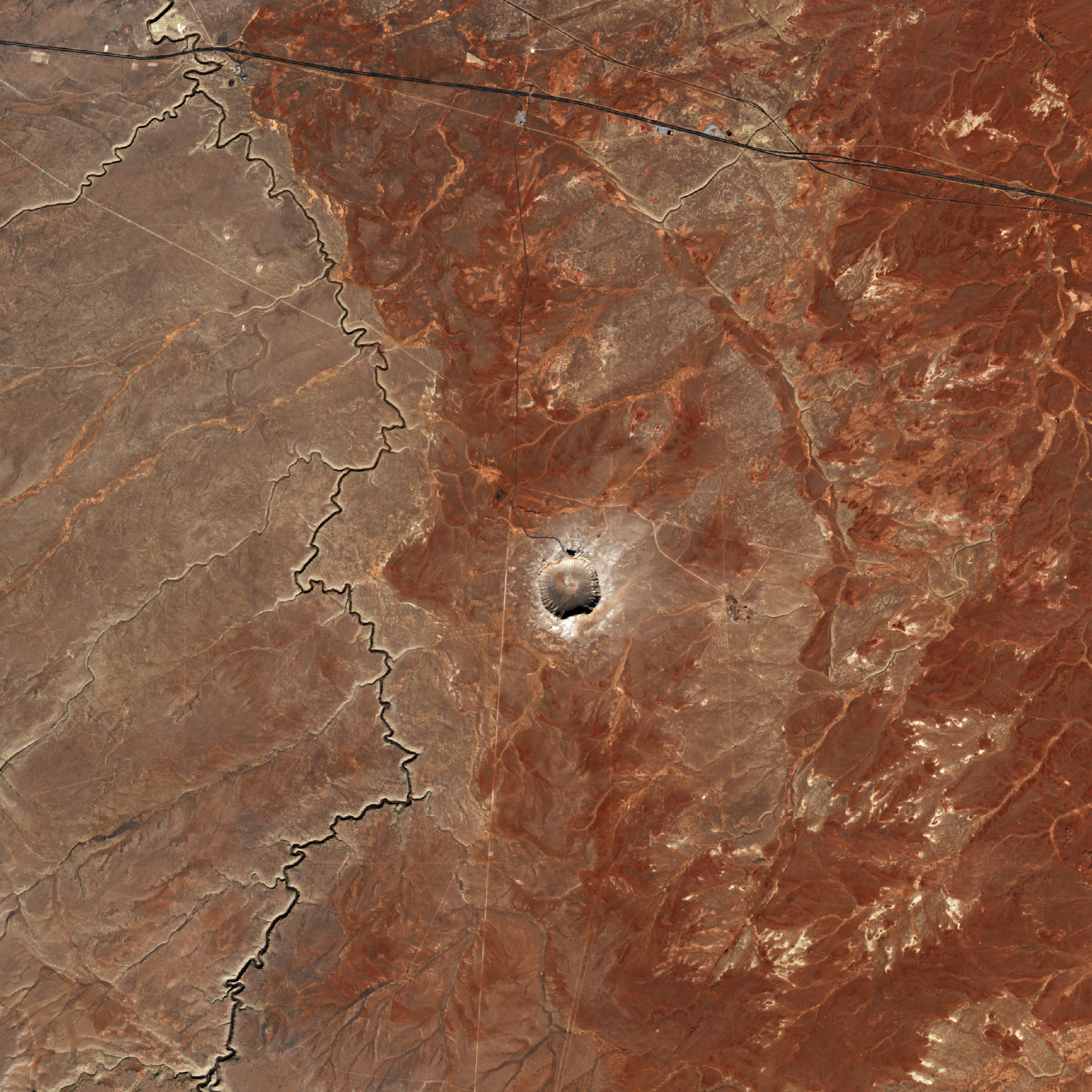
    Earth from Space Meteor Crater
    The Copernicus Sentinel-2 mission reveals the Meteor Crater in Arizona, a significant geological feature created by a meteorite impact 50,000 years ago. The crater, with its unique squared-off shape and extensive debris field, offers insights into the violent forces that shape planetary surfaces. Credit: Contains modified Copernicus Sentinel data (2024), processed by ESA

    The Meteor Crater in Arizona, formed by a meteorite impact 50,000 years ago, provides valuable insights into the geological processes of planetary bodies. Preserved by its desert climate, the crater is a key site for studying impact craters.

    For Asteroid Day (June 30), the Copernicus Sentinel-2 mission takes us over the Meteor Crater, also known as the Barringer Meteorite Crater.

    Formation of the Crater

    Around 50,000 years ago, an iron-nickel meteorite, estimated to be 30-50 m (100-165 feet) wide, smashed into North America and left a massive hole in what is today known as Arizona. The violent impact created a bowl-shaped hole of over 1200 m (4000 feet) across and 180 m (600 feet) deep in what was once a flat, rocky plain.

    During its formation, millions of tonnes of limestone and sandstone were blasted out of the crater, covering the ground for over a kilometer in every direction with a blanket of debris. Large blocks of limestone, the size of small houses, were thrown onto the rim.

    Crater’s Unique Shape and Context

    One of the crater’s main features is its squared-off shape, which is believed to be caused by flaws in the rock which caused it to peel back in four directions upon impact.

    The wide perspective of this image shows the crater in context with the surrounding area. The impact occurred during the last ice age, when the plain around it was covered with a forest where mammoths and giant sloths grazed.

    Crater Preservation and Importance

    Over time, the climate changed and dried. The desert that we see today has helped preserve the crater by limiting its erosion. This makes it an excellent place to learn about the process of impact cratering.

    Studying Impact Craters and Asteroid Monitoring

    Impact craters are inevitably part of being a rocky planet. They occur on every planetary body in our solar system – no matter the size. By studying impact craters and the meteorites that cause them, we can learn more about the processes and geology that shape our entire solar system.
    ESA Flyeye Telescope
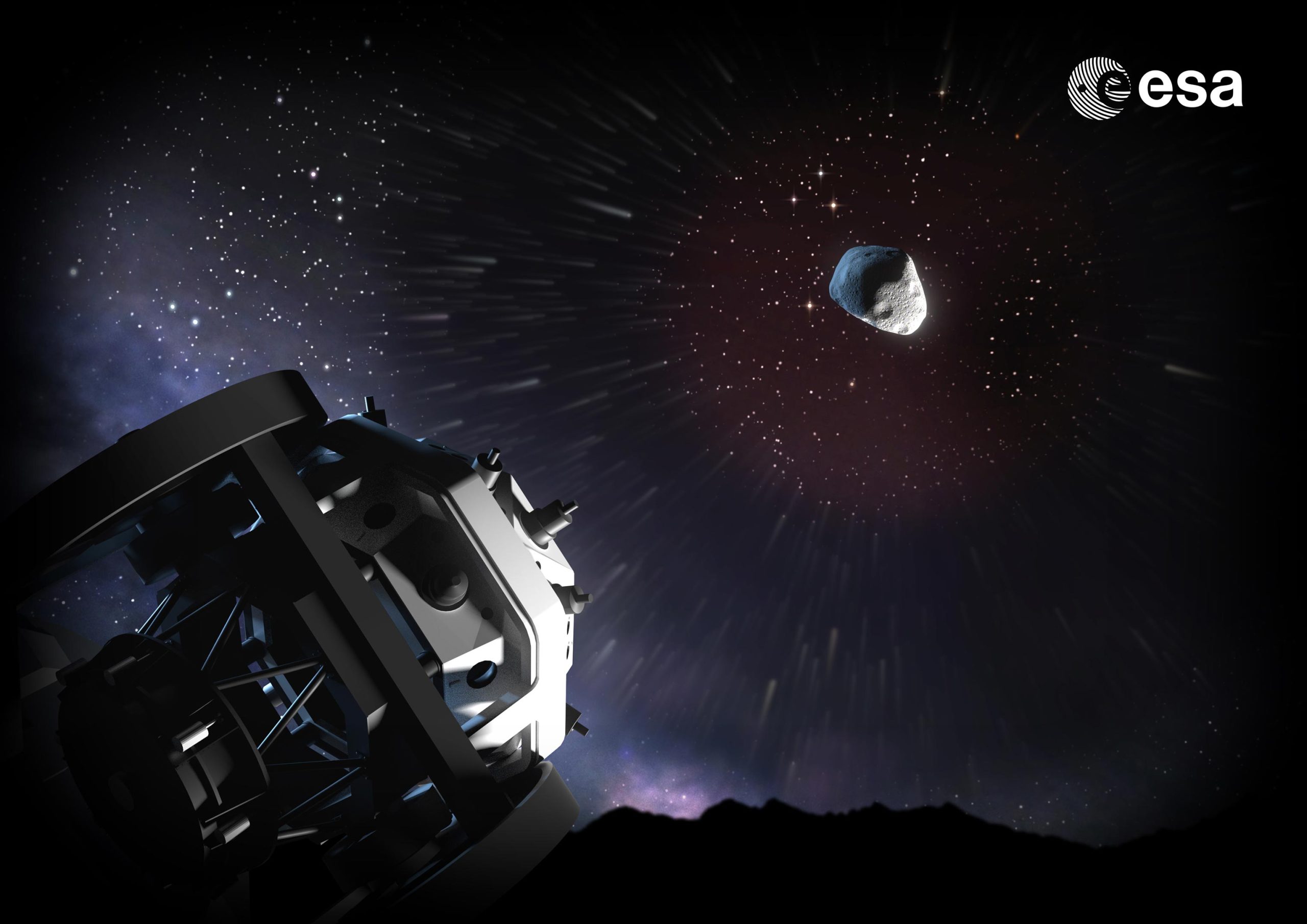
    As part of the global effort to hunt out risky celestial objects such as asteroids and comets, ESA is developing an automated telescope for nightly sky surveys. This telescope is the first in a future network that would completely scan the sky and automatically identify possible new near-Earth objects, or NEOs, for follow-up and later checking by human researchers. The telescope, nicknamed ‘Flyeye’, splits the image into 16 smaller sub-images to expand the field of view, similar to the technique exploited by a fly’s compound eye. Credit: ESA/A. Baker

    Over the past two decades, ESA has tracked and analyzed asteroids that travel close to Earth. ESA’s upcoming Flyeye telescopes will survey the sky for these near-Earth objects, using a unique compound eye design to capture wide-field images, which will enhance the detection of potentially hazardous asteroids.

    Future Missions and Asteroid Deflection

    ESA’s Hera spacecraft, launching later this year, will closely explore asteroids, improve our understanding of these celestial bodies, and help us better prepare for potential future asteroid deflection efforts.

    Never miss a breakthrough: Join the SciTechDaily newsletter.
    Follow us on Google and Google News.

    Asteroid Crater European Space Agency Popular
    Share. Facebook Twitter Pinterest LinkedIn Email Reddit

    Related Articles

    So Close! A Small Asteroid Just Skimmed Past Earth’s Edge

    This “City-Killer” Asteroid Has a 4% Chance of Hitting the Moon

    Planetary Defense Mission: Hera Launches for Asteroid Crash Scene Investigation

    Watch the Skies: Debris From NASA’s DART Asteroid Collision Could Spark a Meteor Display on Earth

    Close Encounter: Two Large Asteroids Will Skim Past Earth Just 42 Hours Apart

    The Asteroid Hunters: 10 Years Preparing for “Armageddon”

    Asteroid Deflection Planetary Defense Mission Target: “Dimorphos”

    Brian May (Lead Guitarist of Rock Band Queen) Works to Probe Origin of Asteroids

    Surprise Asteroid Zips Very Close to Earth, Grazing Path of Satellites in Geostationary Orbit

    Leave A Reply Cancel Reply

    • Facebook
    • Twitter
    • Pinterest
    • YouTube

    Don't Miss a Discovery

    Subscribe for the Latest in Science & Tech!

    Trending News

    Breakthrough Bowel Cancer Trial Leaves Patients Cancer-Free for Nearly 3 Years

    Natural Compound Shows Powerful Potential Against Rheumatoid Arthritis

    100,000-Year-Old Neanderthal Fossils in Poland Reveal Unexpected Genetic Connections

    Simple “Gut Reset” May Prevent Weight Gain After Ozempic or Wegovy

    2.8 Days to Disaster: Scientists Warn Low Earth Orbit Could Suddenly Collapse

    Common Food Compound Shows Surprising Power Against Superbugs

    5 Simple Ways To Remember More and Forget Less

    The Atomic Gap That Could Cost the Semiconductor Industry Billions

    Follow SciTechDaily
    • Facebook
    • Twitter
    • YouTube
    • Pinterest
    • Newsletter
    • RSS
    SciTech News
    • Biology News
    • Chemistry News
    • Earth News
    • Health News
    • Physics News
    • Science News
    • Space News
    • Technology News
    Recent Posts
    • Total Solar Eclipse Made Cities Go Eerily Quiet Beneath the Surface
    • This Common Plant Could Be an Unexpected New Source of Protein
    • Birds in Cities Fear Women More Than Men and Scientists Don’t Know Why
    • Scientists Warn That This Common Pet Fish Can Wreck Entire Ecosystems
    • Scientists Just Made Carbon Capture Much Cheaper and Easier
    Copyright © 1998 - 2026 SciTechDaily. All Rights Reserved.
    • Science News
    • About
    • Contact
    • Editorial Board
    • Privacy Policy
    • Terms of Use

    Type above and press Enter to search. Press Esc to cancel.