
Close Menu
    Facebook X (Twitter) Instagram
    SciTechDaily
    • Biology
    • Chemistry
    • Earth
    • Health
    • Physics
    • Science
    • Space
    • Technology
    Facebook X (Twitter) Pinterest YouTube RSS
    SciTechDaily
    Home»Space»Don’t Miss: Jupiter at Its Biggest and Brightest
    Space

    Don’t Miss: Jupiter at Its Biggest and Brightest

    By Chelsea Gohd, NASA's Jet Propulsion LaboratoryJanuary 11, 20261 Comment3 Mins Read
    Facebook Twitter Pinterest Telegram LinkedIn WhatsApp Email Reddit
    Share
    Facebook Twitter LinkedIn Pinterest Telegram Email Reddit
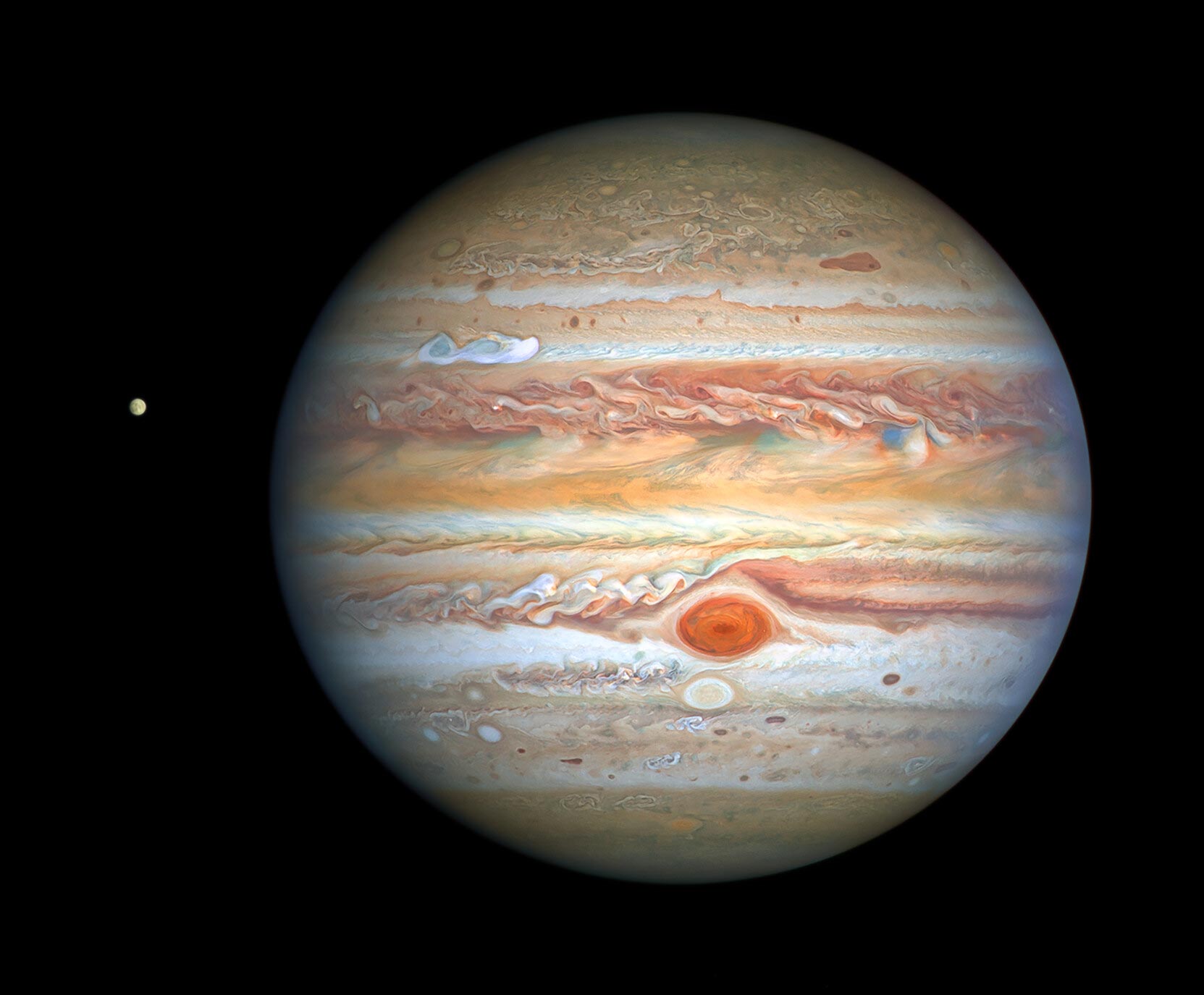
    Jupiter and Europa Hubble 2020
    Jupiter steals the spotlight in January as it reaches its brightest and biggest appearance of the year. The month also features a Moon–Saturn meetup and the steady glow of the Beehive Cluster for binocular-ready observers. (This image of Jupiter was taken by NASA’s Hubble Space Telescope on August 25, 2020.) Credit: NASA, ESA, STScI, A. Simon (Goddard Space Flight Center), M.H. Wong (University of California, Berkeley), and the OPAL team

    Jupiter, Saturn, and a Star Cluster Highlight January Skies

    January brings several standout sights for skywatchers, led by a brilliant view of Jupiter, a close pairing of Saturn and the Moon, and the return of the Beehive Cluster. These events offer easy targets for anyone willing to step outside and look up during the evening hours.

    Skywatching Highlights

    • January 10: Jupiter at opposition
    • January 23: Saturn and Moon conjunction
    • January (throughout): Beehive Cluster

    Video Transcript

    Jupiter is at its biggest and brightest

    The Moon and Saturn share the sky

    And the beehive cluster makes an appearance

    That’s what’s up, this January

    January 10, Jupiter will be at its most brilliant of the entire year!

    This night, Jupiter will be at what’s called “opposition,” meaning that Earth will be directly between Jupiter and the Sun.
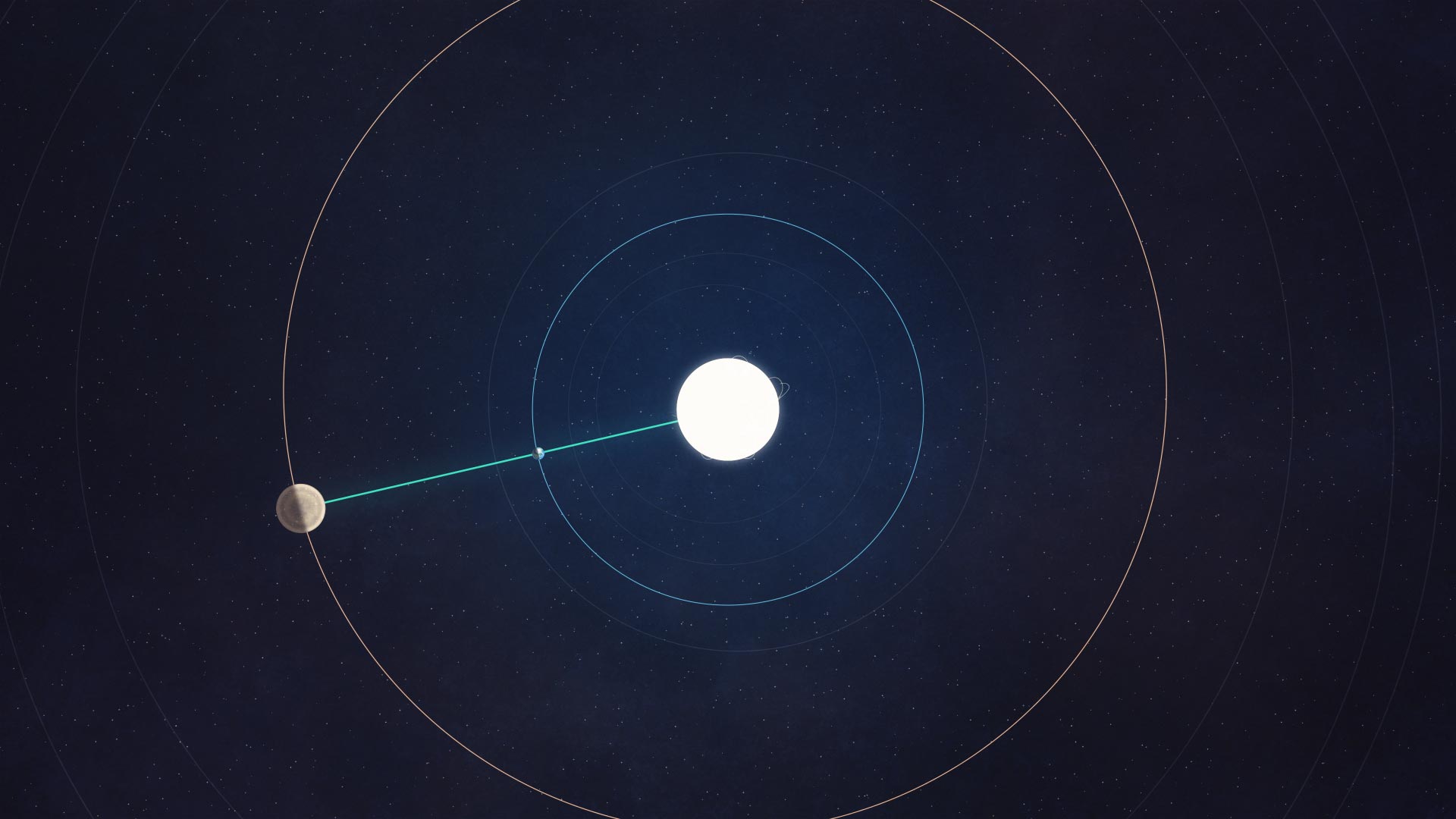
    Jupiter Opposition January 2026
    Credit: NASA/JPL-Caltech

    In this alignment, Jupiter will appear bigger and brighter in the night sky than it will all year – talk about starting off the new year bright!

    To see Jupiter at its best this year, look to the east and all evening long, you’ll be able to see the planet in the constellation Gemini. It will be one of the brightest objects in the night sky (only the moon and Venus will be brighter)

    Saturn and the Moon will share the sky on January 23rd as part of a conjunction!
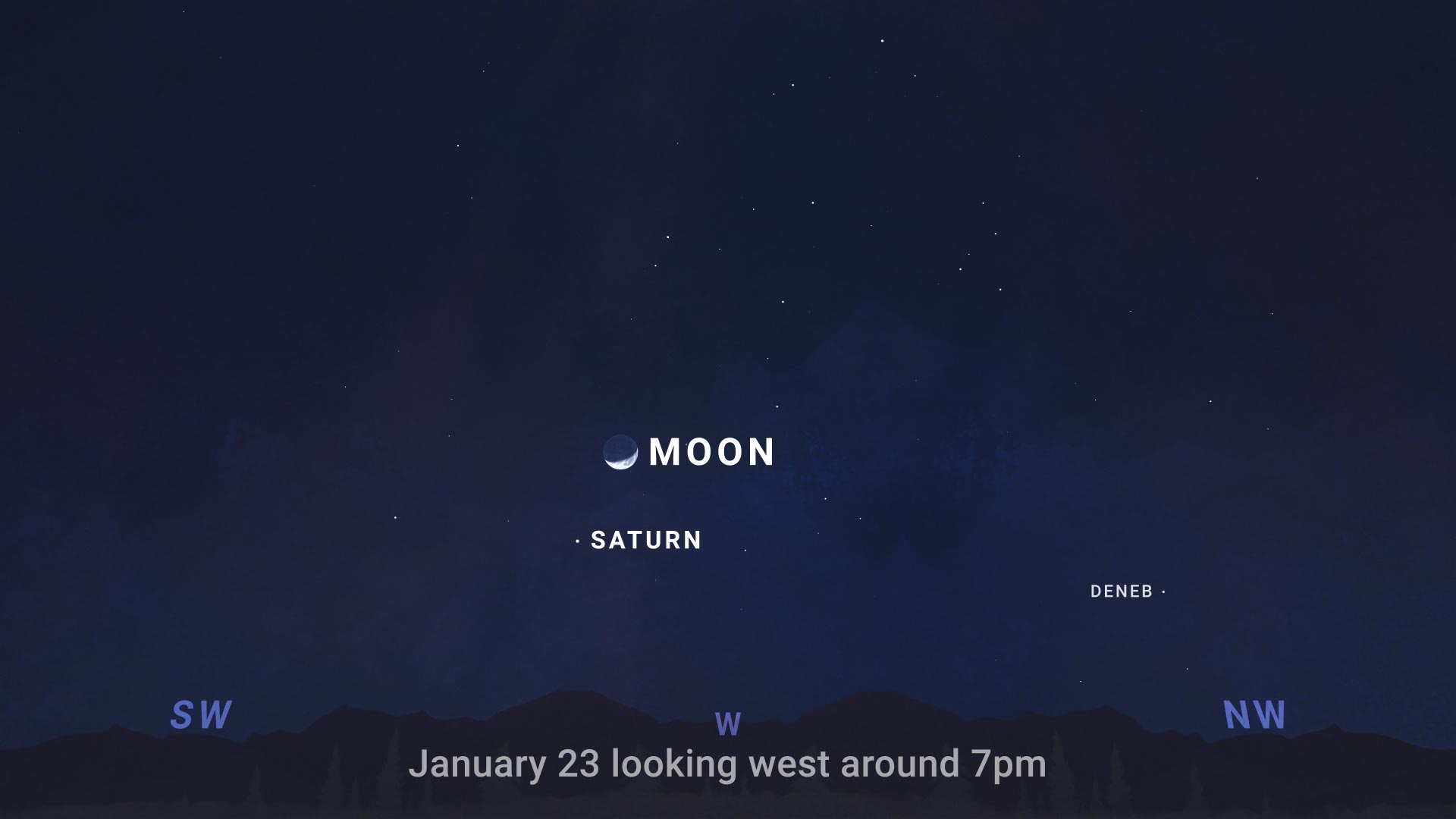
    Moon January 2026 Sky Chart
    Credit: NASA/JPL-Caltech

    A conjunction is when objects in the sky look close together even though they’re actually far apart.

    To spot the pair, look to the west and you’ll see Saturn just below the moon, sparkling in the night sky.

    The beehive cluster will be visible in the night sky throughout January!

    The beehive cluster, more formally known as Messier 44, or M44, is made of at least 1,000 stars

    It’s an open star cluster, meaning it’s a loosely-bound group of stars. There are thousands of open star clusters like the beehive in the Milky Way Galaxy!
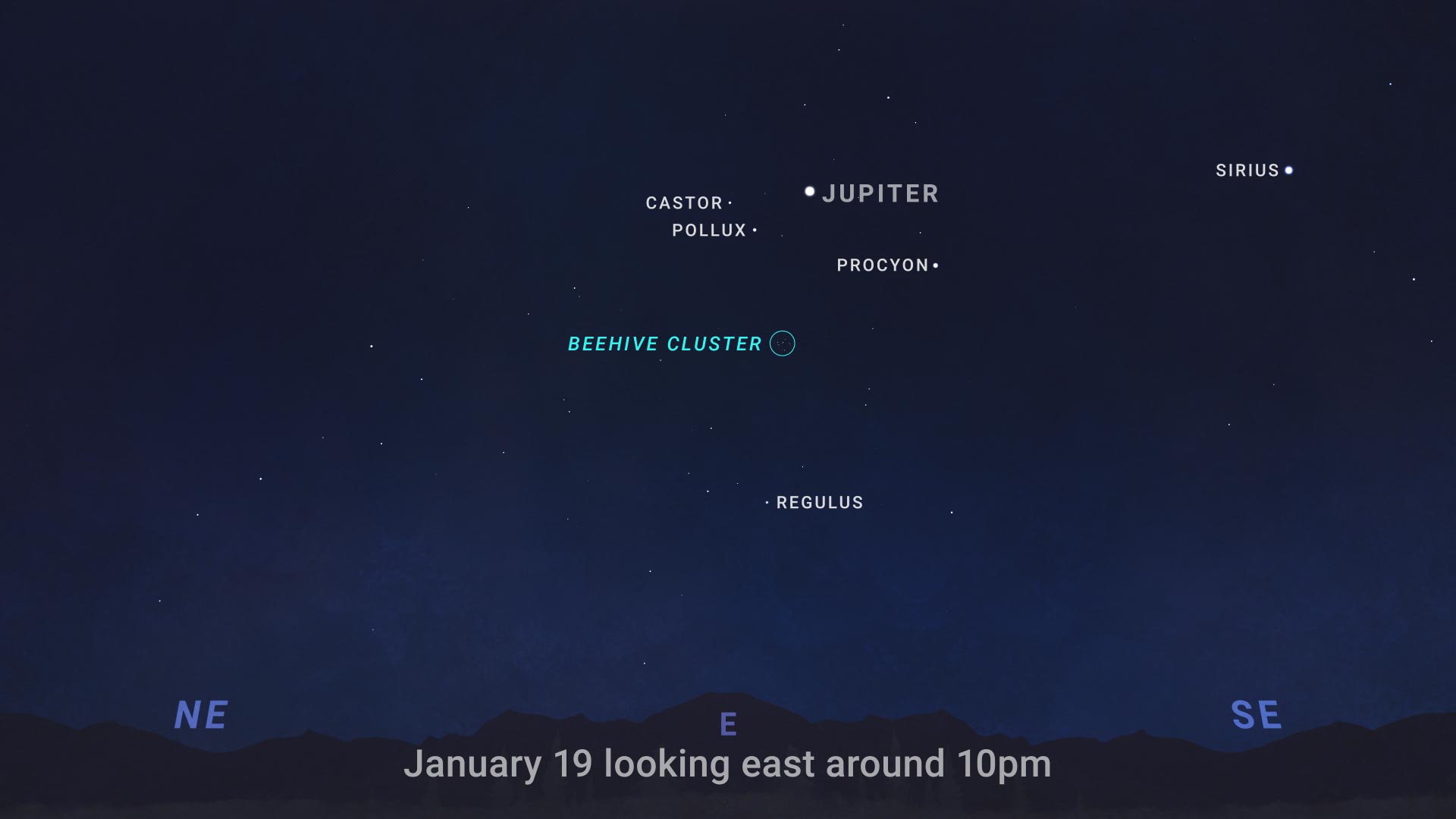
    Jupiter January 2026 Sky Chart
    Credit: NASA/JPL-Caltech

    To see the beehive cluster, look to the eastern night sky after sunset and before midnight throughout the month – especially great nights to spot the cluster are around the middle of January when the cluster isn’t too high or low in the sky to see.

    With dark skies you might be able to spot the beehive with just your eyes, but binoculars or a small telescope will help.

    Here are the phases of the Moon for January.
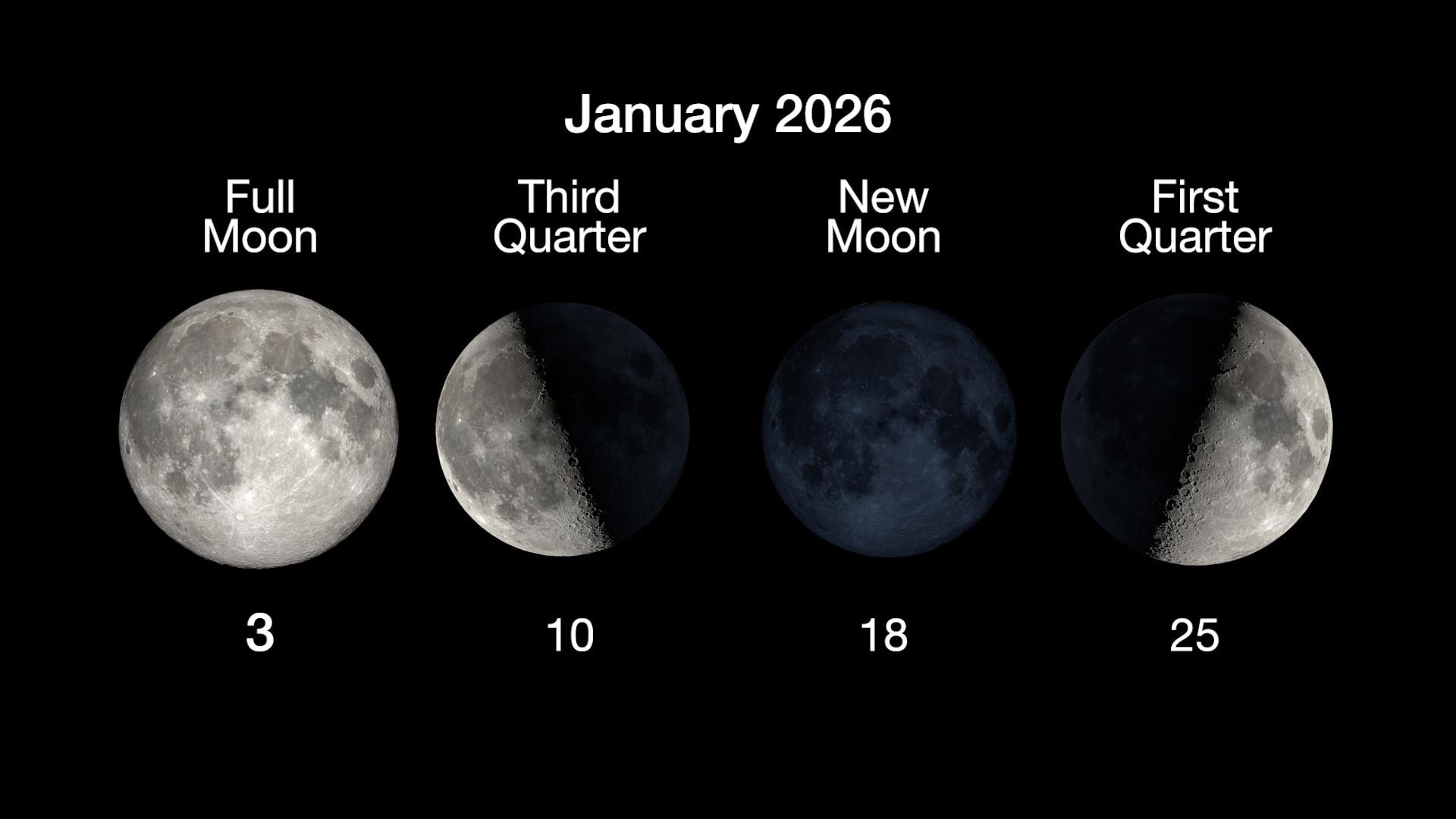
    Moon Phases January 2026
    The phases of the Moon for January 2026. Credit: NASA/JPL-Caltech

    Never miss a breakthrough: Join the SciTechDaily newsletter.
    Follow us on Google and Google News.

    Astronomy JPL NASA Popular
    Share. Facebook Twitter Pinterest LinkedIn Email Reddit

    Related Articles

    Don’t Miss: Total Solar Eclipse, Mars and Saturn Rising, Slim Lunar Crescent, Comet 12P

    Webb’s Ethanol Discovery Fuels Search for Alien Life

    Don’t Miss: Jupiter Plows Through the Pleiades

    NASA’s Next-Gen Exoplanet-Imaging Technology Advances Search for Extraterrestrial Life

    NASA Telescopes Are Unlocking the Secrets Behind Mysterious Deep Space Signals

    Catch the Quadrantid Fireballs: A January Sky Spectacle With Moon and Planet Pairings

    From IRAS to Webb: The Incredible Evolution of NASA’s Infrared Telescopes

    End of an Era: NASA’s NEOWISE 10-Year Mission Ending Due to Solar Activity

    Don’t Miss: Geminid Meteor Shower and Asteroid Vesta

    1 Comment

    1. Siphiwo on January 11, 2026 6:56 am

      Marvellous

      Reply
    Leave A Reply Cancel Reply

    • Facebook
    • Twitter
    • Pinterest
    • YouTube

    Don't Miss a Discovery

    Subscribe for the Latest in Science & Tech!

    Trending News

    Just a Few Breathless Minutes a Day Could Slash Your Risk of 8 Major Diseases

    This Simple Habit Could Cut Your Risk of Dementia by 30%

    Scientists Debunk Rattlesnake Myth That Fooled Hikers and Doctors for Decades

    Scientists Discover Plants Can “Count” – and May Be Smarter Than We Thought

    New Research Reveals Ancient Mars May Have Been Warm, Wet – and Possibly Alive

    This Surprising Daily Habit Could Cut Dementia Risk by 35%

    Just 10 Minutes a Day: Scientists Say This Ancient Chinese Practice Shows Powerful Blood Pressure Benefits

    Scientists Say This Popular Food Could Help Your Body Get Rid of Microplastics

    Follow SciTechDaily
    • Facebook
    • Twitter
    • YouTube
    • Pinterest
    • Newsletter
    • RSS
    SciTech News
    • Biology News
    • Chemistry News
    • Earth News
    • Health News
    • Physics News
    • Science News
    • Space News
    • Technology News
    Recent Posts
    • “We Were Truly Astonished”: New Discovery Rewrites Earth’s Origin Story
    • A Simple Nose Swab Could Detect Alzheimer’s Years Before Symptoms Appear
    • Scientists Warn: Vaping Likely Causes Cancer
    • Irregular Bedtimes Could Double Your Risk of Heart Attack and Stroke
    • Scientists Just Rewrote the Timeline of Complex Life on Earth
    Copyright © 1998 - 2026 SciTechDaily. All Rights Reserved.
    • Science News
    • About
    • Contact
    • Editorial Board
    • Privacy Policy
    • Terms of Use

    Type above and press Enter to search. Press Esc to cancel.