
Close Menu
    Facebook X (Twitter) Instagram
    SciTechDaily
    • Biology
    • Chemistry
    • Earth
    • Health
    • Physics
    • Science
    • Space
    • Technology
    Facebook X (Twitter) Pinterest YouTube RSS
    SciTechDaily
    Home»Space»Earth-Like Exoplanets May Be More Common Than Previously Thought
    Space

    Earth-Like Exoplanets May Be More Common Than Previously Thought

    By National Institutes of Natural SciencesNovember 4, 2022No Comments3 Mins Read
    Facebook Twitter Pinterest Telegram LinkedIn WhatsApp Email Reddit
    Share
    Facebook Twitter LinkedIn Pinterest Telegram Email Reddit
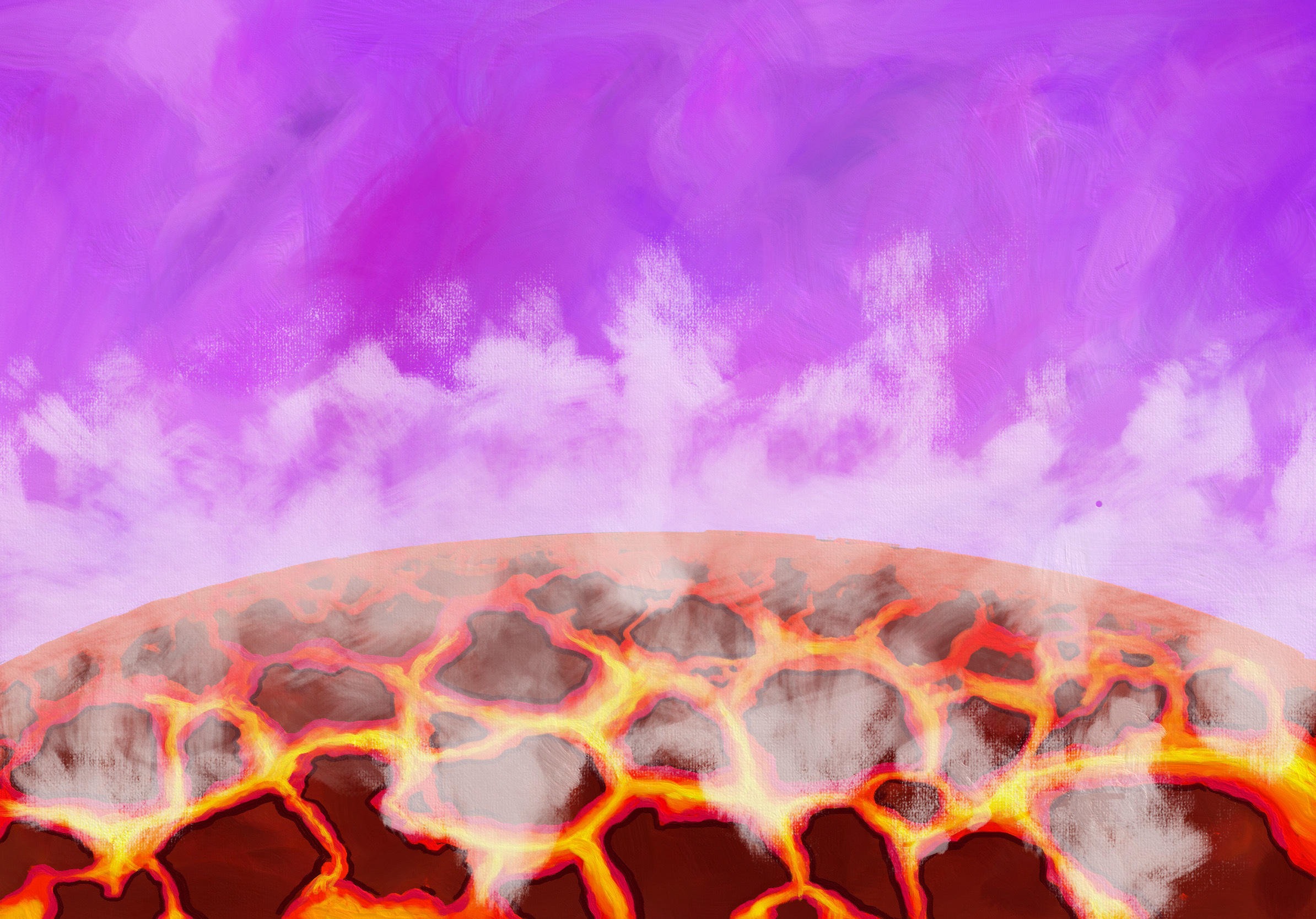
    Artist’s Impression of the Molten Surface of a Young Planet
    Artist’s impression of the molten surface of a young planet reacting with its atmosphere to form water vapor. Credit: Tadahiro Kimura

    A Day at the Beach for Life on Other Planets

    According to new simulations, fully Earth-like exoplanets with oceans and continents, as well as beaches along their boundaries, may be significantly more common around red dwarfs than previously thought. This indicates that by the end of the decade, current and future exoplanet survey missions can expect to discover several Earth analogs for further investigation.

    The range of orbits around a star where the temperature would be suitable for an exoplanet to have liquid water on its surface is referred to as the “habitable zone.” This does not imply that there is life or even water on the planet. In reality, life on the majority of exoplanets in the habitable zone would not be “a day at the beach.”

    On Earth, both the oceans and continents play critical roles in the geochemical carbon cycle, which helps to sustain a temperate climate with liquid water and life. So, in order to search for potentially habitable Earth-like planets, we need “a day at the beach,” where land and sea can coexist.

    Previous research has cautioned that such beach-friendly worlds may be extremely rare, even in the habitable zones around the most common types of stars (namely red dwarfs). This is due to a significant difference in the water content of rocky materials found in the inner and outer parts of a protoplanetary disk where planets form, resulting in the creation of planets with either too much or too little water in most situations.

    New Simulations Offer Hope for Earth Analogs

    But new numerical simulations conducted by Tadahiro Kimura from the University of Tokyo and Masahiro Ikoma from the National Astronomical Observatory of Japan provide a sunnier view. By taking into consideration water produced from interactions between the still-molten surface of a young planet and its primordial atmosphere, the team found that a wide range in final water content is expected.

    And within that range, several percent of roughly-Earth-sized planets in habitable zones should have appropriate amounts of water for a temperate climate. This is a high enough percentage that ongoing and future exoplanet survey missions like TESS and PLATO can expect to find multiple examples of truly Earth-like exoplanets with beaches in the 2020s.

    Reference: “Predicted diversity in water content of terrestrial exoplanets orbiting M dwarfs” by Tadahiro Kimura and Masahiro Ikoma, 29 September 2022, Nature Astronomy.
    DOI: 10.1038/s41550-022-01781-1

    The study was funded by the Japan Society for the Promotion of Science. 

    Never miss a breakthrough: Join the SciTechDaily newsletter.
    Follow us on Google and Google News.

    Exoplanet NAOJ National Institutes of Natural Sciences University of Tokyo
    Share. Facebook Twitter Pinterest LinkedIn Email Reddit

    Related Articles

    Mysterious Cosmic Tadpole: A Strange Gas Cloud Dances With a Colossal Black Hole

    Unknown Physics on the Cosmic Scale? 1000 Supernova Explosions Chart the Expansion History of the Universe

    Astronomers Spot Stellar Eggs Near Center of the Milky Way Hatching Into Baby Stars

    New Spectrograph on Subaru Telescope Shows “Earth-Like” TRAPPIST-1 Planetary Orbits Not Misaligned

    A Fireball Flew Over Kyoto, Japan – Now Scientists Know What It Was and Where It Came From

    Astronomers Analysis Reveals Outbound Comets Likely of Alien Origin

    Nearby ‘Lensing’ Exoplanet Discovered – Confirmed by Telescopic Observations Worldwide

    Scientists Observe the Atmosphere of Super Earth Exoplanet GJ3470b

    New Insights into How Retrograde Planets May Form and Endure

    Leave A Reply Cancel Reply

    • Facebook
    • Twitter
    • Pinterest
    • YouTube

    Don't Miss a Discovery

    Subscribe for the Latest in Science & Tech!

    Trending News

    New Pill Lowers Stubborn Blood Pressure and Protects the Kidneys

    Humans May Have Hidden Regenerative Powers, New Study Suggests

    Scientists Just Solved the Mystery of Why Crabs Walk Sideways

    Doctors Are Surprised by What This Vaccine Is Doing to the Heart

    This Popular Supplement May Boost Your Brain, Not Just Your Muscles

    Scientists Say This Simple Supplement May Actually Reverse Heart Disease

    Warming Oceans Could Trigger a Dangerous Methane Surge

    This Simple Movement Could Be Secretly Cleaning Your Brain

    Follow SciTechDaily
    • Facebook
    • Twitter
    • YouTube
    • Pinterest
    • Newsletter
    • RSS
    SciTech News
    • Biology News
    • Chemistry News
    • Earth News
    • Health News
    • Physics News
    • Science News
    • Space News
    • Technology News
    Recent Posts
    • Hidden Heart Risk Found in 1 in 5 People, Study Warns
    • Scientists Say This Daily Walking Habit May Be the Secret to Keeping Weight Off After Dieting
    • New Therapy Rewires the Brain To Restore Joy in Depression Patients
    • Researchers Discover Efficient New Way To Split Hydrogen From Water for Energy
    • This Korean Skincare Ingredient Could Help Fight Deadly Superbugs
    Copyright © 1998 - 2026 SciTechDaily. All Rights Reserved.
    • Science News
    • About
    • Contact
    • Editorial Board
    • Privacy Policy
    • Terms of Use

    Type above and press Enter to search. Press Esc to cancel.