
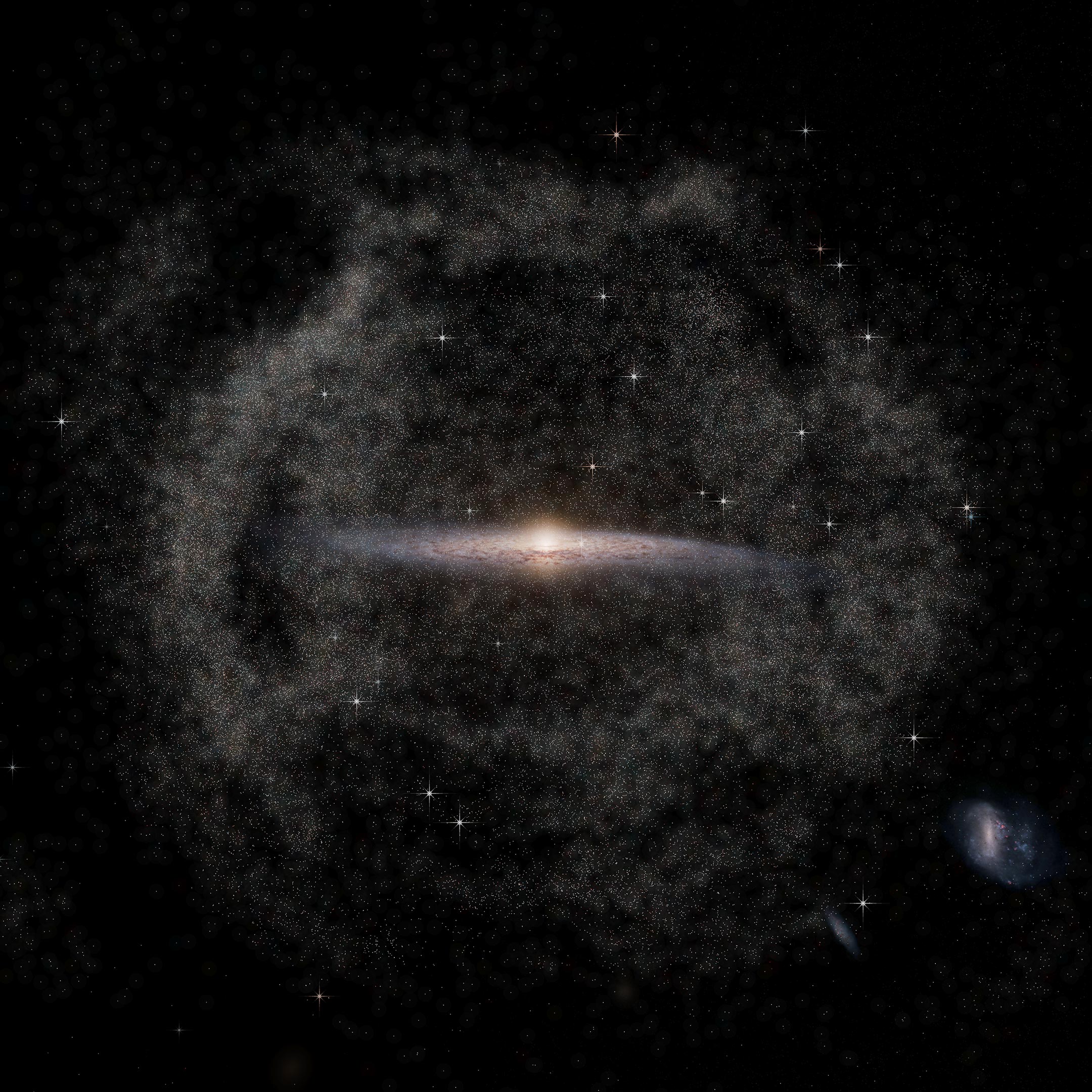
New research, utilizing data from the Gaia space telescope, suggests that the Milky Way’s last significant collision occurred much later than previously believed—within the last three billion years.
By analyzing the wrinkles caused by past galactic collisions, they discovered that the historical timeline of these events has been markedly compressed, which changes our understanding of the Milky Way’s development and the formation of its stellar structures.
Astronomer Robyn Sanderson and collaborators have recently published findings that reveal that the Milky Way galaxy’s last major collision occurred billions of years later than what was previously thought.
“The controversy is about when the Milky Way took in these stars,” Sanderson says. “Our study shows some stars, thought to be from an old merger, couldn’t be. The pattern that we see them forming would have changed or faded away by now.”
Role of Gaia in Mapping Galactic History
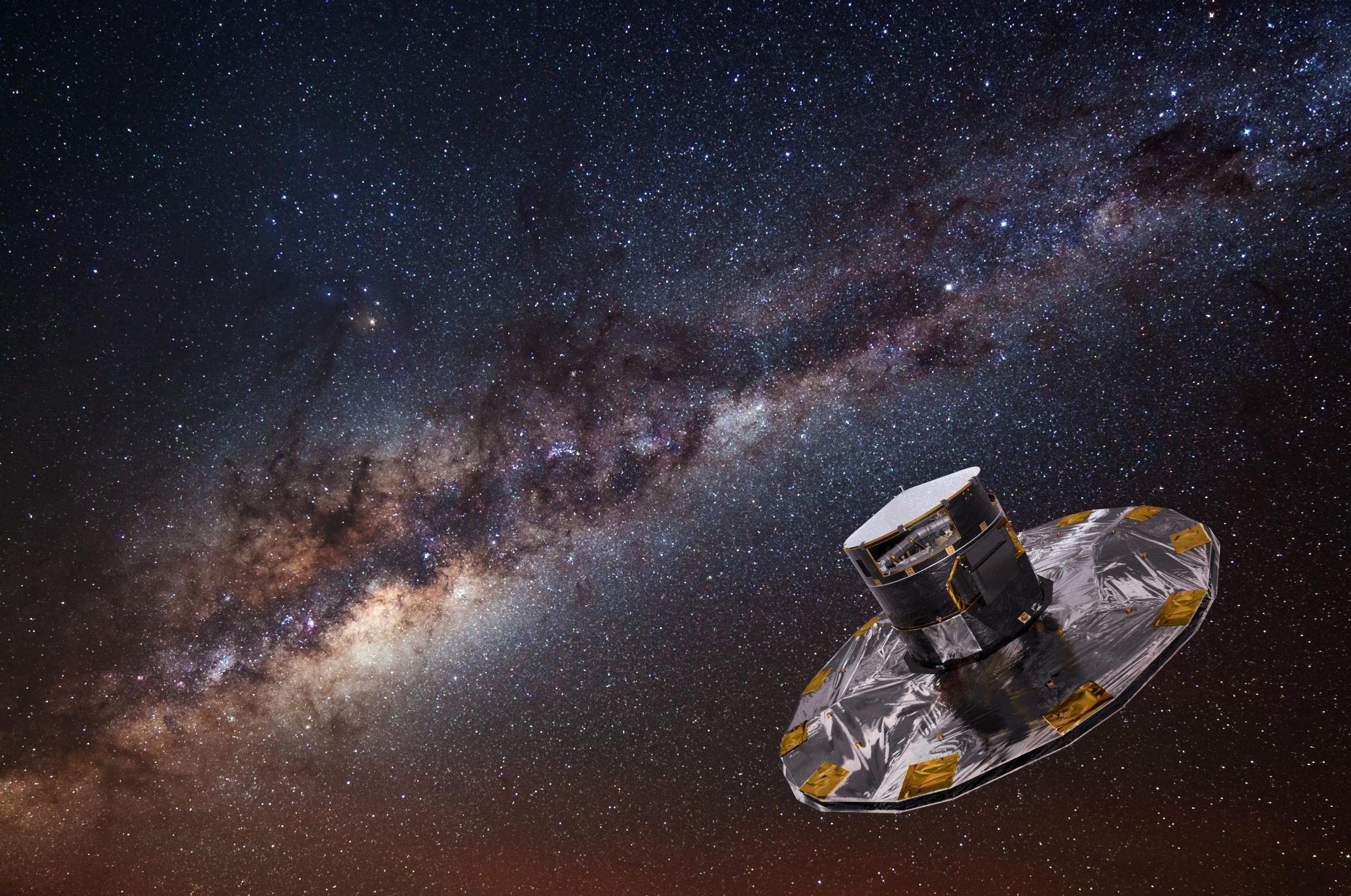
The discovery was made possible by Gaia, the European Space Agency’s “billion-star surveyor,” which is mapping more than a thousand million stars throughout the Milky Way and beyond, tracking their motions, luminosity, temperature, and composition. The team focused on the so-called “wrinkles” in our galaxy, which are formed when other galaxies collide with the Milky Way.
These wrinkles are like cosmic fingerprints left behind by past collisions, Sanderson says. By studying their patterns, cosmologists can trace the timeline of these events and understand the Milky Way’s evolutionary history.
Understanding the Milky Way’s Evolution
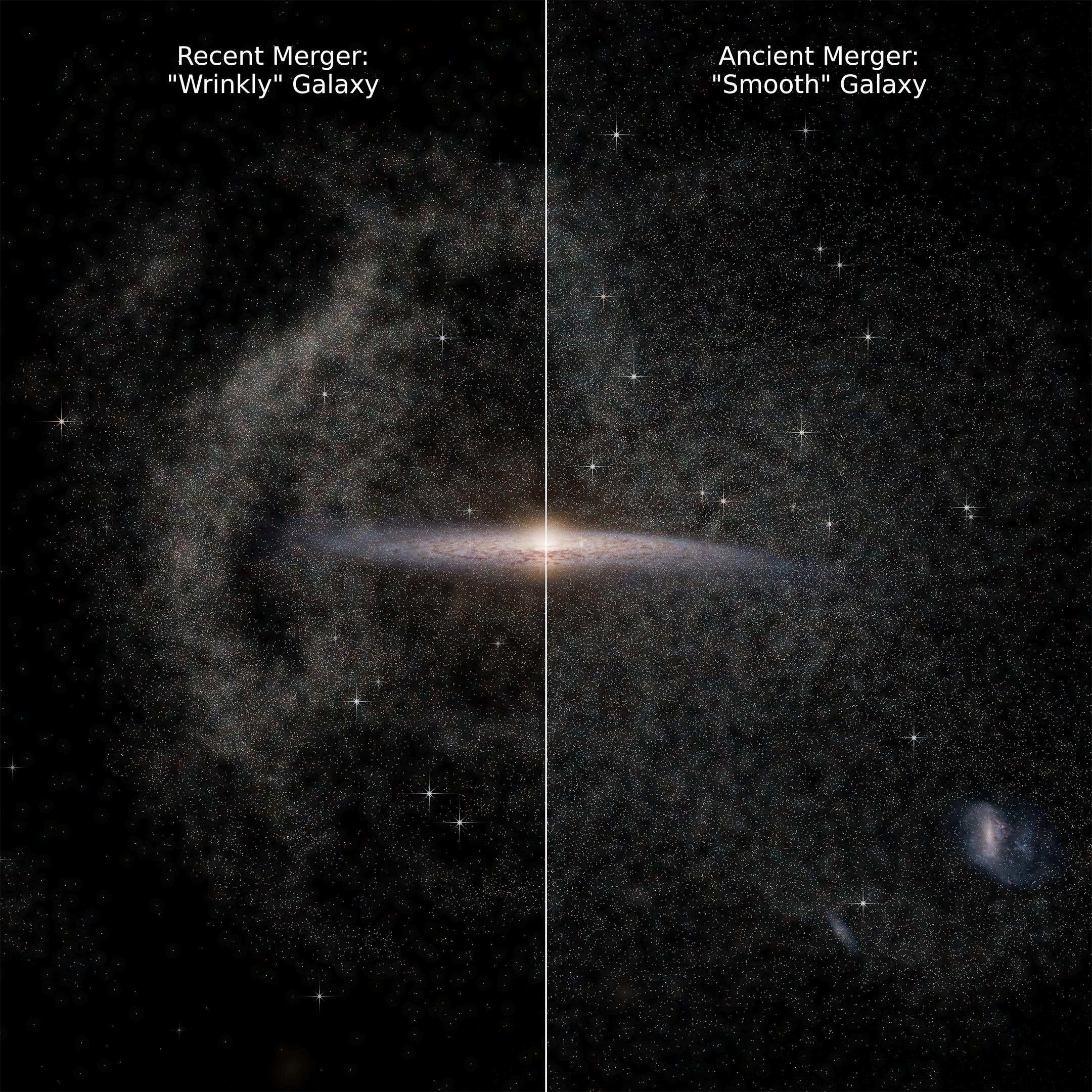
“We get wrinklier as we age, but our work reveals that the opposite is true for the Milky Way. It’s a sort of cosmic Benjamin Button, getting less wrinkly over time,” says Tom Donlon, a former visiting scholar in the Sanderson Group and lead author of the new Gaia study. “By looking at how these wrinkles dissipate over time, we can trace when the Milky Way experienced its last big crash, and it turns out this happened billions of years later than we thought.”
By comparing their observations of the wrinkles with cosmological simulations, the team was able to determine that our last significant collision with another galaxy did not, in fact, occur between eight and 11 billion years ago, as previously believed.
“The simulations are crucial because they allow us to recreate past events that could have happened in the Milky Way and see if they align with what we observe,” Sanderson says. “In this case, they showed us that the timing of the last major collision was much more recent.”
Revising the Timeline of Galactic Collisions
For the wrinkles of stars to be as obvious as they appear in Gaia data, they must have joined us no less than three billion years ago, at least five billion years later than was previously thought, says co-author Heidi Jo Newberg, a professor of astronomy at Rensselaer Polytechnic Institute. “New wrinkles of stars form each time the stars swing back and forth through the center of the Milky Way. If they’d joined us eight billion years ago, there would be so many wrinkles right next to each other that we would no longer see them as separate features,” she adds.
A number of current and former Penn researchers contributed to the study, including Arpit Arora, who built all the models for the galactic potential used in the research, and Nondh Panithanpaisal, who standardized the method used to resimulate the formation of the structures, both graduates in the School of Arts & Sciences, and former undergraduate student researcher Emily Bregou contributed to the development of the resimulation code. Danny Horta, one of Sanderson’s collaborators from the Flatiron Institute also contributed to the study by analyzing the large, old galaxies that merged with the Milky Way long ago.

Implications of the Recent Galactic Collision Discoveries
The collision is thought to have resulted in a large number of stars with unusual orbits. Previously, scientists dated it at between eight and 11 billion years ago in a collision called the Gaia-Sausage-Enceladus merger. Rather, Newberg and Donlon’s findings indicate that the stars may have resulted from the Virgo Radial Merger which crashed through the center of the Milky Way less than three billion years ago.
“Gaia is a hugely productive mission that’s transforming our view of the cosmos,” says Timo Prusti, project scientist for Gaia at ESA. “Results like this are made possible due to incredible teamwork and collaboration between a huge number of scientists and engineers across Europe and beyond.”
Reference: “The debris of the ‘last major merger’ is dynamically young” by Thomas Donlon, Heidi Jo Newberg, Robyn Sanderson, Emily Bregou, Danny Horta, Arpit Arora and Nondh Panithanpaisal, 16 May 2024, Monthly Notices of the Royal Astronomical Society.
DOI: 10.1093/mnras/stae1264
This work was supported by the NASA/NY Space Grant.
Never miss a breakthrough: Join the SciTechDaily newsletter.
Follow us on Google and Google News.
2 Comments
Yet the “science” of climate change is set in stone around a “consensus” which has been totally debunked. Do me a favour!
Agree, not a peep about created
Systems, heavens, stars, so pulsar assumptions enhanced by observable reality ignored by Uniformitarian worshippers.