
Close Menu
    Facebook X (Twitter) Instagram
    SciTechDaily
    • Biology
    • Chemistry
    • Earth
    • Health
    • Physics
    • Science
    • Space
    • Technology
    Facebook X (Twitter) Pinterest YouTube RSS
    SciTechDaily
    Home»Space»GLAM: Keeping Track of Food Production From Space
    Space

    GLAM: Keeping Track of Food Production From Space

    By NASAJuly 28, 20211 Comment2 Mins Read
    Facebook Twitter Pinterest Telegram LinkedIn WhatsApp Email Reddit
    Share
    Facebook Twitter LinkedIn Pinterest Telegram Email Reddit
    GLAM USDA
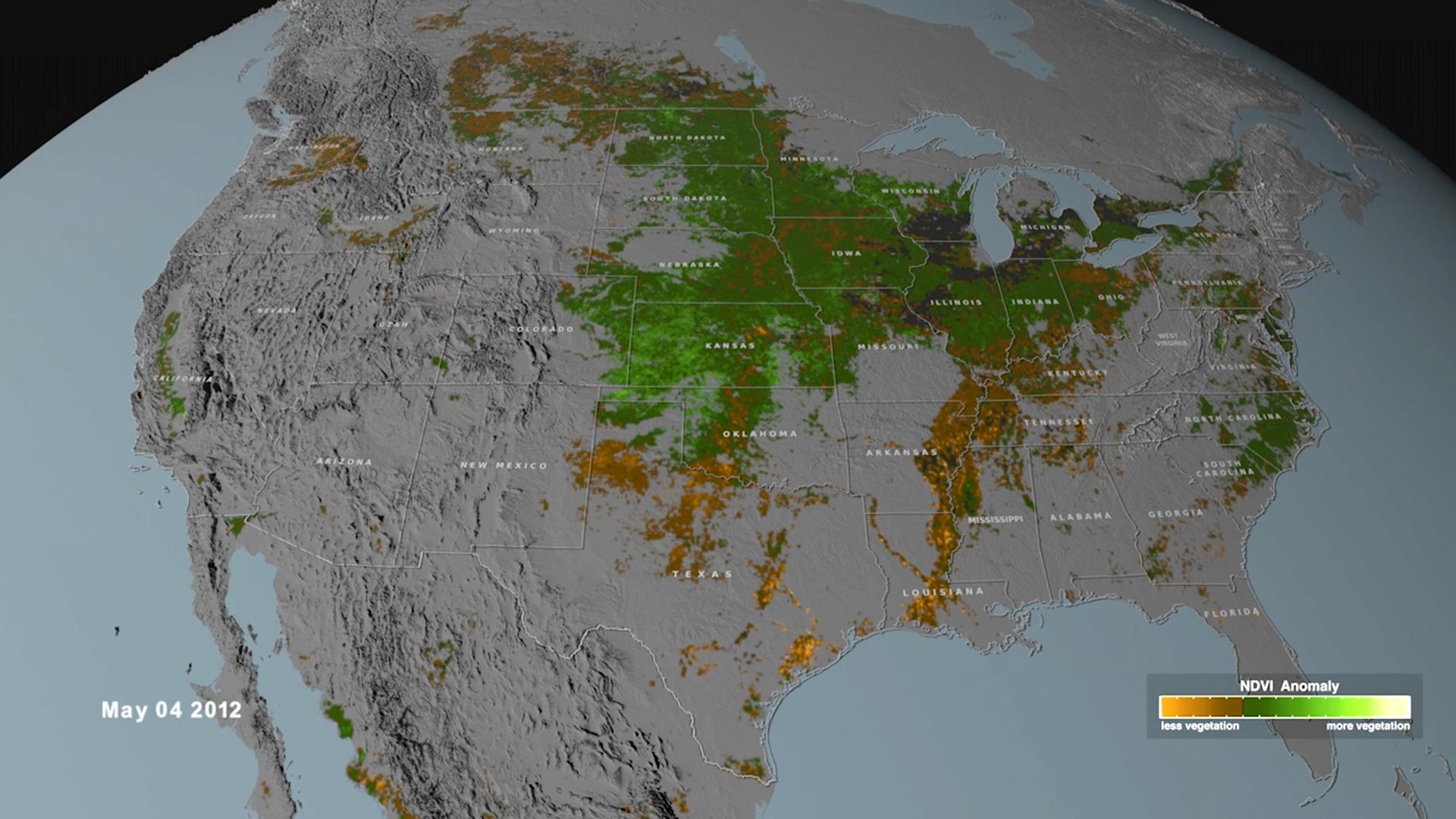
    The GLAM system, developed in collaboration with USDA and the International Production Assessment Division, helps governments assess food crop availability and aids international food aid organizations in predicting potential shortages.

    While USDA has monitored crops around the world for almost a century, the discovery that satellites can “see” greening of vegetation has revolutionized agricultural monitoring for food security. The development of the GLAM system in the 1980s, a collaboration with USDA and the International Production Assessment Division, has helped governments to assess whether or not there will be enough basic food crops to feed their populations, as well as provide international food aid organizations with a tool to predict where food shortages might occur.

    Video Transcript:

    Did you know NASA keeps track of food production from orbit?

    Pioneering scientists in the 1980’s realized that satellites could “see” plants growing from space.

    This monumental discovery occurred when NASA scientists figured out how to use satellites to measure chlorophyll in plants which is reflected as green light into space.

    With a flood of new data pouring in, NASA, USDA and the University of Maryland created an online tool that could track crop health anywhere in the world in near-real-time.

    The team called the inaugural platform, GLAM – Global Agricultural Monitoring. The system has withstood the test of time and is still in use today.

    Inspired by technological advancements and increased computing power in recent years, additional global agricultural monitoring systems have been developed, including NASA Harvest’s GLAM 2.

    Here at home, when a massive derecho hit the Midwest in August of 2020, satellite data helped analysts to rapidly assess the damage.

    This natural disaster caused upwards of four billion dollars in damage one of the costliest windstorms of the past decade.

    Using Earth observation data for these types of damage estimates helps American and international markets prepare for potential commodity crop shortages.

    In the face of more extreme weather due to our changing climate, food security is one of the most important challenges of this century.

    NASA technology is helping keep our leaders informed our markets stable, and our populations fed.

    Never miss a breakthrough: Join the SciTechDaily newsletter.
    Follow us on Google and Google News.

    Agriculture Food Science NASA NASA Goddard Space Flight Center
    Share. Facebook Twitter Pinterest LinkedIn Email Reddit

    Related Articles

    NASA Watches Water From Space to Help Grow our Groceries

    How Satellites Track Status of Nation’s Food Supply and Help Farmers

    NASA LRO Spacecraft Reveals Geological Activity on the Moon’s Surface

    NASA Releases Companion Image to ‘Blue Marble’

    IBEX Measures Particles Outside Our Solar System

    NASA’s THEMIS Satellite Records Effect of Geomagnetic Storms on Radiation Belts

    Goddard’s Space Weather Laboratory to Use ‘Ensemble Forecasting’

    Scientists Believe Water Ice May Exist on the Giant Asteroid Vesta

    Solar Flare Causes Powerful Solar Radiation Storm

    1 Comment

    1. Neil B on July 28, 2021 5:48 pm

      They hit a snag on this since simple produce is making the slow move indoors in high-pop areas. Backing it up with crop insurance data would be a solid call, provided it comes with survey dimensions to exclude polys in the GLAM software.

      Reply
    Leave A Reply Cancel Reply

    • Facebook
    • Twitter
    • Pinterest
    • YouTube

    Don't Miss a Discovery

    Subscribe for the Latest in Science & Tech!

    Trending News

    Enormous Prehistoric Insects Puzzle Scientists

    Scientists Develop Bioengineered Chewing Gum That Could Help Fight Oral Cancer

    After 37 Years, the World’s Longest-Running Soil Warming Experiment Uncovers a Startling Climate Secret

    NASA Satellite Captures First-Ever High-Res View of Massive Pacific Tsunami

    ADHD Isn’t Just a Deficit: Study Reveals Powerful Hidden Strengths

    Scientists Discover Stem Cells That Could Regrow Teeth and Bone

    Early Cannabis Use May Stall Key Brain Skills in Teens

    Popular Vitamin D Supplement Has “Previously Unknown” Negative Effect, Study Finds

    Follow SciTechDaily
    • Facebook
    • Twitter
    • YouTube
    • Pinterest
    • Newsletter
    • RSS
    SciTech News
    • Biology News
    • Chemistry News
    • Earth News
    • Health News
    • Physics News
    • Science News
    • Space News
    • Technology News
    Recent Posts
    • First-of-Its-Kind Discovery: Homer’s Iliad Found Embedded in a 1,600-Year-Old Egyptian Mummy
    • Beyond Inflammation: Scientists Uncover New Cause of Persistent Rheumatoid Arthritis
    • Cancer-Like Mutations Found in the Brain May Be Driving Alzheimer’s Disease
    • A Simple Molecule Could Unlock Safer, Easier Weight Loss
    • Stretching Diamonds Unlocks Powerful New Quantum Sensing Abilities
    Copyright © 1998 - 2026 SciTechDaily. All Rights Reserved.
    • Science News
    • About
    • Contact
    • Editorial Board
    • Privacy Policy
    • Terms of Use

    Type above and press Enter to search. Press Esc to cancel.