
Close Menu
    Facebook X (Twitter) Instagram
    SciTechDaily
    • Biology
    • Chemistry
    • Earth
    • Health
    • Physics
    • Science
    • Space
    • Technology
    Facebook X (Twitter) Pinterest YouTube RSS
    SciTechDaily
    Home»Space»Hubble Captures a Jaw-Dropping Spiral Galaxy Teeming With Star Formation
    Space

    Hubble Captures a Jaw-Dropping Spiral Galaxy Teeming With Star Formation

    By ESA/HubbleMarch 3, 20251 Comment2 Mins Read
    Facebook Twitter Pinterest Telegram LinkedIn WhatsApp Email Reddit
    Share
    Facebook Twitter LinkedIn Pinterest Telegram Email Reddit
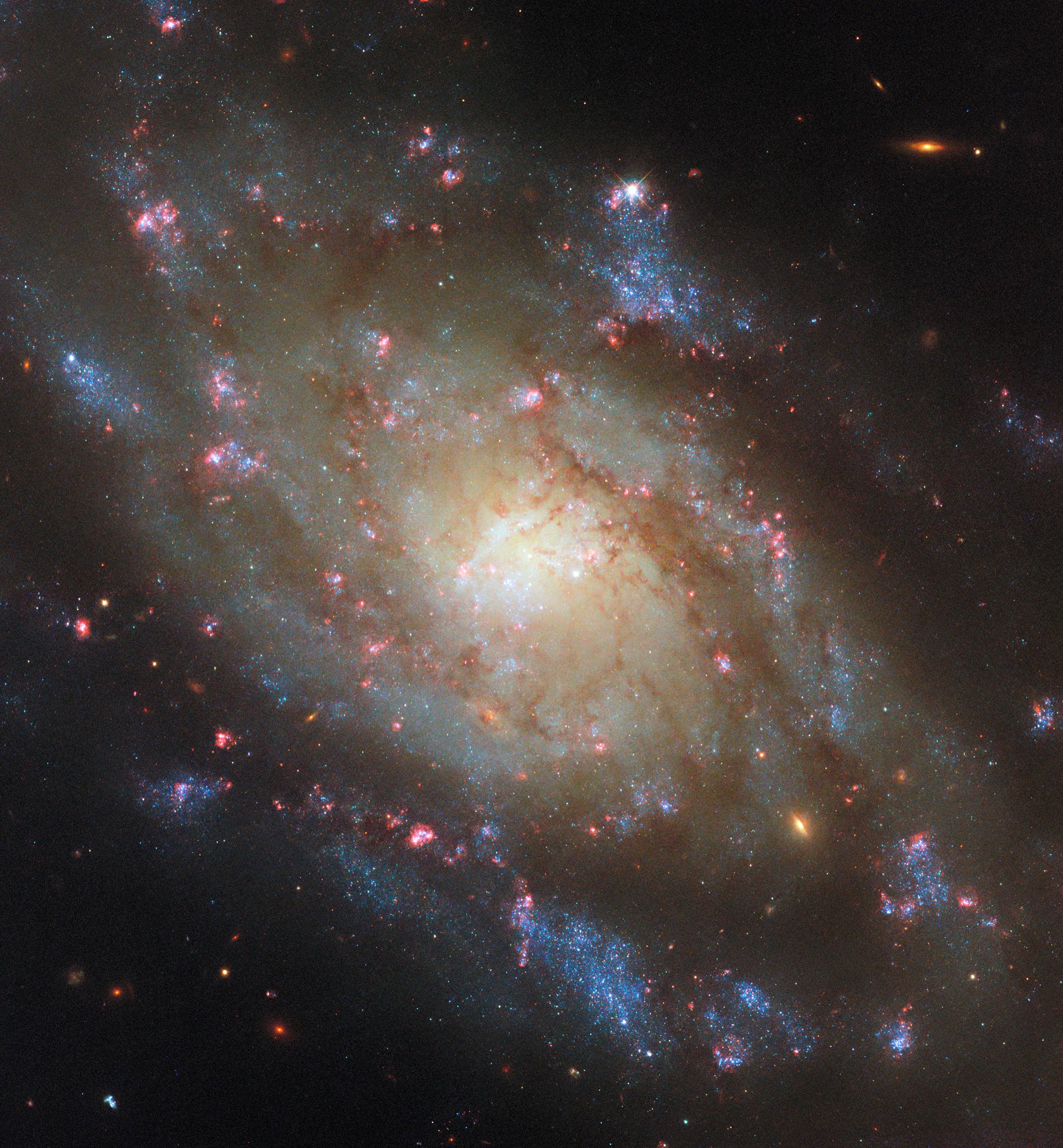
    Galaxy NGC 5042
    NGC 5042, a stunning spiral galaxy in the constellation Hydra, is beautifully captured in this Hubble image. Credit: ESA/Hubble & NASA, D. Thilker

    NGC 5042 is a breathtaking spiral galaxy showcasing a brilliant mix of ancient stars, young blue clusters, and vibrant pink H II regions—stellar nurseries illuminated by massive, short-lived stars.

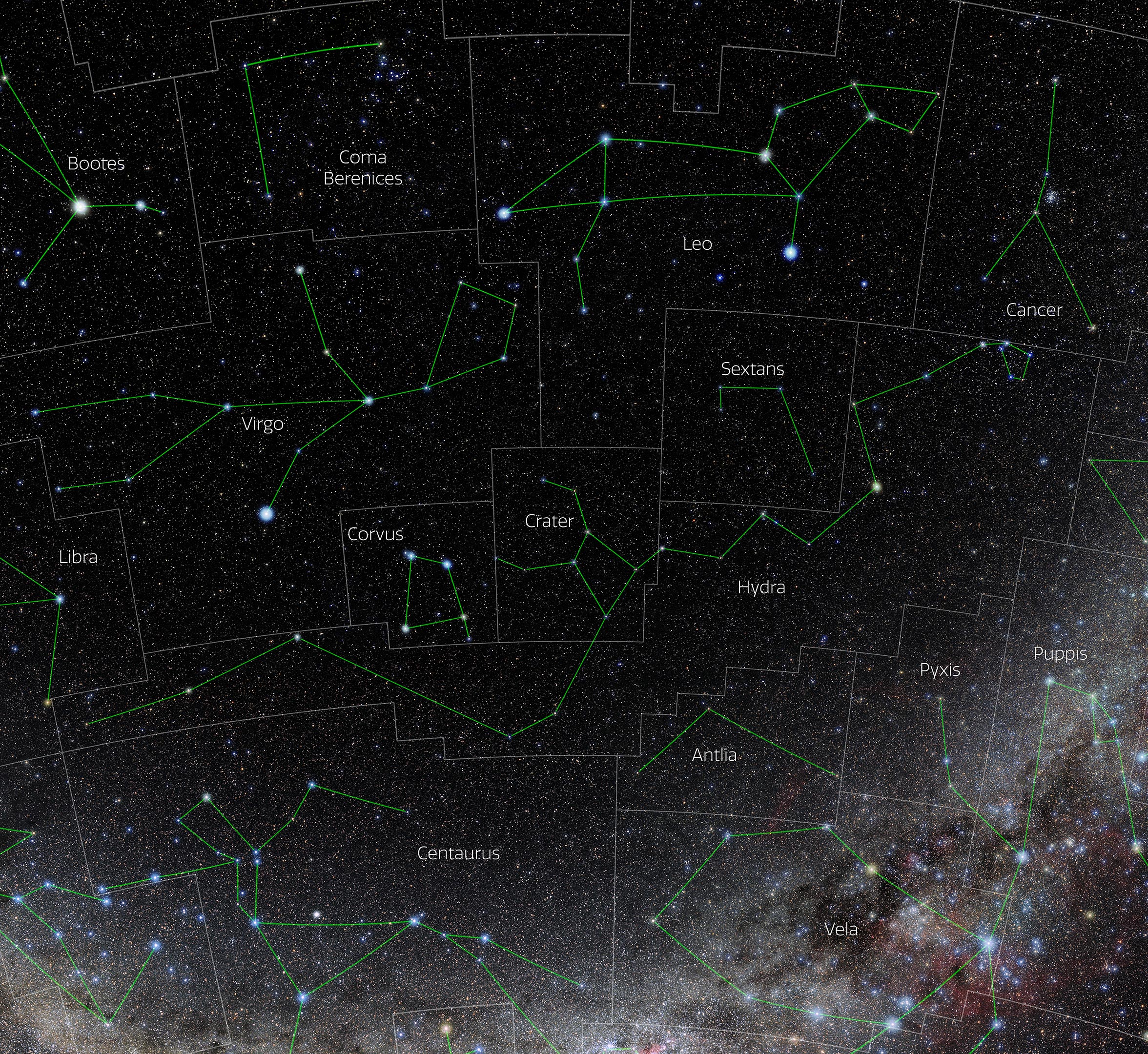
    This stunning spiral galaxy, NGC 5042, is the focus of this Hubble Space Telescope Picture of the Week. Located about 48 million light-years away in the constellation Hydra (the Water Snake), NGC 5042 dominates the frame of this Hubble image. A single foreground star from our Milky Way, marked by cross-shaped diffraction spikes, appears near the galaxy’s edge, blending in with its bright stellar surroundings.

    To create this vibrant image, Hubble observed NGC 5042 in six different wavelengths, ranging from ultraviolet to infrared. The galaxy’s core glows with a warm, cream-colored light, a sign of densely packed ancient stars. In contrast, its spiral arms sparkle with young blue stars, scattered in luminous clusters. Beyond NGC 5042, faint elongated yellow-orange shapes reveal even more distant background galaxies, adding depth to this cosmic scene.
    Hydra Constellation Annotated
    Photo of the constellation Hydra with annotations from IAU and Sky & Telescope. Credit: E. Slawik/NOIRLab/NSF/AURA/M. Zamani

    Perhaps NGC 5042’s most striking feature is its collection of brilliant pink gas clouds that are studded throughout its spiral arms. These flashy clouds are called H II (pronounced “H-two”) regions, and they get their distinctive colour from hydrogen atoms that have been ionised by ultraviolet light. If you look closely at this image, you’ll see that many of these reddish clouds are associated with clumps of blue stars, often appearing to form a shell around the stars.

    H II regions arise in expansive clouds of hydrogen gas, and only hot and massive stars produce enough high-energy light to create an H II region. Because the stars capable of creating H II regions only live for a few million years — just a blink of an eye in galactic terms — this image represents a fleeting snapshot of life in this galaxy.

    Never miss a breakthrough: Join the SciTechDaily newsletter.
    Follow us on Google and Google News.

    Astronomy European Space Agency Hubble Space Telescope
    Share. Facebook Twitter Pinterest LinkedIn Email Reddit

    Related Articles

    A Diamond Necklace of Cosmic Proportions

    Hubble Snaps a Stunning Close-Up of a Magnificent Spiral Galaxy

    Extraordinary Hubble Image: Light Bends From the Beyond

    Hubble Space Telescope Sees Volcanic Activity Reforming the Atmosphere on a Rocky Exoplanet

    Hubble Spies a Luminous Heart With Dark Tendrils

    Spectacular Return to the Veil Nebula

    Hubble Spots a Peculiar Sight: Unusual Spiral Galaxy With a Heavy Arm

    A Flash of Life: Hubble Spies an Unusual Planetary Nebula

    Through the Cosmic Clouds: Hubble Spots a Beautiful Stellar Nursery

    1 Comment

    1. Julia on March 3, 2025 10:25 am

      great

      Reply
    Leave A Reply Cancel Reply

    • Facebook
    • Twitter
    • Pinterest
    • YouTube

    Don't Miss a Discovery

    Subscribe for the Latest in Science & Tech!

    Trending News

    The Strange “Spacetime Crystal” That Can Suddenly Turn Into a Black Hole

    The Surprising Way Asteroids May Have Helped Life Begin on Earth

    Vast Hidden Structure Discovered Under Miles of Ice in East Antarctica

    A Surprising Discovery Suggests Autism Is Not One Condition

    New Alzheimer’s Discovery Could Change How Scientists Fight the Disease

    Yale Discovery Overturns Long-Held “Evolutionary Dead End” Theory

    UCLA Scientists Uncover a “Hidden Weakness” in Some of the World’s Deadliest Cancers

    Humpback Whale Stuns Scientists With 15,000 Kilometer Journey Across Oceans

    Follow SciTechDaily
    • Facebook
    • Twitter
    • YouTube
    • Pinterest
    • Newsletter
    • RSS
    SciTech News
    • Biology News
    • Chemistry News
    • Earth News
    • Health News
    • Physics News
    • Science News
    • Space News
    • Technology News
    Recent Posts
    • Food Waste Becomes a Powerful Carbon Trap in Climate Breakthrough
    • Battery-Free Artificial Photosynthesis Turns Sunlight, Water, and CO2 Into Fuel
    • How Ancient People Moved a 6-Ton Stone 700 Kilometers to Stonehenge
    • Scientists Finally See How Antibodies Really Attack Viruses
    • The Unexpected Gut Health Risk of Cutting Out Sugar
    Copyright © 1998 - 2026 SciTechDaily. All Rights Reserved.
    • Science News
    • About
    • Contact
    • Editorial Board
    • Privacy Policy
    • Terms of Use

    Type above and press Enter to search. Press Esc to cancel.