
Close Menu
    Facebook X (Twitter) Instagram
    SciTechDaily
    • Biology
    • Chemistry
    • Earth
    • Health
    • Physics
    • Science
    • Space
    • Technology
    Facebook X (Twitter) Pinterest YouTube RSS
    SciTechDaily
    Home»Space»New Fly Over Video Shows a Unique Perspective of Ceres
    Space

    New Fly Over Video Shows a Unique Perspective of Ceres

    By Elizabeth Landau/Preston Dyches, Jet Propulsion LaboratoryJune 8, 20151 Comment3 Mins Read
    Facebook Twitter Pinterest Telegram LinkedIn WhatsApp Email Reddit
    Share
    Facebook Twitter LinkedIn Pinterest Telegram Email Reddit
    Fly Over Dwarf Planet Ceres
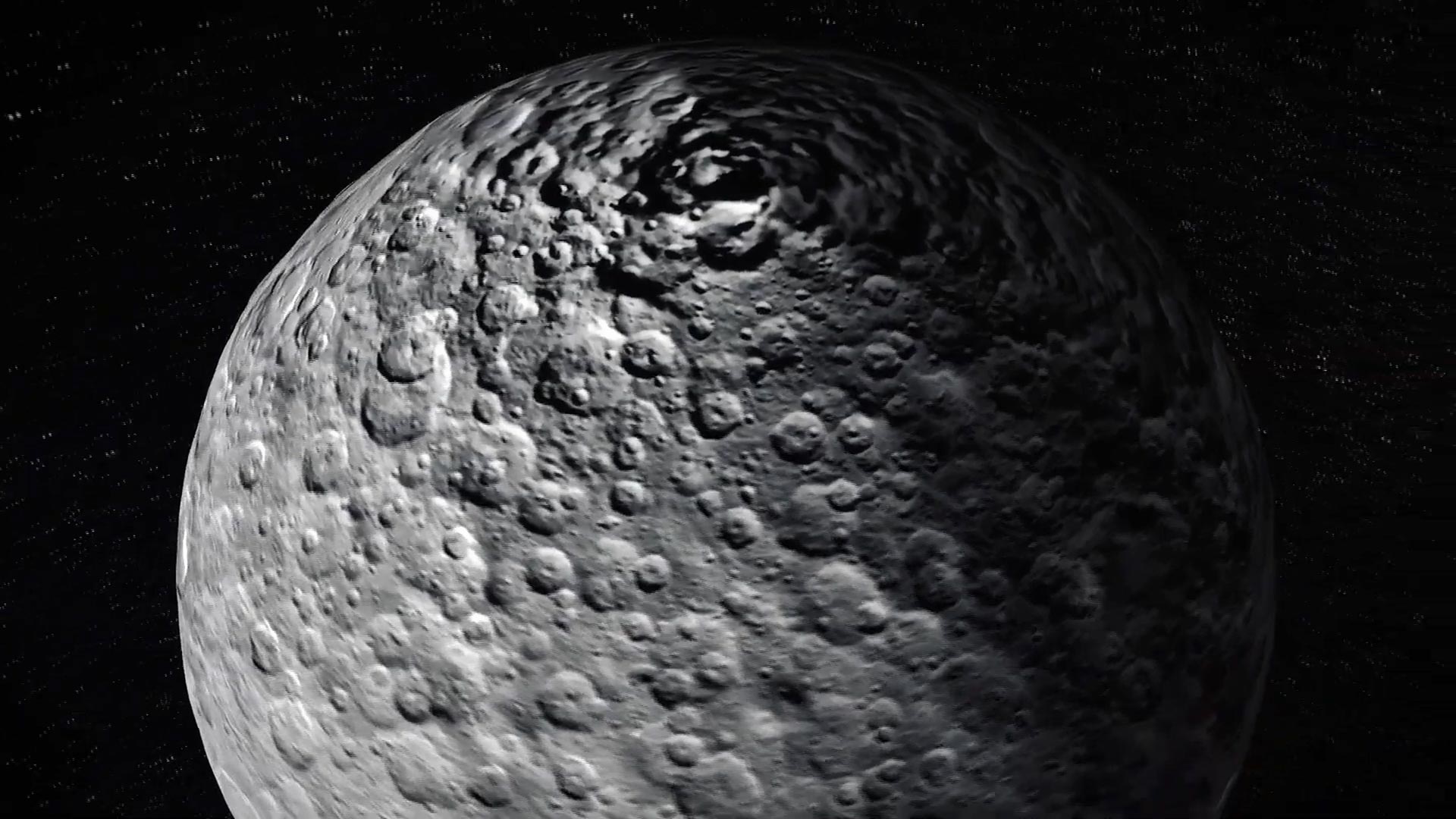
    The dwarf planet Ceres based on observations by NASA’s Dawn Spacecraft. Credit: NASA

    Based on observations of Ceres that were taken from NASA’s Dawn Spacecraft, a new animated video reveals a unique perspective of this heavily cratered, mysterious world.

    The video is based on observations of Ceres that were taken from Dawn’s first mapping orbit, at an altitude of 8,400 miles (13,600 kilometers), as well as the most recent navigational images taken from 3,200 miles (5,100 kilometers).

    Data from 80 images are combined into the video. Analysis of overlapping images provided three-dimensional detail. The vertical dimension is exaggerated by a factor of two in the video.


    A new video animation of dwarf planet Ceres, based on images taken by NASA’s Dawn spacecraft, provides dramatic flyover views of this heavily cratered, mysterious world. The images come from Dawn’s first mapping orbit at Ceres, at an altitude of 8,400 mile (13,600 kilometers), as well as navigational images taken from 3,200 miles (5,100 kilometers) away. The images provided information for a three-dimensional terrain model. The vertical dimension has been exaggerated by a factor of two, and a star field has been added in the background.

    “We used a three-dimensional terrain model that we had produced based on the images acquired so far,” said Dawn team member Ralf Jaumann of the German Aerospace Center (DLR), in Berlin. “They will become increasingly detailed as the mission progresses — with each additional orbit bringing us closer to the surface.”

    Dawn entered its second mapping orbit on June 3. It will spend the rest of the month observing the dwarf planet from 2,700 miles (4,400 kilometers) above its surface. The spacecraft will conduct intensive observations of Ceres, completing orbits of about three days each.

    Earlier this year, Dawn made history as the first mission to visit a dwarf planet, and the first to orbit two distinct extraterrestrial targets. It studied Vesta, a protoplanet in the main asteroid belt, for 14 months in 2011 and 2012, and arrived at Ceres on March 6, 2015.

    Dawn’s mission is managed by the Jet Propulsion Laboratory (JPL) for NASA’s Science Mission Directorate in Washington. Dawn is a project of the directorate’s Discovery Program, managed by NASA’s Marshall Space Flight Center in Huntsville, Alabama. UCLA is responsible for overall Dawn mission science. Orbital ATK Inc., in Dulles, Virginia, designed and built the spacecraft. The German Aerospace Center, Max Planck Institute for Solar System Research, Italian Space Agency and Italian National Astrophysical Institute are international partners on the mission team.

    Never miss a breakthrough: Join the SciTechDaily newsletter.
    Follow us on Google and Google News.

    Astronomy Ceres Dawn Spacecraft NASA Planetary Science
    Share. Facebook Twitter Pinterest LinkedIn Email Reddit

    Related Articles

    What’s Creating Those Unusual Bright Spots on Ceres? Dawn Heads Toward Low-Altitude Mapping Orbit

    Dawn Spacecraft Reveals New Maps and Insights about Ceres

    New Up-Close View of the Bright Spots on Ceres

    NASA’s Dawn Spacecraft Delivers Sharper Images Ceres

    New NASA Video Highlights Dwarf Planet Ceres

    NASA’s Dawn Reveals Topography of Dwarf Planet Ceres

    Ceres Spots Remain a Mystery in Latest Dawn Images

    A New View of Ceres, Dawn Shows Finer Detail

    New Images by NASA’s Dawn Spacecraft Show Mysterious Bright Spots on Ceres

    1 Comment

    1. Randy Rogers on June 8, 2015 10:22 am

      Very beautiful. What are the white light colored areas?

      Reply
    Leave A Reply Cancel Reply

    • Facebook
    • Twitter
    • Pinterest
    • YouTube

    Don't Miss a Discovery

    Subscribe for the Latest in Science & Tech!

    Trending News

    Largest-Ever Study Finds Medicinal Cannabis Ineffective for Anxiety, Depression, PTSD

    250-Million-Year-Old Egg Solves One of Evolution’s Biggest Mysteries

    Living With Roommates Might Be Changing Your Gut Microbiome Without You Knowing

    Century-Old Cleaning Chemical Linked to 500% Increased Risk of Parkinson’s Disease

    What if Your Memories Never Happened? Physicists Take a New Look at the Boltzmann Brain Paradox

    One of the Universe’s Largest Stars May Be Getting Ready To Explode

    Scientists Discover Enzyme That Could Supercharge Ozempic-Like Weight Loss Drugs

    Popular Sweetener Linked to DNA Damage – “It’s Something You Should Not Be Eating”

    Follow SciTechDaily
    • Facebook
    • Twitter
    • YouTube
    • Pinterest
    • Newsletter
    • RSS
    SciTech News
    • Biology News
    • Chemistry News
    • Earth News
    • Health News
    • Physics News
    • Science News
    • Space News
    • Technology News
    Recent Posts
    • Scientists Prove There Are Just Six Degrees of Separation in a Social Network
    • Bee Bacteria Could Fix a Major Flaw in Plant-Based Milk
    • Scientists Discover a Surprising Way To Make Bread Healthier and More Nutritious
    • Natural Compounds Boost Bone Implant Success While Killing Bacteria and Cancer Cells
    • After 60 Years, Scientists Uncover Unexpected Brain Effects of Popular Diabetes Drug Metformin
    Copyright © 1998 - 2026 SciTechDaily. All Rights Reserved.
    • Science News
    • About
    • Contact
    • Editorial Board
    • Privacy Policy
    • Terms of Use

    Type above and press Enter to search. Press Esc to cancel.