
Close Menu
    Facebook X (Twitter) Instagram
    SciTechDaily
    • Biology
    • Chemistry
    • Earth
    • Health
    • Physics
    • Science
    • Space
    • Technology
    Facebook X (Twitter) Pinterest YouTube RSS
    SciTechDaily
    Home»Biology»Scientists Uncover New Secrets of Insulin Production
    Biology

    Scientists Uncover New Secrets of Insulin Production

    By University of WürzburgFebruary 11, 2025No Comments4 Mins Read
    Facebook Twitter Pinterest Telegram LinkedIn WhatsApp Email Reddit
    Share
    Facebook Twitter LinkedIn Pinterest Telegram Email Reddit
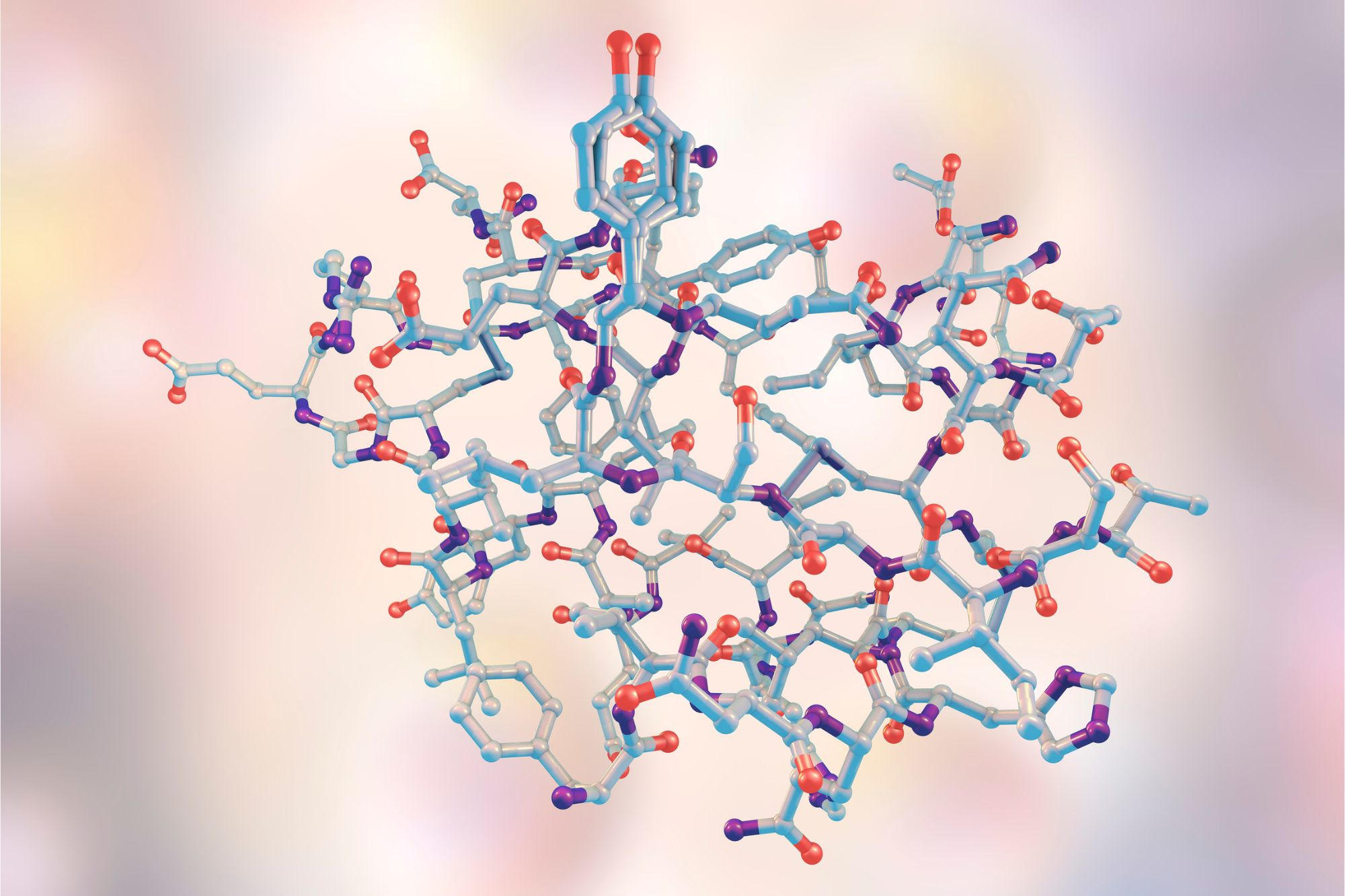
    Insulin Molecule
    Fruit flies use brain cells to release insulin in response to sugar, much like humans, and this response declines with age, offering insights into metabolic diseases.

    JMU scientists studied insulin-producing cells in fruit flies, finding that secretion is influenced by gut hormones, decreases with age, and has minimal impact on foraging, offering insights into human metabolism.

    Insulin is a key hormone that regulates metabolism in many living organisms. When food is abundant, insulin facilitates the absorption and storage of energy. During periods of hunger, insulin production decreases, prompting the body to conserve energy or seek alternative sources. Maintaining a precise balance in this system is essential for survival; disruptions can lead to diabetes and other metabolic disorders.

    In humans, insulin is produced in the pancreas. In contrast, the fruit fly Drosophila generates insulin in specialized nerve cells within the brain. These cells release insulin directly into the hemolymph, the insect equivalent of blood. Despite this difference, the insulin system in Drosophila closely resembles that of humans.

    Published in the Journal eLife

    Scientists at Julius-Maximilians-Universität Würzburg (JMU) in Bavaria, Germany, have now taken a closer look at the insulin-producing cells of the fruit fly. They aimed to unravel how these cells in the fly’s brain work together with other neurons to produce a concerted response to metabolic demands and internal state changes.

    Insulin Producing Cells of Drosophila
    The image shows in magenta the insulin-producing cells (IPCs) and a second group of nerve cells (DH44 positive cells, green), which together with the IPCs regulate central aspects of the energy balance in insects. Credit: Rituja Bisen / University of Wuerzburg

    The results have been published in the scientific journal eLife. Dr. Jan Ache, head of an Emmy Noether group at the Department of Neurobiology and Genetics at the JMU Biocentre, is responsible for the study.

    Tracking the Activity of Individual Cells

    How do insulin-producing cells (IPC) in living insects react to changes in energy balance? Little is known about this so far. To close this knowledge gap, Jan Ache’s team used an approach that allows recording the activity of individual IPCs in living fruit flies under different conditions.

    They found that the IPCs release insulin when the flies ingest sugar with their food – but not when sugar is injected directly into the hemolymph.

    ‘In humans, this phenomenon is known as the incretin effect,’ explains Jan Ache. It suggests that insulin secretion is not simply controlled by the rise in blood sugar levels, but by more complex mechanisms involving gut hormones.

    The JMU team also found that IPC activity is much lower in older flies. It is therefore possible that the way in which the insects process sugar changes with age – similar to humans.

    Influence on Foraging Behaviour Investigated

    The foraging behavior of fruit flies is closely linked to fluctuations in their energy reserves, which in turn are linked to insulin secretion. The Würzburg team also wanted to find out more about these relationships.

    The researchers therefore stimulated the IPCs optogenetically – mimicking what normally happens after a meal and a rise in sugar levels. It turned out that the insulin-producing cells play only a minor role in modulating foraging behavior compared to other nerve cells.

    Studies May be Relevant for Humans

    ‘With our experiments, we have refined our knowledge of the circuits that control insulin secretion in fruit flies,’ says Jan Ache. This now enables further investigations, which could ultimately lead to findings that are relevant to human health and diseases such as diabetes. Although humans and fruit flies are very different in appearance, they have some similarities in their genetics and metabolism, including the function of the nervous system and core aspects of metabolic regulation.

    Reference: “Nutritional state-dependent modulation of insulin-producing cells in Drosophila” by Rituja S Bisen, Fathima Mukthar Iqbal, Federico Cascino-Milani, Till Bockemühl and Jan M Ache, 29 January 2025, eLife.
    DOI: 10.7554/eLife.98514

    Never miss a breakthrough: Join the SciTechDaily newsletter.
    Follow us on Google and Google News.

    Diabetes Fruit Flies Insulin Metabolism University of Würzburg
    Share. Facebook Twitter Pinterest LinkedIn Email Reddit

    Related Articles

    Scientists Discover Potential Diabetes Treatment in Venom of One of the World’s Deadliest Creatures

    Overturning Old Myths: New Research Indicates That Insulin Spike After Eating Is Actually a Good Thing

    Neuronal Nightmare: The Troubling Connection Between Sugar, Obesity, and Brain Degeneration

    Stanford Scientists Uncover New Indicators of Health, Disease, and Aging

    Cornell Scientists Discover That Losing Key Type of Pancreatic Cell May Contribute to Diabetes

    Scientists Have Discovered a Microprotein That Increases Appetite

    Study Finds That Exercise Curbs Insulin Production

    New Route Discovered for Regulating Blood Sugar Levels – Independent of Insulin

    New Study Shows Absence of ANGPTL4 Protein Reduces Cholesterol and Inflammation

    Leave A Reply Cancel Reply

    • Facebook
    • Twitter
    • Pinterest
    • YouTube

    Don't Miss a Discovery

    Subscribe for the Latest in Science & Tech!

    Trending News

    Your Blood Pressure Reading Could Be Wrong Because of One Simple Mistake

    Astronomers Stunned by Ancient Galaxy With No Spin

    Physicists May Be on the Verge of Discovering “New Physics” at CERN

    Scientists Solve 320-Million-Year Mystery of Reptile Skin Armor

    Scientists Say This Daily Walking Habit May Be the Secret to Keeping Weight Off After Dieting

    New Therapy Rewires the Brain To Restore Joy in Depression Patients

    Giant Squid Detected off Western Australia in Stunning Deep-Sea Discovery

    Popular Sugar-Free Sweetener Linked to Liver Disease, Study Warns

    Follow SciTechDaily
    • Facebook
    • Twitter
    • YouTube
    • Pinterest
    • Newsletter
    • RSS
    SciTech News
    • Biology News
    • Chemistry News
    • Earth News
    • Health News
    • Physics News
    • Science News
    • Space News
    • Technology News
    Recent Posts
    • Hidden Warm Water Beneath Antarctica Could Rapidly Raise Global Sea Levels
    • Scientists Revive Ancient Chemistry Trick To Engineer Next-Generation Glass
    • Scientists Use AI To Supercharge Ultrafast Laser Simulations by More Than 250x
    • Scientists Just Found a Surprising Way To Destroy “Forever Chemicals”
    • Popular Supplement Ingredient Linked to Shorter Lifespan in Men
    Copyright © 1998 - 2026 SciTechDaily. All Rights Reserved.
    • Science News
    • About
    • Contact
    • Editorial Board
    • Privacy Policy
    • Terms of Use

    Type above and press Enter to search. Press Esc to cancel.