
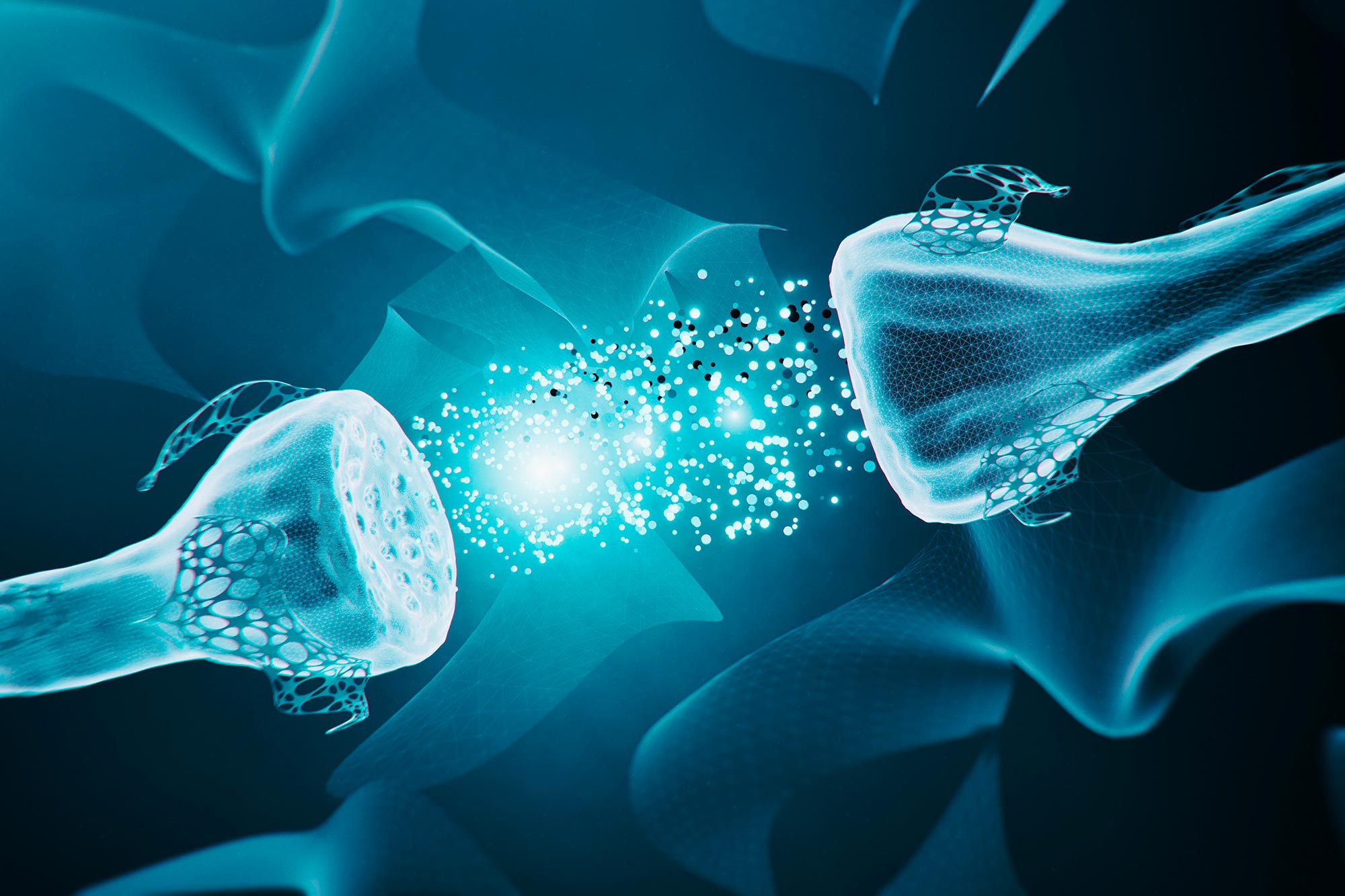
Researchers discovered that electrical synapses filter sensory signals in animals, enabling context-specific decision-making—a finding with broad implications for neuroscience.
Scientists from Yale University and the University of Connecticut have made a significant breakthrough in understanding how animal brains make decisions. Their research highlights the critical role of electrical synapses in “filtering” sensory information.
Published in the journal Cell, the study shows that a specific arrangement of electrical synapses allows animals to make appropriate decisions based on context, even when they encounter similar sensory signals.
Animal brains are constantly bombarded with sensory information — sights, sounds, smells, and more. Making sense of this information, scientists say, requires a sophisticated filtering system that focuses on relevant details and enables an animal to act accordingly. Such a filtering system doesn’t simply block out “noise” — it actively prioritizes information depending on the situation. Focusing on certain sensory information and deploying a context-specific behavior is known as “action selection.”
The Worm Model: C. elegans and Temperature Navigation
The Yale-led study focused on a worm, C. elegans, which, surprisingly, provides a powerful model for understanding the neural mechanisms of action selection. C. elegans can learn to prefer specific temperatures; when in a temperature gradient, it uses a simple, yet effective strategy to navigate towards its preferred temperature.
Worms first move across the gradient towards their preferred temperature (a behavior called “gradient migration”) — and once they have identified temperature conditions more to their liking, they track that temperature, which allows them to stay within their preferred range (a behavior called “isothermal tracking”). Worms also can perform these behaviors in context-specific manners, deploying gradient migration when they are far away from their preferred temperature, and isothermal tracking when they are near a preferred temperature.
But how are they able to perform the correct behavior in the correct context?
For the new study, the researchers investigated a specific type of connection between neuronal cells, called electrical synapses, which differs from the more widely studied chemical synapses. They found that these electrical synapses, mediated by a protein called INX-1, connect a specific pair of neurons (AIY neurons) which are responsible for controlling locomotion decisions in the worm.
“Altering this electrical conduit in a single pair of cells can change what the animal chooses to do,” said Daniel Colón-Ramos, the Dorys McConnell Duberg Professor of Neuroscience and Cell Biology at Yale School of Medicine and corresponding author of the study.
The team found that these electrical synapses don’t simply transmit signals, they also act as a “filter.” In worms with normal INX-1 function, the electrical connection effectively dampens signals from the thermosensory neurons, allowing the worm to ignore weak temperature variations and focus on the larger changes experienced in the temperature gradient. This ensures that the worms move efficiently across the gradient and toward their preferred temperature without getting distracted by context-irrelevant signals, like those experienced in isothermal tracks which present throughout the gradient but are not at the preferred temperatures.
Consequences of Disrupted Electrical Synapses
However, in worms lacking INX-1, the AIY neurons become hypersensitive, responding much more strongly to minor temperature fluctuations. This hypersensitivity causes the worms to react to these small signals, trapping the animals in isotherms that are not their preferred temperature. Such abnormal tracking of isotherms within incorrect contexts adversely affects the worms’ ability to move across the temperature gradient toward their preferred temperature.
“It would be like watching a confused bird flying with its legs extended,” Colón-Ramos said. “Birds normally extend their legs prior to landing but were a bird to extend its legs in the incorrect context it would be detrimental to its normal behavior and goals.”
Since electrical synapses are found throughout the nervous systems of many animals, from worms to humans, the findings have significant implications beyond the behavior of worms.
“Scientists will be able to use this information to examine how relationships in single neurons can change how an animal perceives its environment and responds to it,” Colón-Ramos said. “While the specific details of action selection will likely vary, the underlying principle of the role of electrical synapses in coupling neurons to alter responses to sensory information could be widespread.
“For example, in our retina, a group of neurons called ‘amacrine cells’ uses a similar configuration of electrical synapses to regulate visual sensitivity when our eyes adapt to light changes.”
Synaptic configurations are central to the way animals process sensory information and then react, and the results uncovered in the new study suggest that configurations of electrical synapses play a crucial role in modulating how nervous systems process context-specific sensory information to guide perception and behavior in animals.
Reference: “Configuration of electrical synapses filters sensory information to drive behavioral choices” by Agustin Almoril-Porras, Ana C. Calvo, Longgang Niu, Jonathan Beagan, Malcom Díaz García, Josh D. Hawk, Ahmad Aljobeh, Elias M. Wisdom, Ivy Ren, Zhao-Wen Wang and Daniel A. Colón-Ramos, 31 December 2024, Cell.
DOI: 10.1016/j.cell.2024.11.037
Colón-Ramos is also associate director of Yale’s Wu Tsai Institute, which is devoted to the study of cognition.
The study’s co-lead authors are Agustin Almoril-Porras and Ana Calvo from Yale. Co-authors are Jonathan Beagan, Malcom Díaz Garcia, Josh Hawk, Ahmad Aljobeh, Elias Wisdom, and Ivy Ren, all of Yale; and Longgang Niu and Zhao-Wen Wang of the University of Connecticut.
The work was supported by the National Institutes of Health, the National Science Foundation, and a Howard Hughes Medical Institute Scholar Award.
Never miss a breakthrough: Join the SciTechDaily newsletter.
Follow us on Google and Google News.