
Close Menu
    Facebook X (Twitter) Instagram
    SciTechDaily
    • Biology
    • Chemistry
    • Earth
    • Health
    • Physics
    • Science
    • Space
    • Technology
    Facebook X (Twitter) Pinterest YouTube RSS
    SciTechDaily
    Home»Space»Hubble Watches a Cosmic Bat Shadow “Flapping”
    Space

    Hubble Watches a Cosmic Bat Shadow “Flapping”

    By ESA/HubbleOctober 31, 2021No Comments4 Mins Read
    Facebook Twitter Pinterest Telegram LinkedIn WhatsApp Email Reddit
    Share
    Facebook Twitter LinkedIn Pinterest Telegram Email Reddit
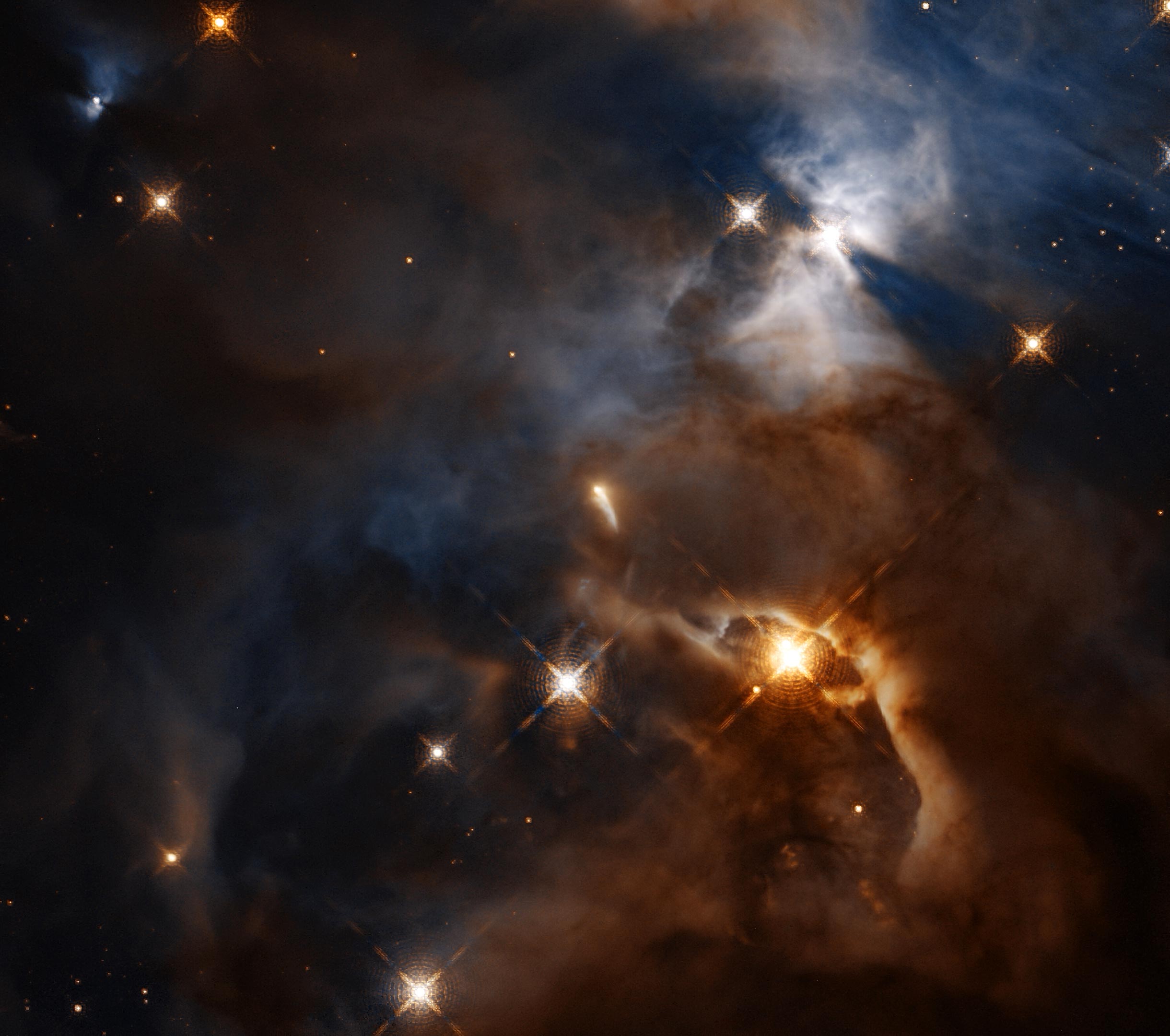
    Bat Shadow (2018 Observation)
    This image shows only the feature which was nicknamed the Bat Shadow. It is the shadow of a protoplanetary disc orbiting the star in the center of the image. Credit: NASA, ESA, K. Pontoppidan

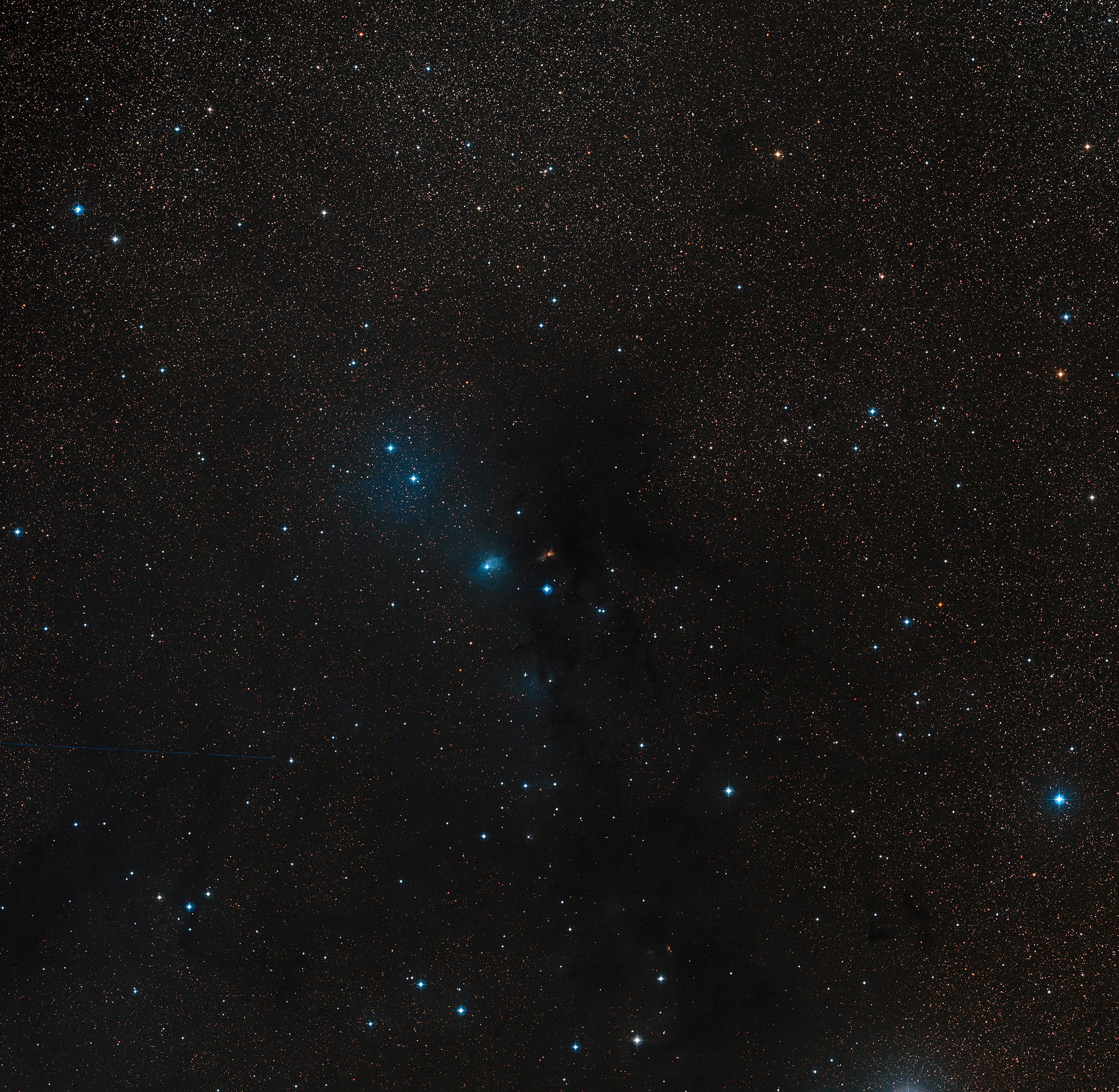
    The young star HBC 672 is known by its nickname of Bat Shadow because of its wing-like shadow feature. The NASA/ESA Hubble Space Telescope has now observed a curious “flapping” motion in the shadow of the star’s disc for the first time. The star resides in a stellar nursery called the Serpens Nebula, about 1300 light-years away.

    Serpens Nebula
    This image shows the Serpens Nebula as seen by the HAWK-I instrument installed on the Very Large Telescope of the European Southern Observatory. The filters used by HAWK-I to create this image cover wavelengths similar to the filters used by Hubble. Credit: ESO

    The Hubble Space Telescope captured a striking observation of the fledgling star’s unseen, planet-forming disc in 2018. This disc casts a huge shadow across a more distant cloud in a star-forming region — like a fly wandering into the beam of a flashlight shining on a wall.

    Now, astronomers have serendipitously observed the Bat Shadow’s “flapping.” This may have been caused by a planet pulling on the disc and warping it. “You have a star that is surrounded by a disc, and the disc is not like Saturn’s rings — it’s not flat. It’s puffed up. And so that means that the light from the star, if it goes straight up, can continue straight up — it’s not blocked by anything. But if it tries to go along the plane of the disc, it doesn’t get out, and it casts a shadow,” explained lead author Klaus Pontoppidan, an astronomer at the Space Telescope Science Institute (STScI) in Baltimore, USA, whose team have published these results.

    This “flapping” finding was also a surprise. Pontoppidan and his team observed the shadow in several filters over a period of 13 months. When they combined the old and new images, the shadow appeared to have moved.

    The shadow is so large — about 200 times the diameter of our Solar System — that light doesn’t travel instantaneously across it. In fact, it takes about 45 days for the light to travel from the star out to the best defined edge of the shadow.

    Pontoppidan and his team calculate that a planet warping the disc would orbit its star in no fewer than 180 days. They estimate that it would be about the same distance from its star as Earth is from the Sun. Pontoppidan’s team also suggest the disc must be flared, with an angle that increases with distance — like a trumpet. This shape of its two peaks and two dips would explain the “flapping” of the shadow. The team also speculates that a planet is embedded in the disc, inclined to the disc’s plane. If it’s not a planet, a less likely explanation is a lower-mass stellar companion orbiting HBC 672 outside the plane of the disc. Pontoppidan and his team doubt this is the case, based on the thickness of the disc. There is also no current evidence for a binary companion.
    Serpens Nebula Wide-Field View

    The disc is a circling structure of gas, dust, and rock, and is too small and too distant to be seen, even by Hubble. However, based on the projected shadow, scientists do know that its height-to-radius ratio is 1:5.

    For more on this study, see Hubble Spots Cosmic Flapping “Bat Shadow” in Outer Space.

    Reference: “Variability of the Great Disk Shadow in Serpens” by Klaus M. Pontoppidan, Joel D. Green, Tyler A. Pauly, Colette Salyk and Joseph DePasquale, 25 June 2020, The Astrophysical Journal.
    DOI: 10.3847/1538-4357/ab91ae

    Never miss a breakthrough: Join the SciTechDaily newsletter.
    Follow us on Google and Google News.

    Astronomy European Space Agency Hubble Space Telescope NASA
    Share. Facebook Twitter Pinterest LinkedIn Email Reddit

    Related Articles

    Hubble’s Newest Discovery Isn’t a Star, It’s a Window Into the Dark Universe

    This Nearby Galaxy Shows How Frozen Clouds Ignite Into Stars

    This Chaotic Spiral Galaxy Is Still Recovering From a Cosmic Collision

    This Strange Spiral Galaxy Is Hiding a Massive Black Hole

    Hubble Zooms In on a Galaxy That Maps the Universe’s Expansion

    Hubble Captures a Dazzling Spiral Galaxy Alive With Birth and Destruction

    Hubble Spots a Glowing “Ring of Fire” in a Distant Spiral Galaxy

    Dust, Light & Ancient Collisions: The Sombrero Galaxy Like You’ve Never Seen It

    Star Formation in Motion: Hubble Reveals Spiraling Stars and Sculpted Nebulae

    Leave A Reply Cancel Reply

    • Facebook
    • Twitter
    • Pinterest
    • YouTube

    Don't Miss a Discovery

    Subscribe for the Latest in Science & Tech!

    Trending News

    Scientists Uncover Promising New Strategy To Stop Parkinson’s in Its Tracks

    Experts Reveal the Surprising Cancer Link Behind a Common Vitamin

    This Strange “Golden Orb” Found 2 Miles Deep Stumped Scientists for Years

    Giant “Last Titan” Dinosaur Discovered in Thailand Was Bigger Than 9 Elephants

    This “Longevity Gene” May Protect the Brain From Aging and Dementia

    Common Cleaning Chemical Could Triple Your Risk of a Dangerous Liver Disease

    Scientists Discover Bizarre 100-Million-Year-Old Insect With Giant Claws

    Scientists Discover “Good” Gut Microbes That Could Protect Against Autism and ADHD

    Follow SciTechDaily
    • Facebook
    • Twitter
    • YouTube
    • Pinterest
    • Newsletter
    • RSS
    SciTech News
    • Biology News
    • Chemistry News
    • Earth News
    • Health News
    • Physics News
    • Science News
    • Space News
    • Technology News
    Recent Posts
    • Scientists Discover Metformin Doesn’t Work the Way We Thought
    • Tea or Coffee? Your Daily Choice Could Affect Osteoporosis Risk
    • Scientists Discover Brain Pathway That May Slow Parkinson’s Disease – but Only in Women
    • Vitamin C May Fight Cancer in a Surprising Way
    • Light-Matter Particles Could Revolutionize AI Computing
    Copyright © 1998 - 2026 SciTechDaily. All Rights Reserved.
    • Science News
    • About
    • Contact
    • Editorial Board
    • Privacy Policy
    • Terms of Use

    Type above and press Enter to search. Press Esc to cancel.