
Close Menu
    Facebook X (Twitter) Instagram
    SciTechDaily
    • Biology
    • Chemistry
    • Earth
    • Health
    • Physics
    • Science
    • Space
    • Technology
    Facebook X (Twitter) Pinterest YouTube RSS
    SciTechDaily
    Home»Space»Catch a Falling Star: Don’t Miss Lyrid Meteor Shower Peak
    Space

    Catch a Falling Star: Don’t Miss Lyrid Meteor Shower Peak

    By NASAApril 22, 20233 Comments3 Mins Read
    Facebook Twitter Pinterest Telegram LinkedIn WhatsApp Email Reddit
    Share
    Facebook Twitter LinkedIn Pinterest Telegram Email Reddit
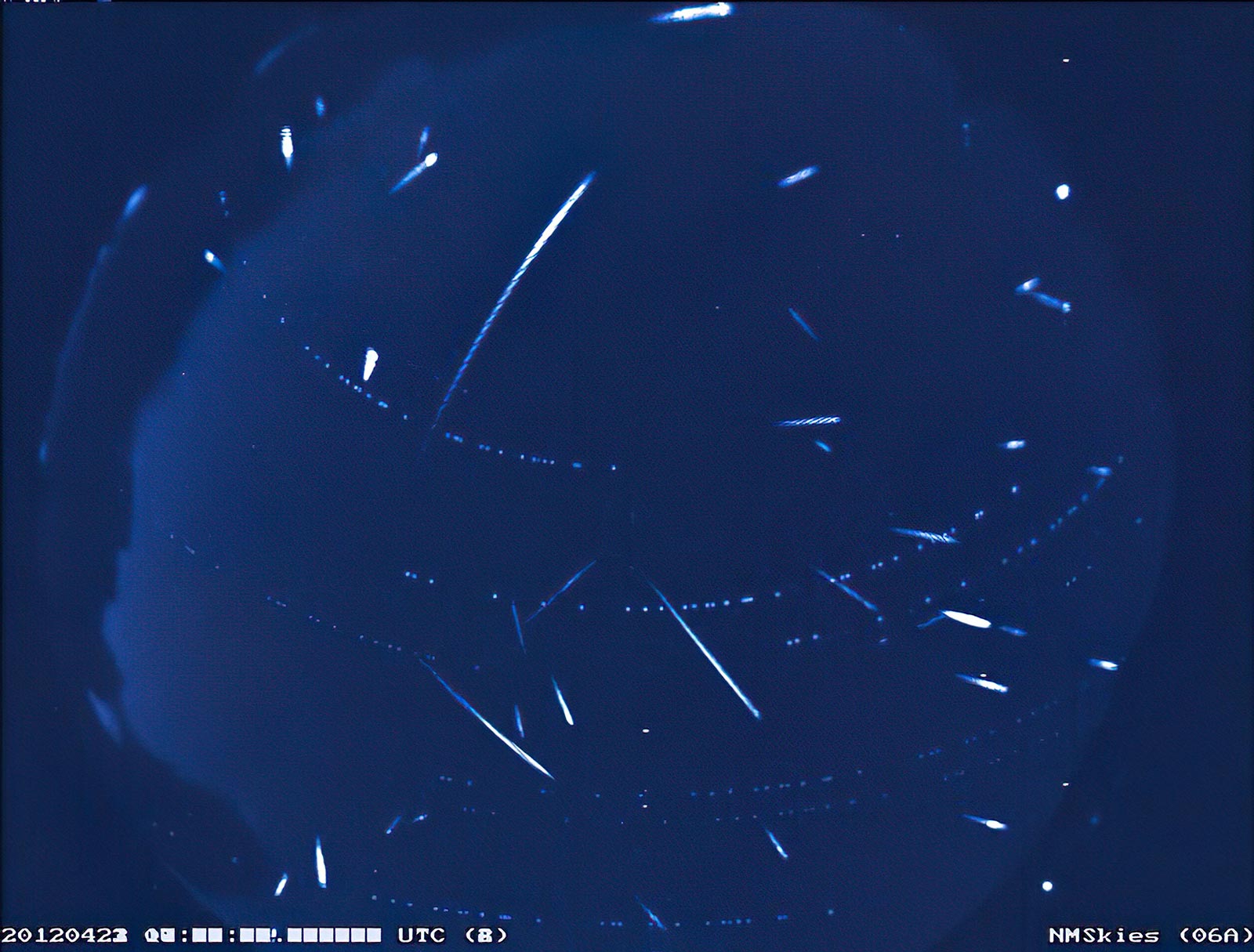
    Lyrid Meteors Over New Mexico
    Composite image of Lyrid and not-Lyrid meteors over New Mexico from April, 2012. Credit: NASA/ MSFC/ Danielle Moser

    The Lyrid meteor shower peaks on April 23 with up to 15 meteors per hour.

    The shower is one of the oldest in history, with records dating back 2,700 years. Lyrid outbursts remain difficult to predict, making regular observations crucial for improving models. To observe the Lyrids, find a dark location away from city lights, allow 30 minutes for eyes to adjust, and avoid bright screens. Meteors will peak at 10-15 per hour during the early morning of the 23rd, but lower rates are visible on adjacent nights.

    This year’s Lyrid meteor shower will peak in the predawn hours of April 23. On average, the shower can produce up to 15 meteors per hour under ideal viewing conditions. The Lyrids occur every year in mid-April, when Earth crosses the trail of debris left by the Comet C/1861 G1 Thatcher. These bits of comet burn up when they hit Earth’s atmosphere and produce this shower of shooting stars. The shower gets its name from the constellation Lyra, the point in the sky where the meteors appear to originate. Unlike the Perseids or Geminids, the Lyrids are not known for bright fireballs. What makes them special is their unpredictability.
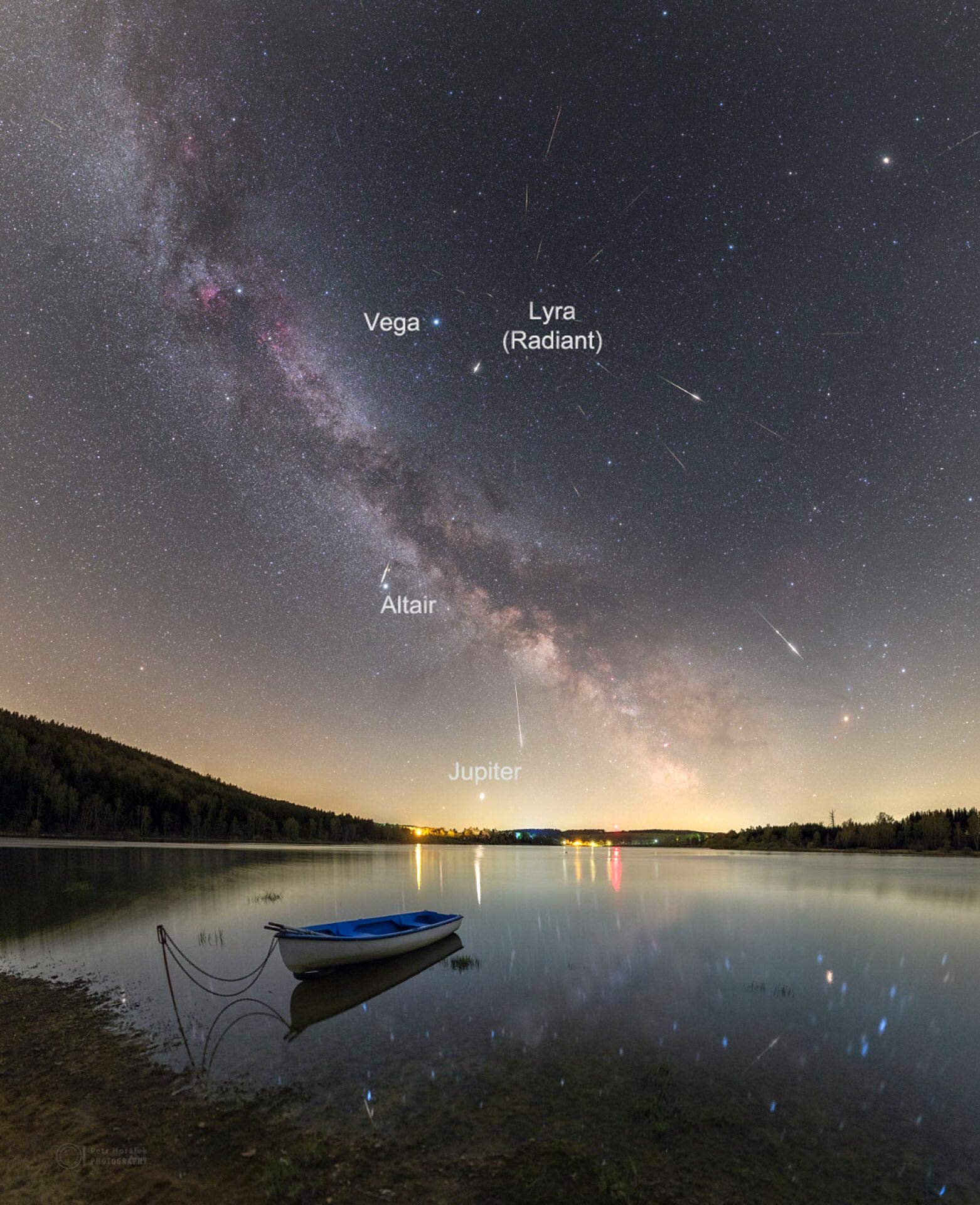
    Lyrid Meteors From Constellation Lyra
    Lyrid Meteors from the Constellation Lyra. Credit & Copyright: Petr Horálek

    The first record of the Lyrid meteor shower dates back 2,700 years, making it one of the oldest in history. Researchers looking though old records have found descriptions of major Lyrid outbursts. For example, a notation made by the French bishop Gregory of Tours in April of 582 A.D. states, “At Soissons, we see the sky on fire.” There was also a Lyrid outburst visible over the United States in 1803. An article in the Virginia Gazette and General Advertiser describes the shower: “From one until three, those starry meteors seemed to fall from every point in the heavens, in such numbers as to resemble a shower of sky rockets.” The last Lyrid outburst was in 1982, when 75 meteors per hour were recorded by observers in Florida.

    The common theme here is that Lyrid outbursts are surprises. Unlike some other showers, meteor researchers aren’t able to predict Lyrid outbursts as well. That’s why it is important to make observations each year so that models of its activity can be improved.


    On April 21, the 2012 Lyrid meteor shower peaked in the skies over Earth. While NASA allsky cameras were looking up, astronaut Don Pettit aboard the International Space Station trained his video camera on Earth below. Video footage has revealed breathtaking images of meteors ablating — or burning up — over Earth at night. This video is a composite of 310 still frames from that evening. Credit: NASA/JSC/Don Pettit

    How can you best observe the Lyrids? After 10:30 p.m. local time on the night of April 22, find a dark place away from city lights with open sky free of clouds and look straight up. It will take about 30 minutes for your eyes to get acclimated to the dark. Don’t look at your cell phone – the bright light from its screen will interrupt your night vision. You will begin to see Lyrids, and as the night progresses the meteors will appear more often, reaching 10 to 15 per hour in the pre-dawn hours of the 23rd. You can see Lyrids on the night before and after the peak, but the rates will be lower, maybe five per hour or so.

    Never miss a breakthrough: Join the SciTechDaily newsletter.
    Follow us on Google and Google News.

    Comet Meteors NASA Popular
    Share. Facebook Twitter Pinterest LinkedIn Email Reddit

    Related Articles

    Don’t Miss: Eta Aquariid Meteor Shower Outburst Peak – Up to 160 Meteors per Hour

    Sodium Surprise: Asteroid’s Comet-Like Tail Is Not Made of Dust

    Experts on the Future of Planetary Defense 10 Years After the Chelyabinsk Asteroid Impact’s 440 Kiloton Explosion

    Don’t Miss: Total Lunar Eclipse and Leonid Meteor Shower

    Fireball Lights Up the Sky Over Salt Lake City – 16 Times Brighter Than the Full Moon

    Perseids Meteor Shower on the Way – But There’s a Big Problem

    NASA’s $10 Billion Webb Space Telescope Struck by Micrometeoroid

    Spectacular New Tau Herculids Meteor Shower May Light Up the Skies Over North America

    Loud Fireball: A Fiery Meteor Streaked Across the Mississippi Skies at 55,000 MPH

    3 Comments

    1. Jim Klimov on April 22, 2023 1:57 pm

      Ok, thanks, we took the article’s subject at face value. A schoolgirl at my kids’ school saw a bright streak into their yard. Other kids conceded they saw a glitch, but she being an astronomy geek went and found a hole with a warm stone. Caught the falling star 🙂

      Reply
    2. Debra Kay Ewing on April 23, 2023 1:54 am

      I’m so excited excited for this,thank-you Sincerely Deb

      Reply
    3. Donald E HEROD on April 23, 2023 6:57 pm

      Heading home to Watch the meteor shower at the Shawnee park and plano near my house.

      Reply
    Leave A Reply Cancel Reply

    • Facebook
    • Twitter
    • Pinterest
    • YouTube

    Don't Miss a Discovery

    Subscribe for the Latest in Science & Tech!

    Trending News

    First-of-Its-Kind Discovery: Homer’s Iliad Found Embedded in a 1,600-Year-Old Egyptian Mummy

    Beyond Inflammation: Scientists Uncover New Cause of Persistent Rheumatoid Arthritis

    A Simple Molecule Could Unlock Safer, Easier Weight Loss

    Scientists Just Built a Quantum Battery That Charges Almost Instantly

    Researchers Unveil Groundbreaking Sustainable Solution to Vitamin B12 Deficiency

    Millions of People Have Osteopenia Without Realizing It – Here’s What You Need To Know

    Researchers Discover Boosting a Single Protein Helps the Brain Fight Alzheimer’s

    World-First Study Reveals Human Hearts Can Regenerate After a Heart Attack

    Follow SciTechDaily
    • Facebook
    • Twitter
    • YouTube
    • Pinterest
    • Newsletter
    • RSS
    SciTech News
    • Biology News
    • Chemistry News
    • Earth News
    • Health News
    • Physics News
    • Science News
    • Space News
    • Technology News
    Recent Posts
    • Scientists Flip Immune System “Switch,” Uncover Surprising Path To Stop Gut Inflammation
    • Magnesium Magic: New Drug Melts Fat Even on a High-Fat, High-Sugar Diet
    • Weight-Loss Drugs Like Ozempic May Come With an Unexpected Cost
    • After Decades, MIT Researchers Capture the First 3D Atomic View of a Mysterious Material
    • Your Favorite Fishing Spot Is Turning Brown – and the Fish Are Changing
    Copyright © 1998 - 2026 SciTechDaily. All Rights Reserved.
    • Science News
    • About
    • Contact
    • Editorial Board
    • Privacy Policy
    • Terms of Use

    Type above and press Enter to search. Press Esc to cancel.