
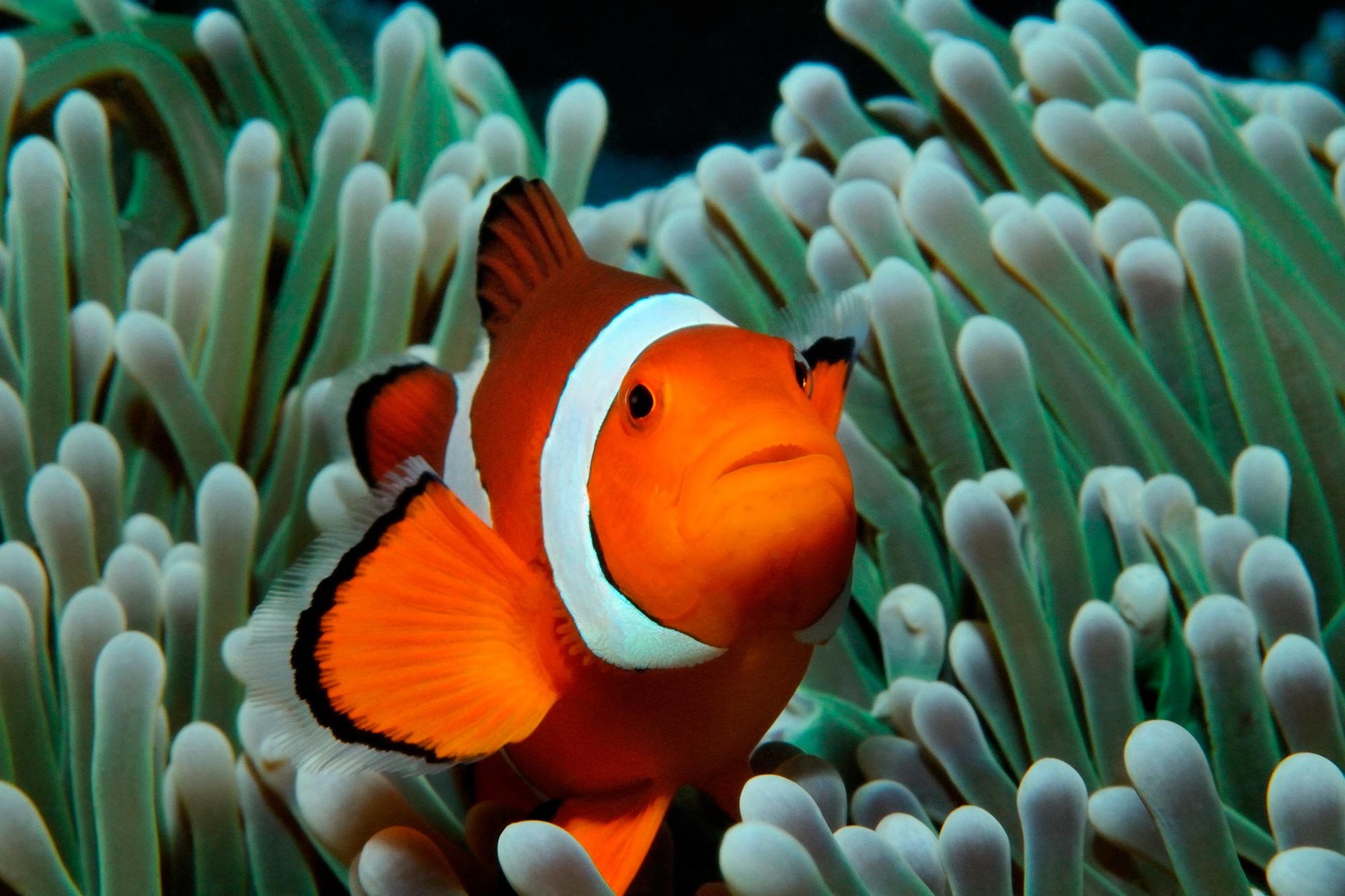
Anemonefish, famously known as clownfish, have long been admired for their vibrant colors and their fascinating relationship with sea anemones.
While it’s well-known that these fish protect their hosts from predators, new research reveals that they also feed them — offering food they can’t eat themselves. This behavior, observed in the wild by scientists, strengthens the bond between fish and anemone, with benefits for both.
A Surprising Feeding Behavior in the Wild
Anemonefish, commonly known as clownfish, have been popular in aquariums since Disney’s Finding Nemo hit theaters in 2003. These fish share a unique symbiotic relationship with sea anemones, which provide them with protection from predators. In return, anemonefish defend their hosts by warding off creatures that might feed on them. They have also been observed offering food to their anemones when fed by humans — but does this behavior occur in the wild?
A research team from Osaka Metropolitan University, led by PhD student Yuya Kobayashi and Professor Satoshi Awata, set out to investigate. Their field experiments revealed that Clark’s anemonefish actively provide food to bubble-tip anemones. In some cases, the fish attached clams they cannot eat themselves to the anemone’s tentacles, while for smaller food items, they first ate their share before feeding their hosts.

How Feeding Benefits Both Fish and Anemones
“We also confirmed that feeding the anemonefish directly increases the growth rate of the sea anemones,” stated PhD student Kobayashi. “It is known that in other anemonefish species, the number of eggs laid increases when the hosts are larger. For anemonefish, which cannot leave their sea anemone, feeding their hosts is extremely important and will ultimately benefit themselves.”
Professor Awata added, “We believe that correctly understanding animal behavior will not only lead to the development of ecology, biology, and other fields of research, but will also provide appropriate methods for the protection and conservation of animals that are on the verge of extinction.”
Reference: “Active provisioning of food to host sea anemones by anemonefish” by Yuya Kobayashi, Yuki Kondo, Masanori Kohda and Satoshi Awata, 26 February 2025, Scientific Reports.
DOI: 10.1038/s41598-025-85767-9
Never miss a breakthrough: Join the SciTechDaily newsletter.
Follow us on Google and Google News.
4 Comments
Being a novice reef tank aquarist, I must say, Clownish, although territorial buttheads, are extremely smart! From pushing a large hermit crab across the bottom of a 75 gallon tank to fending off curious tank mates from getting close to the clutch of eggs. They never cease to amaze me! Great article!
How old is this data because my local salt water fish shop told me their clownfish feed the anemone over a month ago.
I believe the point stated in the article was to see if it also happened in the wild.
You’re right, end of first paragraph, I had to go back and check:
“They have also been observed offering food to their anemones when fed by humans — but does this behavior occur in the wild?”
I think all of us, unfortunately, have been conditioned to skim as we read due to how media is presented and delivered these days. So even among those who are smart and bookish, it’s getting harder to pick up on details rather than just getting the gist of anything we read.
I blame ads. It’s the driving force behind how we consume and engage with everything we see online, begging us to click more, to see more, to not spend time in the same place. Ads are dulling the collective reading comprehension of our species.