
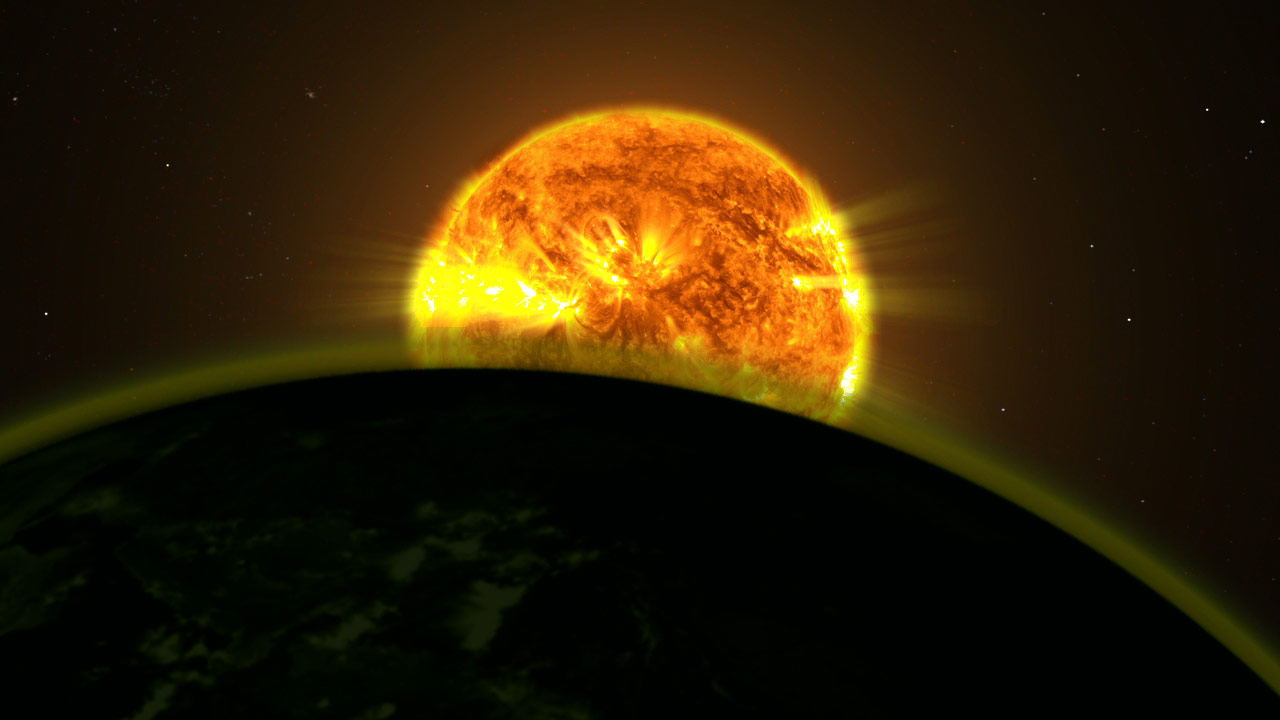
Researchers are preparing to study the atmospheres of Earth-sized exoplanets, focusing on distinguishing those similar to Earth from those resembling Venus, which has a thick, carbon-dioxide-heavy atmosphere.
A team simulated viewing Venus as an exoplanet and successfully applied techniques planned for future large telescopes, indicating potential for accurately characterizing distant planets’ atmospheres.
Exoplanetary Atmosphere Research
In the coming decade, scientists will begin studying the atmospheres of planets as small as Earth and Venus orbiting nearby stars. Despite their similar size and bulk density, which has earned them the nickname “twins,” Earth and Venus have vastly different atmospheres. If observed from light-years away, could scientists distinguish between them?
To explore this question, a team from the Instituto de Astrofísica e Ciências do Espaço (IA) simulated Venus as if it were a distant exoplanet. They investigated what kind of atmospheric data could be gathered using current techniques. Published in the journal Atmosphere, their findings show that methods used to study large, hot exoplanets can also be adapted for much smaller worlds. This breakthrough brings researchers closer to identifying key markers that differentiate nitrogen-rich, temperate atmospheres like Earth’s from the carbon dioxide-heavy, extreme atmospheres found on planets like Venus.

Challenges and Techniques in Exoplanet Atmosphere Studies
“The techniques currently used to study the atmosphere of exoplanets are effective for giant planets close to their star, thus with a hot atmosphere. However, it is challenging to study the atmosphere of bodies as small as Earth or Venus,” says first author Alexandre Branco, a MSc student at IA and the Faculty of Sciences of the University of Lisbon (Ciências ULisboa). “The most promising targets are often bathed in a stellar radiation regime much like Venus, so ‘ExoVenus’ are most likely to be the first small worlds to have their atmosphere characterized. Our work had this aim of looking at Venus as if we were looking at an exoplanet.”
With decades of other studies on Venus, the researchers were able to validate their conclusions. Furthermore, they show that the atmospheres of Solar System bodies may also be probed using these same techniques for distant atmospheres, to detect in our close neighbors chemical species of very low concentrations, hard to find through other means.
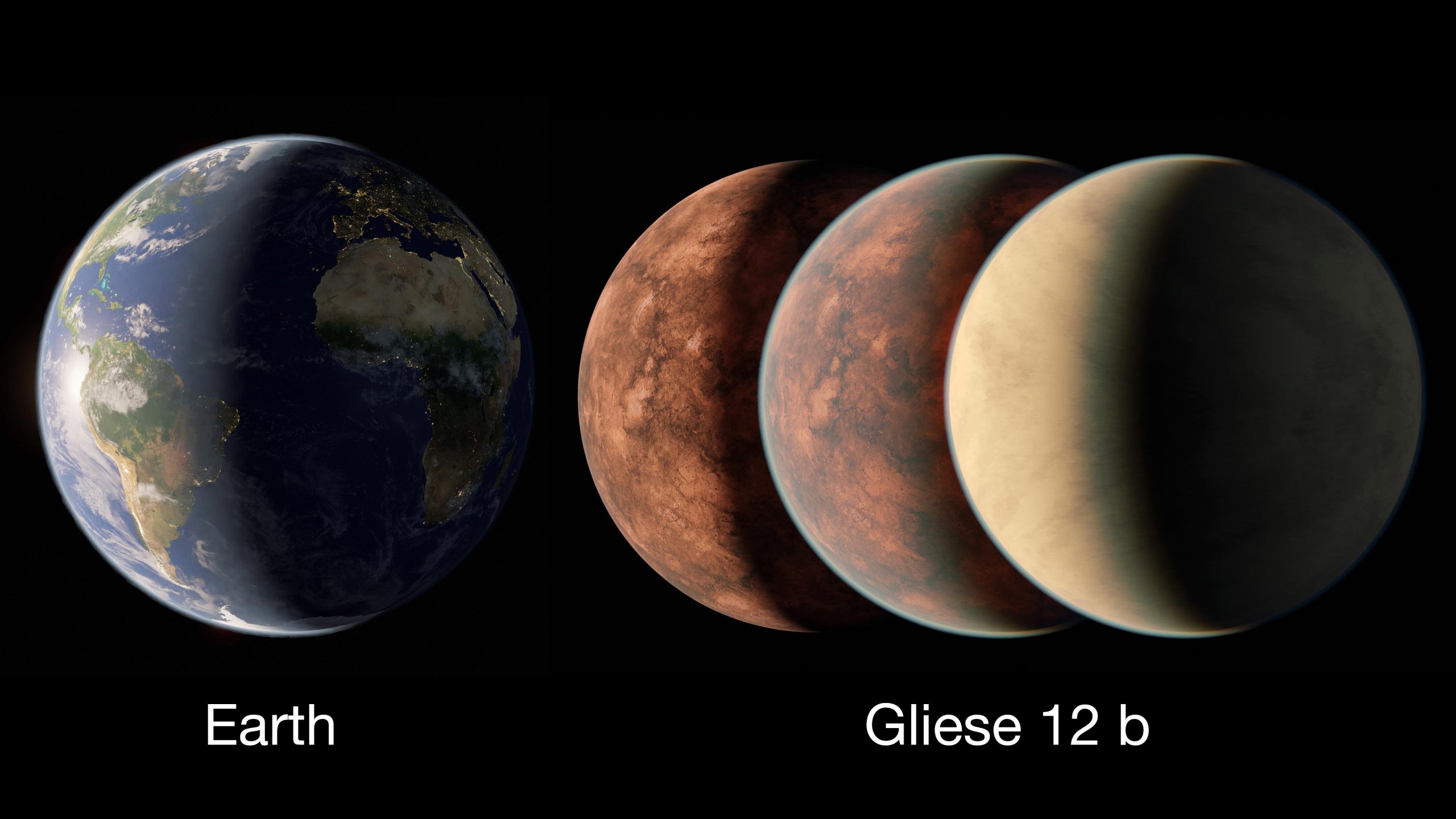
Observing and Understanding Venus’ Atmospheric Signatures
To observe Venus as an exoplanet, the team analyzed a very rare set of data, collected on 5 and 6 June 2012, the last time in this century Venus crossed the disc of our Sun – much in the same way the atmospheres of exoplanets are probed when they pass in front of their host star from our point of view on Earth. They imprint their presence on the star’s light as it passes on its way to Earth. Among the traces are signals left by molecules in their atmosphere that tell astrophysicists what it is made of.
This is harder the smaller the planet is, but new astronomical instruments are planned to start operations in the 2030s, and exoplanets the size of Earth and Venus will be within their reach. Thus, the techniques already being successfully used on large hot exoplanets need to be tested and calibrated for these more challenging cases, where relevant signals are likely to be too small and hidden in the noise.
By applying those techniques to data from the Venus transit in front of the Sun, the researchers validated their future use with powerful facilities such as ESO’s Extremely Large Telescope (ELT) and European Space Agency (ESA)’s Ariel space mission, projects in which Portugal and IA are involved. However, to discriminate between worlds like Earth and those like Venus, more needs to be done. Seen from afar, Venus could be mistaken by a planet like our own.

Will the First Distant “Earth” Actually Be Another Hellish Venus?
Due to its carbon dioxide concentration, Venus’ atmosphere is subject to an extreme greenhouse effect that melts lead on the planet’s surface, and pressure reaches that inside divers bottles. Actually, a Venus-like atmosphere is likely to be the first to be characterized in an “Earth-sized” exoplanet.
“The high temperatures intrinsic to rocky planets with an atmosphere rich in carbon dioxide, and thus subject to intense greenhouse effect, lead to a chemically active environment, with many chemical transitions. This makes this type of atmosphere easy to detect,” says Pedro Machado, of IA and Ciências ULisboa, and the second author of this study.
Co-author Olivier Demangeon, of IA and Faculty of Sciences of the University of Porto (FCUP), adds: “Venus’ atmosphere is around 90 times denser than Earth and is also significantly hotter. So much so that, despite being denser, Venus’ atmosphere is larger. Larger and denser both imply a strong signature in our observations. We detected some faint signatures of carbon dioxide on the Venus data that are not expected in Earth-like atmospheres. Yet, it is still not the most efficient way to differentiate between the two planets.”
Enhanced Observational Techniques for Solar System Studies
In 2012, Pedro Machado and his team participated in the coordinated observations of Venus for the international campaign when the planet crossed the solar disc in June. They also analyzed spectroscopic data collected at Dunn Solar Telescope (National Solar Observatory, New Mexico, USA) using the Facility Infrared Spectropolarimeter (FIRS). The data refers to light from the Sun refracted by the upper atmosphere of Venus during the moments the rim of the planet touched and, at the end, released the solar disc.
“We adapted to a Solar System body the sophisticated techniques used to study the atmosphere of worlds incredibly farther,” says Pedro Machado, “and we proved they can also be used to detect minor chemical components in the atmospheres in our Solar System. We are preparing observations that will benefit from this technique to probe the atmospheres of Júpiter and Saturn when a bright star passes behind them as seen from our telescopes on Earth. Orbital missions around Venus or Mars also have observed the Sun across their atmospheres.”
“We even detected the clear signatures of the isotopes of carbon and oxygen in the molecules of carbon dioxide and carbon monoxide,” adds Machado. The amount of certain isotopes change with time and are used to assess past atmospheric environments of temperature and pressure and their timescales.
“Estimating the relative amounts of isotopes enables us to extract conclusions about the story of how Venus evolved,” says Alexandre Branco. Machado adds: “This is something to which this work contributes very clearly, and this is also one of the goals of the next ESA mission to Venus, EnVision, in which Portugal and IA collaborate: to study Venus’ past evolution.”
The ANDES spectrograph, for ESO’s ELT, and ESA’s Ariel space mission, both with contributions from IA on the science and the technology, are two facilities that will boost the research into other worlds, and will benefit from studies in line with the work by this team. Ariel will enable the study of the atmosphere of about 1000 exoplanets already known, and to do so it will use the same observing and analysis techniques this team applied in this work. Pedro Machado is member of the Ariel Consortium board and coordinator of the Ariel working group that links the study of atmospheres of exoplanets with that of the Solar System.
Reference: “Transmission Spectroscopy Along the Transit of Venus: A Proxy for Exoplanets Atmospheric Characterization” by Alexandre Branco, Pedro Machado, Olivier Demangeon, Tomás Azevedo Silva, Sarah A. Jaeggli, Thomas Widemann and Paolo Tanga, 27 November 2024, Atmosphere.
DOI: 10.3390/atmos15121431
Never miss a breakthrough: Join the SciTechDaily newsletter.
Follow us on Google and Google News.